What Are Synonyms and Antonyms With Simple Examples 2026
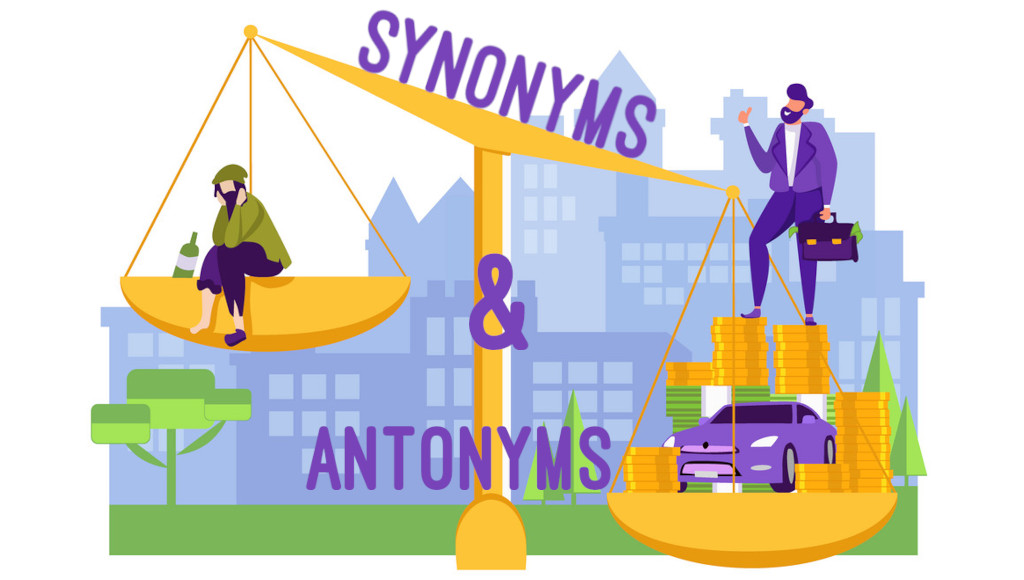
What are synonyms and antonyms is one of the most commonly searched grammar questions by students, writers, and English learners in 2026.
Synonyms are words that share the same or nearly the same meaning, while antonyms are words that carry the opposite meaning of another word.
Both are essential tools in English vocabulary that help you write more clearly, speak more confidently, and communicate without repeating the same words over and over.
This complete guide explains what are synonyms and antonyms with simple examples, types, differences, uses, and lists for students at every level.
What Are Synonyms
Synonyms are words that have the same or very similar meaning as another word in the same language.
When two words can be swapped in a sentence without changing the overall meaning, they are called synonyms. For example, the words happy and joyful are synonyms because both describe a positive emotional state.
Synonyms do not always mean exactly the same thing. There can be small differences in tone, intensity, or formality between synonymous words. Understanding these small differences helps you choose the right word for the right situation.
Simple Definition of a Synonym
A synonym is a word that means the same or nearly the same as another word.
The word synonym itself comes from the Greek words syn meaning together and onoma meaning name. So a synonym is literally a word with a shared name or shared meaning.
You find synonyms every day in writing and speech without realising it. When you say a film was brilliant instead of great, or call someone smart instead of intelligent, you are using synonyms naturally.
Synonym Examples for Everyday Words
Here are simple synonym examples organised by common base words.
Synonyms for Happy:
- Joyful
- Cheerful
- Content
- Pleased
- Delighted
- Glad
- Thrilled
- Elated
Synonyms for Sad:
- Unhappy
- Gloomy
- Sorrowful
- Downcast
- Miserable
- Dejected
- Melancholy
- Heartbroken
Synonyms for Big:
- Large
- Huge
- Enormous
- Giant
- Massive
- Vast
- Gigantic
- Immense
Synonyms for Small:
- Tiny
- Little
- Petite
- Miniature
- Compact
- Slight
- Microscopic
- Minute
Synonyms for Good:
- Excellent
- Great
- Wonderful
- Superb
- Fine
- Outstanding
- Brilliant
- Splendid
Synonyms for Bad:
- Terrible
- Awful
- Dreadful
- Horrible
- Poor
- Unpleasant
- Inferior
- Dreadful
Synonyms for Fast:
- Quick
- Rapid
- Swift
- Speedy
- Brisk
- Hasty
- Fleet
- Prompt
Synonyms for Beautiful:
- Pretty
- Lovely
- Gorgeous
- Stunning
- Attractive
- Elegant
- Radiant
- Charming
What Are Antonyms
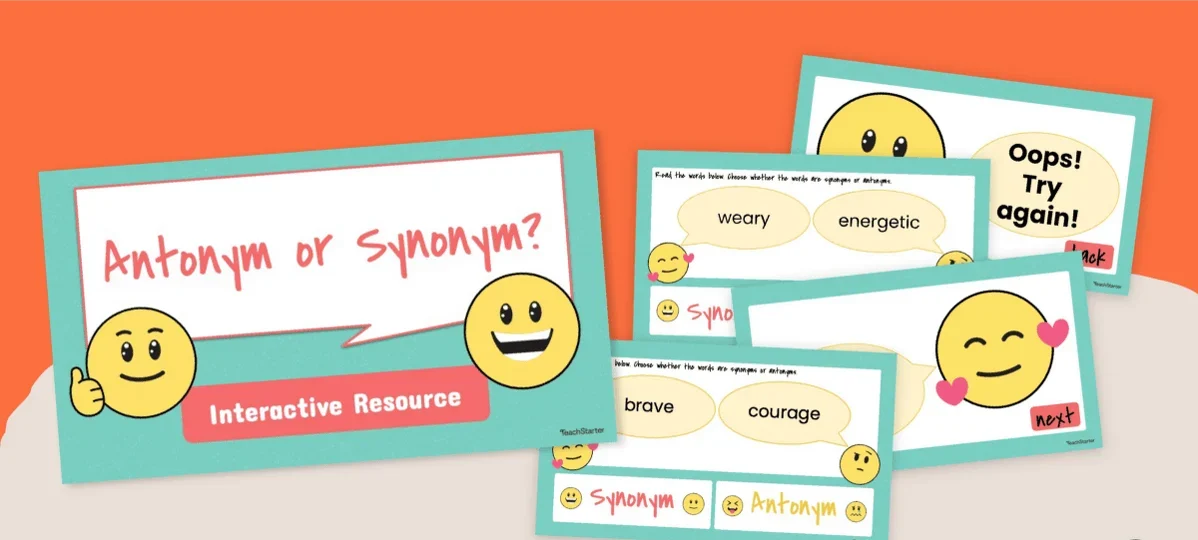
Antonyms are words that have the opposite meaning of another word.
When two words express completely different or contrasting ideas, they are called antonyms. For example, hot and cold are antonyms because they describe opposite temperature states.
Learning antonyms alongside synonyms is one of the most effective ways to build your vocabulary. Knowing opposites helps you understand the full range of meaning a word carries and makes your language richer and more expressive.
Simple Definition of an Antonym
An antonym is a word that means the opposite of another word.
The word antonym comes from the Greek words anti meaning against and onoma meaning name. So an antonym is literally a word with an opposing name or opposite meaning.
Antonyms help you express contrast, disagreement, and comparison. Writers and speakers use them constantly to add tension, clarity, and nuance to their communication.
Antonym Examples for Everyday Words
Here are simple antonym examples organised by common base words.
Antonyms for Happy:
- Sad
- Unhappy
- Miserable
- Gloomy
- Depressed
- Sorrowful
- Heartbroken
- Dejected
Antonyms for Big:
- Small
- Tiny
- Little
- Miniature
- Petite
- Compact
- Slight
- Microscopic
Antonyms for Good:
- Bad
- Poor
- Terrible
- Awful
- Inferior
- Dreadful
- Horrible
- Unpleasant
Antonyms for Fast:
- Slow
- Sluggish
- Gradual
- Leisurely
- Unhurried
- Lagging
- Delayed
- Crawling
Antonyms for Strong:
- Weak
- Frail
- Feeble
- Fragile
- Powerless
- Delicate
- Helpless
- Infirm
Antonyms for Love:
- Hate
- Dislike
- Loathe
- Despise
- Detest
- Abhor
- Resent
- Scorn
Antonyms for Day:
- Night
- Darkness
- Midnight
- Dusk
- Nighttime
- Evening
- Dark
- Blackness
Antonyms for Win:
- Lose
- Fail
- Surrender
- Forfeit
- Miss
- Fall
- Yield
- Concede
Key Difference Between Synonyms and Antonyms
The core difference between synonyms and antonyms is direction of meaning.
Synonyms move in the same direction. They share meaning. Replace one synonym with another and the sentence still says the same thing. Antonyms move in opposite directions. Swap an antonym into a sentence and the meaning completely reverses.
For example: He was brave in the battle. Replace brave with courageous and the meaning stays the same. Replace brave with cowardly and the meaning becomes the exact opposite. Courageous is a synonym. Cowardly is an antonym.
Types of Synonyms
Not all synonyms are exactly alike. There are different types depending on how closely the words match in meaning and use.
Absolute Synonyms are words with identical meanings that can be used interchangeably in any context. True absolute synonyms are very rare in English. An example is the pair begin and commence, which mean exactly the same thing.
Near Synonyms are words with very similar meanings but small differences in tone, intensity, or formality. For example, slim and thin both mean not fat, but slim carries a more positive or elegant tone while thin can sometimes suggest being unhealthily underweight.
Partial Synonyms are words that overlap in meaning in some contexts but not in others. For example, house and home are often used interchangeably, but home carries a stronger emotional and personal meaning while house refers purely to the physical structure.
Contextual Synonyms are words that become synonymous only in a specific context. For example, catch and understand are synonyms only in the context of I did not catch what you said and I did not understand what you said.
Types of Antonyms
Just as with synonyms, antonyms come in different types depending on the nature of the opposite relationship.
Complementary Antonyms are also called binary or contradictory antonyms. These are word pairs where one word being true means the other cannot be true at the same time. Examples include alive and dead, true and false, present and absent, married and unmarried, on and off. There is no middle ground between these pairs.
Gradable Antonyms are word pairs that sit at opposite ends of a scale or spectrum. There are degrees of meaning between them. Examples include hot and cold, which have warm, lukewarm, and cool in between. Other gradable antonym pairs include tall and short, happy and sad, fast and slow, loud and quiet, old and young, heavy and light.
Relational Antonyms are word pairs that are opposite only when viewed in relation to each other. They define each other and depend on the relationship for their meaning. Examples include teacher and student, parent and child, employer and employee, buy and sell, give and take, doctor and patient.
Auto-Antonyms are also called contranyms or Janus words. These are single words that can actually mean the opposite of themselves depending on context. For example, the word sanction can mean to approve or to penalise. The word cleave can mean to split apart or to cling together. The word dust can mean to remove dust from or to sprinkle dust onto.
Synonyms and Antonyms List for Students
This is a ready reference list of common words with both their synonyms and antonyms side by side. This format is especially useful for exam preparation and vocabulary building.
Word: Brave
- Synonym: Courageous
- Antonym: Cowardly
Word: Clean
- Synonym: Neat
- Antonym: Dirty
Word: Cold
- Synonym: Chilly
- Antonym: Hot
Word: Dark
- Synonym: Gloomy
- Antonym: Bright
Word: Easy
- Synonym: Simple
- Antonym: Difficult
Word: Early
- Synonym: Prompt
- Antonym: Late
Word: Fat
- Synonym: Chubby
- Antonym: Thin
Word: Friend
- Synonym: Companion
- Antonym: Enemy
Word: Hard
- Synonym: Tough
- Antonym: Soft
Word: High
- Synonym: Tall
- Antonym: Low
Word: Kind
- Synonym: Generous
- Antonym: Cruel
Word: Love
- Synonym: Adore
- Antonym: Hate
Word: New
- Synonym: Fresh
- Antonym: Old
Word: Open
- Synonym: Unlocked
- Antonym: Closed
Word: Peace
- Synonym: Harmony
- Antonym: War
Word: Rich
- Synonym: Wealthy
- Antonym: Poor
Word: Right
- Synonym: Correct
- Antonym: Wrong
Word: Safe
- Synonym: Secure
- Antonym: Dangerous
Word: Strong
- Synonym: Powerful
- Antonym: Weak
Word: True
- Synonym: Genuine
- Antonym: False
Synonyms and Antonyms for Common Adjectives
Adjectives are describing words and knowing their synonyms and antonyms helps you describe things more accurately.
Word: Angry
- Synonym: Furious
- Antonym: Calm
Word: Beautiful
- Synonym: Attractive
- Antonym: Ugly
Word: Brave
- Synonym: Bold
- Antonym: Timid
Word: Careful
- Synonym: Cautious
- Antonym: Careless
Word: Clever
- Synonym: Smart
- Antonym: Foolish
Word: Comfortable
- Synonym: Cozy
- Antonym: Uncomfortable
Word: Confident
- Synonym: Assured
- Antonym: Insecure
Word: Curious
- Synonym: Inquisitive
- Antonym: Indifferent
Word: Generous
- Synonym: Giving
- Antonym: Selfish
Word: Honest
- Synonym: Truthful
- Antonym: Dishonest
Word: Humble
- Synonym: Modest
- Antonym: Arrogant
Word: Intelligent
- Synonym: Brilliant
- Antonym: Stupid
Word: Lazy
- Synonym: Idle
- Antonym: Hardworking
Word: Loud
- Synonym: Noisy
- Antonym: Quiet
Word: Patient
- Synonym: Tolerant
- Antonym: Impatient
Synonyms and Antonyms for Common Verbs
Verbs are action words. Knowing their synonyms and antonyms helps you express actions with more variety and precision.
Word: Begin
- Synonym: Start
- Antonym: End
Word: Build
- Synonym: Construct
- Antonym: Destroy
Word: Buy
- Synonym: Purchase
- Antonym: Sell
Word: Come
- Synonym: Arrive
- Antonym: Go
Word: Cry
- Synonym: Weep
- Antonym: Laugh
Word: Find
- Synonym: Discover
- Antonym: Lose
Word: Give
- Synonym: Offer
- Antonym: Take
Word: Help
- Synonym: Assist
- Antonym: Hinder
Word: Hide
- Synonym: Conceal
- Antonym: Reveal
Word: Hurry
- Synonym: Rush
- Antonym: Dawdle
Word: Increase
- Synonym: Grow
- Antonym: Decrease
Word: Remember
- Synonym: Recall
- Antonym: Forget
Word: Save
- Synonym: Preserve
- Antonym: Waste
Word: Succeed
- Synonym: Achieve
- Antonym: Fail
Word: Talk
- Synonym: Speak
- Antonym: Silence
Synonyms and Antonyms for Common Nouns
Nouns name people, places, things, and ideas. Knowing their synonyms and antonyms builds your ability to write more descriptively.
Word: Answer
- Synonym: Reply
- Antonym: Question
Word: Beginning
- Synonym: Start
- Antonym: End
Word: Courage
- Synonym: Bravery
- Antonym: Cowardice
Word: Enemy
- Synonym: Rival
- Antonym: Friend
Word: Fear
- Synonym: Dread
- Antonym: Courage
Word: Freedom
- Synonym: Liberty
- Antonym: Slavery
Word: Joy
- Synonym: Happiness
- Antonym: Sorrow
Word: Knowledge
- Synonym: Wisdom
- Antonym: Ignorance
Word: Peace
- Synonym: Tranquility
- Antonym: Conflict
Word: Success
- Synonym: Achievement
- Antonym: Failure
Word: Truth
- Synonym: Fact
- Antonym: Lie
Word: Victory
- Synonym: Triumph
- Antonym: Defeat
How to Use Synonyms in Writing
Synonyms make writing more interesting and more precise. Using the same word repeatedly in a paragraph makes writing feel flat and boring.
A thesaurus is the best tool for finding synonyms. You can use a physical thesaurus or an online thesaurus like Merriam-Webster, Thesaurus.com, or Cambridge Dictionary. These tools give you multiple synonym options with usage notes.
The most important rule when using synonyms is to check the full meaning before swapping. Some synonyms are near-perfect replacements. Others have subtle differences in tone, formality, or intensity that can change how your writing sounds. Always read a sentence aloud after substituting a synonym to make sure it still sounds natural.
How to Use Antonyms in Writing
Antonyms are powerful tools for creating contrast, emphasis, and dramatic effect in writing.
Writers use antonyms to highlight differences. Comparing two opposite things next to each other is called antithesis. The famous Shakespeare line from Romeo and Juliet, My only love sprung from my only hate, works because it places love and hate side by side for maximum emotional impact.
In everyday writing, antonyms help you correct or deny something clearly. Instead of saying the situation was not good, using the antonym bad gives your writing more directness and force. Strong writing favours direct word choices over vague negations.
Synonyms and Antonyms in Sentences
Seeing synonyms and antonyms used in real sentences helps understand how they work in context.
Using Synonyms in Sentences:
- She was happy about the result. She was joyful about the result. Both sentences mean the same thing.
- The movie was interesting. The movie was fascinating. Both are synonyms expressing engagement.
- He is a brave soldier. He is a courageous soldier. Brave and courageous are synonyms here.
- The bag is heavy. The bag is weighty. Heavy and weighty are synonyms.
- She answered quickly. She answered promptly. Quickly and promptly are synonyms.
Using Antonyms in Sentences:
- The weather today is hot. The weather yesterday was cold. Hot and cold are antonyms.
- He passed the exam. She failed the exam. Passed and failed are antonyms.
- The sun rises in the east. The sun sets in the west. Rises and sets are relational antonyms.
- The city is loud and busy. The village is quiet and peaceful. Loud and quiet are gradable antonyms.
- She arrived early. He arrived late. Early and late are gradable antonyms.
Synonyms and Antonyms for Academic and Exam Vocabulary
This list focuses on vocabulary commonly tested in exams like SSC CGL, IBPS, UPSC, IELTS, TOEFL, SAT, and competitive English tests.
Word: Abundant
- Synonym: Plentiful
- Antonym: Scarce
Word: Ambiguous
- Synonym: Vague
- Antonym: Clear
Word: Arrogant
- Synonym: Conceited
- Antonym: Humble
Word: Benevolent
- Synonym: Charitable
- Antonym: Malevolent
Word: Cautious
- Synonym: Prudent
- Antonym: Reckless
Word: Diligent
- Synonym: Hardworking
- Antonym: Lazy
Word: Eloquent
- Synonym: Articulate
- Antonym: Inarticulate
Word: Enormous
- Synonym: Vast
- Antonym: Tiny
Word: Frugal
- Synonym: Thrifty
- Antonym: Wasteful
Word: Genuine
- Synonym: Authentic
- Antonym: Fake
Word: Harsh
- Synonym: Severe
- Antonym: Mild
Word: Impulsive
- Synonym: Rash
- Antonym: Thoughtful
Word: Lenient
- Synonym: Permissive
- Antonym: Strict
Word: Obscure
- Synonym: Unclear
- Antonym: Obvious
Word: Optimistic
- Synonym: Hopeful
- Antonym: Pessimistic
Word: Prudent
- Synonym: Wise
- Antonym: Foolish
Word: Rigid
- Synonym: Inflexible
- Antonym: Flexible
Word: Superficial
- Synonym: Shallow
- Antonym: Deep
Word: Timid
- Synonym: Shy
- Antonym: Confident
Word: Vivid
- Synonym: Bright
- Antonym: Dull
How Synonyms and Antonyms Help Build Vocabulary
Learning synonyms and antonyms together is one of the fastest and most effective ways to expand your vocabulary.
When you learn one new word, look up both its synonyms and antonyms immediately. This instantly gives you a family of related words around every new word you encounter. Instead of learning one word at a time, you learn clusters of words that stick together in your memory.
Reading widely also exposes you to synonyms and antonyms in natural context. When a good writer avoids repeating the word said in a dialogue and uses replied, whispered, shouted, or answered instead, you are seeing synonyms at work. Pay attention to these substitutions as you read.
Using a Thesaurus to Find Synonyms and Antonyms
A thesaurus is a book or digital tool that lists synonyms and often antonyms for words. It is one of the most useful reference tools for any writer or language learner.
Online thesaurus tools like Thesaurus.com, Merriam-Webster Thesaurus, and the Cambridge English Thesaurus give you synonyms, antonyms, and example sentences all in one place. They also show you the subtle differences between near-synonyms so you can choose the most precise word.
When using a thesaurus, always read the example sentences for any synonym you plan to use. This prevents the common mistake of swapping in a synonym that sounds strange or unnatural in the specific context of your writing.
Synonyms and Antonyms for Kids
Learning synonyms and antonyms does not need to be complicated for young learners. Using simple, familiar words makes the concept easy to grasp.
Simple Synonyms for Kids:
- Big and Large
- Small and Tiny
- Happy and Glad
- Sad and Unhappy
- Fast and Quick
- Slow and Sluggish
- Hot and Warm
- Cold and Chilly
- Funny and Silly
- Smart and Clever
Simple Antonyms for Kids:
- Day and Night
- Up and Down
- In and Out
- Hot and Cold
- Big and Small
- Happy and Sad
- Yes and No
- Open and Closed
- Hard and Soft
- Full and Empty
The best way to teach synonyms and antonyms to children is through matching games, flashcards, sorting activities, and story writing. Keep the words simple and relatable to everyday objects and feelings the child already knows.
Synonyms and Antonyms for Class 5 and Class 6 Students
Students in Class 5 and Class 6 need a slightly more advanced list of synonyms and antonyms for their English curriculum.
Word: Angry
- Synonym: Furious
- Antonym: Calm
Word: Ancient
- Synonym: Old
- Antonym: Modern
Word: Bright
- Synonym: Shining
- Antonym: Dim
Word: Brave
- Synonym: Fearless
- Antonym: Afraid
Word: Famous
- Synonym: Well-known
- Antonym: Unknown
Word: Humble
- Synonym: Modest
- Antonym: Proud
Word: Innocent
- Synonym: Pure
- Antonym: Guilty
Word: Lazy
- Synonym: Idle
- Antonym: Active
Word: Neat
- Synonym: Tidy
- Antonym: Messy
Word: Polite
- Synonym: Courteous
- Antonym: Rude
Word: Quick
- Synonym: Rapid
- Antonym: Slow
Word: Silent
- Synonym: Quiet
- Antonym: Noisy
Word: Tall
- Synonym: High
- Antonym: Short
Word: Wild
- Synonym: Untamed
- Antonym: Tame
Word: Young
- Synonym: Youthful
- Antonym: Old
Common Mistakes When Using Synonyms and Antonyms
People often make a few predictable errors when working with synonyms and antonyms. Being aware of these mistakes helps you avoid them.
The most common mistake is assuming all synonyms are perfectly interchangeable. The words famous and notorious both describe someone who is widely known, but notorious carries a negative meaning. Swapping one for the other completely changes the impression you create.
Another common error is using a synonym that is too formal or too informal for the writing context. Commence is a synonym for start, but using it in casual conversation would sound stiff and unnatural. Always match the register of your synonym to the register of your writing.
With antonyms, a frequent mistake is thinking that any word opposite in meaning will work in a sentence. Antonyms must also match grammatically. You cannot replace a noun with an adjective just because they are opposite in meaning. Always check both meaning and word class.
Why Synonyms and Antonyms Matter in English
Understanding what are synonyms and antonyms is not just an exam skill. It is a practical communication skill.
Using synonyms makes your writing flow better and avoids the monotony of repetition. Good writers rarely use the same word twice in a paragraph if they can help it. Variety in word choice signals command of the language and keeps readers engaged.
Understanding antonyms sharpens your reading comprehension. When a text contrasts two ideas, you can follow the logic better if you recognise the antonym relationship. It also improves your vocabulary retention because learning words in opposing pairs creates stronger memory connections.
Frequently Asked Questions
What are synonyms and antonyms in simple words?
Synonyms are words with the same or similar meaning, like happy and joyful. Antonyms are words with opposite meanings, like happy and sad.
What is the difference between synonyms and antonyms?
Synonyms share the same meaning and can replace each other in a sentence. Antonyms have opposite meanings and reverse the meaning when substituted.
Can a word be both a synonym and an antonym?
No, one word cannot be both a synonym and an antonym of the same word at the same time. However, some words called auto-antonyms can mean the opposite of themselves depending on context.
What are the types of antonyms?
The four main types of antonyms are complementary antonyms such as alive and dead, gradable antonyms such as hot and cold, relational antonyms such as teacher and student, and auto-antonyms such as sanction.
What are the types of synonyms?
The main types of synonyms are absolute synonyms with identical meaning, near synonyms with slight differences, partial synonyms that overlap in some contexts, and contextual synonyms that only match in specific uses.
Why is it important to learn synonyms and antonyms?
Learning synonyms and antonyms builds vocabulary, improves writing quality, sharpens reading comprehension, and is essential for passing competitive exams in English.
Where can I find synonyms and antonyms for any word?
You can find synonyms and antonyms in a thesaurus, Merriam-Webster Thesaurus, Thesaurus.com, Cambridge Dictionary, or Oxford Dictionary both online and in print.
What are 5 examples of synonyms?
Five easy synonym pairs are happy and joyful, big and large, fast and quick, begin and start, and beautiful and pretty.
What are 5 examples of antonyms?
Five easy antonym pairs are hot and cold, day and night, love and hate, win and lose, and strong and weak.
How do synonyms and antonyms help in exam preparation?
Synonyms and antonyms questions appear in exams like SSC CGL, IBPS, UPSC, IELTS, SAT, and TOEFL. A strong vocabulary of synonym and antonym pairs directly improves scores in verbal and reading comprehension sections.
Conclusion
What are synonyms and antonyms is one of the most fundamental questions in English grammar, and the answer shapes how well you communicate every day.
Synonyms give you word choices that carry the same meaning, keeping your language fresh and varied. Antonyms give you opposites that help you contrast, clarify, and add power to your writing.
Mastering both types of word relationships is one of the simplest and most effective investments you can make in your English skills.
Whether you are a student preparing for an exam, a writer crafting better sentences, or simply someone who wants to speak more clearly, knowing synonyms and antonyms will serve you well in 2026 and beyond.