What Is the Difference Between Synonyms and Antonyms? 2026
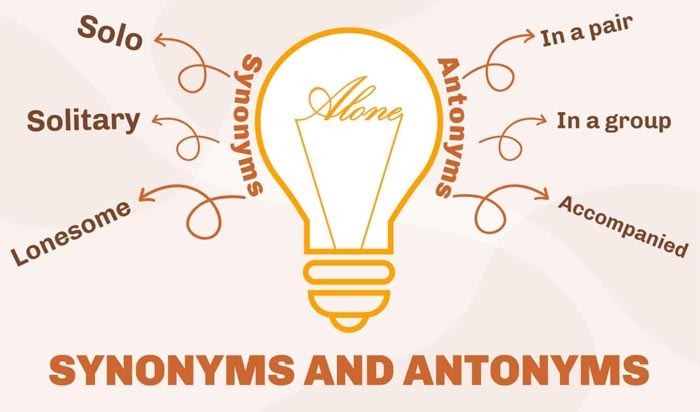
What is the difference between synonyms and antonyms is one of the most commonly searched grammar questions by students, writers, and English learners in 2026.
At its simplest, synonyms are words that share the same or similar meaning, while antonyms are words that carry opposite meanings. But the real picture is far more detailed than that.
Understanding both concepts deeply can sharpen your vocabulary, strengthen your writing, and help you communicate with far more precision.
What Is the Difference Between Synonyms and Antonyms? What Are Synonyms? A Clear Definition
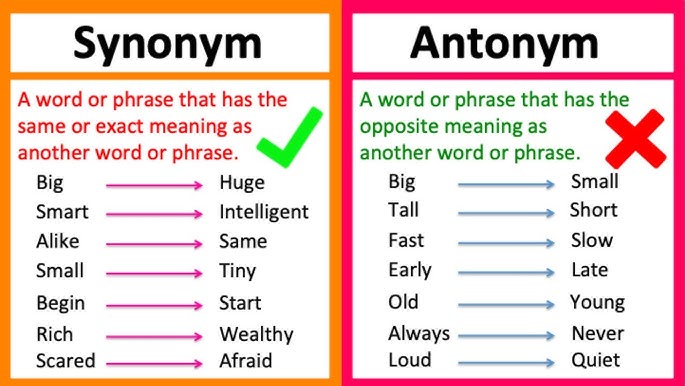
A synonym is a word that means the same or nearly the same as another word. For example, “happy” and “joyful” are synonyms because they share a very similar meaning.
Synonyms exist across every part of speech. You can find synonym pairs among nouns, verbs, adjectives, adverbs, and even prepositions. They give writers the freedom to vary their word choice without changing the meaning of a sentence.
The word “synonym” comes from the Greek word sunonumon, combining syn (same) and onoma (name). It has been used in English for over 500 years, making it one of the oldest grammatical terms still in common use today.
What Are Antonyms? A Clear Definition
An antonym is a word that means the opposite or nearly the opposite of another word. For example, “hot” is an antonym of “cold,” and “happy” is an antonym of “sad.”
The word “antonym” is much newer in English than “synonym.” It first appeared in the 1860s, making it a relatively recent addition to the language. It comes from the Greek prefix anti- (against) and onoma (name).
Not every word has an antonym. The word “sandwich,” for example, has many synonyms (hoagie, grinder, sub) but no true opposite. Antonyms are therefore less common in language overall than synonyms.
The Core Difference Between Synonyms and Antonyms
The fundamental difference is direction of meaning. Synonyms move toward the same idea; antonyms move away from it in opposite directions.
Think of it this way: if “cold” is your starting point, synonyms bring you words like “chilly,” “freezing,” and “icy.” Antonyms take you in the opposite direction toward “hot,” “warm,” and “boiling.”
| Feature | Synonyms | Antonyms |
|---|---|---|
| Meaning Relationship | Same or similar | Opposite |
| Purpose in Writing | Avoid repetition, add variety | Show contrast, highlight differences |
| Greek Root | syn (same) + onoma (name) | anti (against) + onoma (name) |
| Age in English | 500+ years | Since the 1860s |
| How Common | Very common (most words have them) | Less common (not all words have opposites) |
| Example Pair | happy / joyful | happy / sad |
The Three Types of Synonyms
Not all synonyms are created equal. Linguists classify synonyms into three main types based on how closely the meanings match.
Absolute Synonyms
Absolute synonyms are words that share an identical meaning and can be used interchangeably in any context without changing the message. True absolute synonyms are actually quite rare in English.
Examples include “airman” and “pilot,” or “automobile” and “car.” In these pairs, swapping one word for the other makes no difference to meaning, tone, or style.
Linguists note that absolute synonymy is nearly impossible to achieve perfectly, because words constantly shift in meaning over time and carry slightly different cultural or social associations.
Partial Synonyms
Partial synonyms are words with broadly similar meanings but subtle differences in degree, specificity, or usage. These are far more common than absolute synonyms in everyday English.
“Smart” and “intelligent” are a good example. Both relate to mental ability, but “intelligent” often suggests a higher level of intellect. Similarly, “car” and “vehicle” overlap in meaning, but “vehicle” is the broader, more general term.
When using partial synonyms in writing, you should always consider whether the subtle difference in meaning serves your sentence or changes it in an unwanted way.
Near Synonyms
Near synonyms are words that are related in meaning but not interchangeable. They share a conceptual connection without being true substitutes for each other.
“Lie,” “falsehood,” “untruth,” and “fib” are all near synonyms. They all describe something that is not true, but each word carries a different shade of meaning. A “fib” is minor and perhaps harmless. A “lie” is deliberate and direct.
Writers who understand near synonyms can craft sentences with far greater nuance and emotional precision.
| Type of Synonym | Definition | Example |
|---|---|---|
| Absolute | Identical meaning, fully interchangeable | car / automobile |
| Partial | Similar meaning with subtle differences | good / excellent |
| Near Synonym | Related but not fully interchangeable | lie / fib / falsehood |
The Three Main Types of Antonyms
Just as synonyms have types, antonyms are also divided into categories based on the nature of their opposition.
Gradable Antonyms
Gradable antonyms sit at opposite ends of a spectrum, with room for degrees or gradations between them. These are the most common type of antonym.
“Hot” and “cold” are the classic example. Between these two extremes exists a whole range of temperature words: warm, cool, lukewarm, tepid. You can also modify gradable antonyms with adverbs like “very,” “quite,” or “extremely.”
Other examples include: tall/short, heavy/light, young/old, empty/full, loud/quiet, and expensive/cheap. Most adjectives that can be compared (bigger, biggest) fall into this category.
Complementary Antonyms
Complementary antonyms represent a strict either-or relationship. There is no middle ground between them. Something is either one or the other — never both, never in between.
“Alive” and “dead” are complementary antonyms. A living being cannot be partly alive and partly dead in any meaningful linguistic sense. Other examples include: true/false, on/off, present/absent, pass/fail, and married/single.
These antonyms also cannot take comparative forms. You cannot say something is “more dead” or “very false.” The relationship is absolute and binary.
Relational (Converse) Antonyms
Relational antonyms describe a relationship between two entities from opposite perspectives. Each word only makes full sense in reference to the other.
“Teacher” and “student” are relational antonyms. A teacher cannot exist without someone to teach, and a student requires someone to learn from. Other examples include: employer/employee, parent/child, doctor/patient, buyer/seller, and lend/borrow.
Unlike other antonym types, relational antonyms do not strictly oppose each other — they define each other.
| Type of Antonym | Definition | Example |
|---|---|---|
| Gradable | Opposites on a spectrum with degrees between | hot / cold |
| Complementary | Strict either-or, no middle ground | alive / dead |
| Relational | Opposites that define each other | teacher / student |
Synonyms and Antonyms Together: How They Interact
Here is something fascinating that most people overlook: synonyms and antonyms are linked to each other in a systematic way.
All synonyms of one word are automatically antonyms of that word’s antonym. For example, “good” has synonyms including excellent, wonderful, and superb. Since “bad” is the antonym of “good,” all of those synonyms — excellent, wonderful, superb — are also antonyms of “bad.”
This interconnection shows that the vocabulary of a language is not just a list of words. It is an organized network of meaning relationships where synonymy and antonymy work together to define boundaries of meaning.
How to Use Synonyms in Writing
Synonyms are one of the most practical tools a writer can master. Their primary function is to prevent repetitive language and improve the rhythm of sentences.
Imagine writing: “The story was interesting. The characters were interesting. The setting was interesting.” That repetition dulls the reader’s attention quickly. Replacing “interesting” with synonyms like “compelling,” “fascinating,” and “vivid” makes the same content far more engaging.
Writers should always check context when swapping synonyms. “Slim” and “thin” are synonyms, but “That’s a slim chance” sounds natural while “That’s a thin chance” feels awkward. Context always governs synonym choice.
Using a Thesaurus Effectively
A thesaurus is the standard tool for finding synonyms and antonyms. Most dictionaries, including online versions, include a thesaurus feature. Cambridge, Merriam-Webster, and Oxford all provide free access to thousands of synonym and antonym entries.
When using a thesaurus, always read the example sentences alongside the entries. A synonym that looks perfect in isolation may not fit the specific tone, register, or grammar of your sentence.
Do not use rare or unusual synonyms just to sound sophisticated. The best synonym is always the most precise one, not the most impressive-sounding one.
How to Use Antonyms in Writing
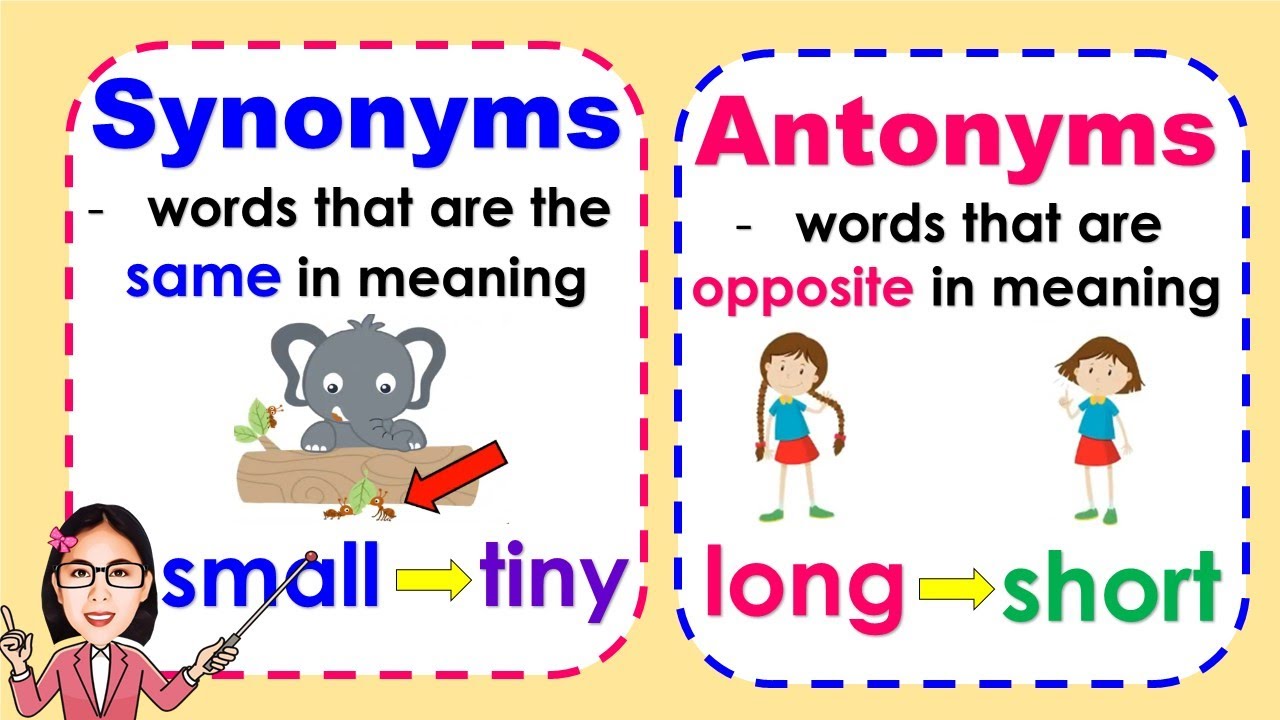
Antonyms are powerful tools for contrast, emphasis, and irony. They help writers draw sharp distinctions between ideas, emotions, or characters.
Antithesis is one of the most famous literary devices built on antonyms. Charles Dickens opened A Tale of Two Cities with an extended antithesis: the juxtaposition of the best and worst of times is built entirely on pairs of antonyms.
In everyday writing, antonyms help clarify meaning by showing what something is not. Rather than saying “The room was not bright,” you can say “The room was dim” — a more direct and vivid choice that uses an antonym to replace a negative construction.
Antonyms in Persuasive and Academic Writing
In academic and persuasive writing, antonyms sharpen arguments. They allow writers to set up clear contrasts between positions, highlight the stakes of an issue, and make comparisons that are immediately understandable.
For example, contrasting “freedom” with “oppression,” or “clarity” with “confusion,” creates a framework that helps readers follow the logic of an argument. Antonyms make abstract concepts more concrete through comparison.
Prefix-Based Antonyms: A Special Category
Many English antonyms are formed by adding a prefix to an existing word. This is one of the most productive ways the English language creates opposites.
Common prefixes that create antonyms include: un-, in-, im-, dis-, non-, anti-, and mis-. Each prefix carries a core meaning of negation or opposition.
| Original Word | Prefix | Antonym |
|---|---|---|
| happy | un- | unhappy |
| possible | im- | impossible |
| honest | dis- | dishonest |
| logical | il- | illogical |
| regular | ir- | irregular |
| fiction | non- | nonfiction |
| trust | mis- | mistrust |
| freeze | anti- | antifreeze |
Understanding prefix-based antonyms helps learners expand vocabulary quickly. When you know the base word and the prefix rules, you can predict and understand antonyms you have never seen before.
Synonyms vs Antonyms vs Homonyms vs Homophones
Students often confuse these four terms. Here is how they differ clearly.
Synonyms share the same meaning: “big” and “large.” Antonyms carry opposite meanings: “big” and “small.” Homonyms are words spelled and pronounced the same way but with different meanings: “bank” (financial) and “bank” (riverbank). Homophones are words pronounced the same but spelled differently: “bare” and “bear.”
| Term | Definition | Example |
|---|---|---|
| Synonym | Same or similar meaning | happy / joyful |
| Antonym | Opposite meaning | happy / sad |
| Homonym | Same spelling/sound, different meaning | bat (animal) / bat (sports) |
| Homophone | Same sound, different spelling | to / too / two |
These are all types of word relationships in the study of semantics. Knowing the difference between all four helps you navigate vocabulary questions in exams, writing, and everyday communication.
Contronyms: When a Word Is Its Own Antonym
A contronym (also called an auto-antonym or Janus word) is a fascinating edge case in antonym study. It is a single word that carries two opposite meanings.
“Clip” can mean to attach or to cut. “Dust” can mean to remove dust from a surface or to add a fine powder to something. “Sanction” can mean to permit or to penalize. “Cleave” can mean to split apart or to cling together.
Contronyms demonstrate that the relationship between words and their opposites is not always straightforward. Context is always the final guide to meaning.
Synonyms and Antonyms in Different Parts of Speech
Both synonyms and antonyms exist across all major parts of speech, not just adjectives. Writers often focus on adjective pairs, but the same principles apply to nouns, verbs, and adverbs.
Noun synonyms: joy / happiness / delight. Noun antonyms: joy / sorrow. Verb synonyms: begin / start / commence. Verb antonyms: begin / end. Adverb synonyms: quickly / rapidly / swiftly. Adverb antonyms: quickly / slowly.
When forming antonym pairs, always match parts of speech. Pairing “despaired” (a verb) with “hopeful” (an adjective) creates a non-parallel antonym pair. The correct pairing is either “despaired/hoped” (both verbs) or “despairing/hopeful” (both adjectives).
Why Some Words Have No Antonyms
Many words simply do not have antonyms because they refer to things that have no logical opposite. Concrete nouns are especially resistant to antonyms.
“Table” has no antonym. “Mountain” has no direct opposite. “Sandwich,” as Merriam-Webster points out, has many synonyms but no antonym at all. This is one reason why there are far fewer antonyms than synonyms in the English language.
Abstract and evaluative words (good, bad, happy, sad, fast, slow) tend to have clear antonyms because they describe qualities that naturally exist on a scale or in opposition.
Synonyms and Antonyms in Vocabulary Building
Learning vocabulary through synonym and antonym pairs is one of the most effective memory techniques available. Pairing a new word with a word you already know creates a stronger mental link.
When you learn “frugal” (meaning economical with money), learning its synonym “thrifty” reinforces the meaning. Learning its antonym “wasteful” or “extravagant” defines the boundaries of the concept. Together, these three words give you a complete picture of the semantic space around the original term.
Research in cognitive linguistics shows that learning words in relational clusters — including synonyms and antonyms — improves both retention and active recall compared to learning words in isolation.
Synonyms and Antonyms for ESL and EFL Learners
For English as a Second Language (ESL) and English as a Foreign Language (EFL) learners, synonyms and antonyms are core building blocks of communicative competence.
Synonyms help learners paraphrase and avoid repetition, both critical skills for IELTS, TOEFL, and Cambridge exams. Antonyms help learners understand contrast structures common in academic and professional English.
A practical classroom technique is to practice disagreeing with statements by using antonyms: “I like long films.” — “I prefer short films.” This forces active use of antonyms in a natural, communicative context.
Common Synonym Pairs with Examples in Sentences
Here are frequently used synonym pairs along with example sentences to show how each word fits naturally in context.
| Synonym Pair | Example Sentence 1 | Example Sentence 2 |
|---|---|---|
| big / large | She carried a big bag. | He ordered a large coffee. |
| begin / start | Let’s begin the meeting. | She started the engine. |
| fast / quick | He is a fast runner. | We need a quick decision. |
| smart / intelligent | She is a smart student. | He gave an intelligent answer. |
| tired / exhausted | I feel tired after work. | She was exhausted after the marathon. |
| sad / unhappy | He seemed sad yesterday. | She was unhappy with the result. |
| angry / furious | He was angry about the delay. | She was furious when she found out. |
Even in this small table, you can see that synonyms are not always perfectly interchangeable. “Exhausted” is a stronger, more intense version of “tired.” “Furious” suggests a more extreme emotion than “angry.” These nuances matter in good writing.
Common Antonym Pairs with Examples in Sentences
| Antonym Pair | Example Sentence 1 | Example Sentence 2 |
|---|---|---|
| hot / cold | The coffee was hot. | The night air was cold. |
| young / old | She has a young face. | He is the oldest player on the team. |
| love / hate | She loves classical music. | He hates early mornings. |
| open / close | Please open the window. | Close the door behind you. |
| rich / poor | He grew up in a rich neighborhood. | Many poor families struggled that winter. |
| arrive / depart | The train will arrive at noon. | The flight departs at 6 a.m. |
| loud / quiet | The music was too loud. | The library was very quiet. |
Synonyms and Antonyms on Standardized Tests
Synonym and antonym questions appear regularly on standardized tests including the SAT, GRE, ACT, IELTS, TOEFL, and various school-level assessments.
GRE verbal reasoning tests frequently present questions requiring students to identify words “most similar in meaning” (synonyms) or “most opposite in meaning” (antonyms) in the context of a sentence. The context-based format means that vocabulary knowledge alone is insufficient — you also need to understand nuance and word relationships.
Preparation strategies include: studying root words and prefixes, using flashcard sets organized by synonym/antonym clusters, and reading academic texts to encounter words in meaningful contexts rather than isolated lists.
How Synonyms and Antonyms Differ in Number
There is an important structural asymmetry between synonyms and antonyms: words generally have more synonyms than antonyms.
A word like “happy” can have dozens of synonyms: joyful, cheerful, content, pleased, elated, thrilled, delighted, blissful, and more. But its antonyms are far fewer: sad, unhappy, miserable, sorrowful.
This is because synonymy captures gradations and shades of a meaning (there are many ways to be happy), while antonymy captures a single opposing direction (the general opposite of happy is sad).
The Role of Context in Choosing Between Synonyms and Antonyms
Context is the single most important factor when selecting synonyms or antonyms. A word that works perfectly in one sentence may sound wrong in another, even if it is technically a synonym.
“The room was dim” and “The room was dark” are synonyms in many contexts. But “a dark sense of humour” works perfectly, while “a dim sense of humour” shifts the meaning entirely — “dim” here reads as describing low intelligence rather than the nature of the humour.
Always read the full sentence before selecting a synonym or antonym. Pay attention to tone, register (formal vs. informal), and the surrounding words that create the full meaning.
Synonyms and Antonyms in Literature and Rhetoric
Great writers have always exploited synonyms and antonyms for stylistic effect. In poetry, synonyms allow for careful control of sound and rhythm without changing meaning. Antonyms create dramatic tension, paradox, and irony.
Oxymorons are built from antonyms placed side by side: “bittersweet,” “deafening silence,” “living death,” and “clearly confused.” These pairings create a deliberate contradiction that forces the reader to think more deeply about the idea being expressed.
Chiasmus — the reversal of grammatical structures — often uses antonyms for rhetorical punch. “Ask not what your country can do for you; ask what you can do for your country” reverses both structure and meaning through antonym-like contrasts.
Building Your Vocabulary With Synonym and Antonym Practice
The most effective way to master synonyms and antonyms is through regular, active practice. Passive reading helps, but active application builds stronger retention.
Try rewriting a paragraph using at least three different synonyms for the most commonly repeated word. Then rewrite it again replacing every key adjective with its antonym — notice how the entire meaning and tone of the paragraph shifts. This exercise teaches both vocabulary and sensitivity to meaning at the same time.
Use a good thesaurus alongside a dictionary. The thesaurus provides the synonym or antonym options; the dictionary explains the precise meaning of each one. Together, they give you the full picture needed to make an informed word choice.
Frequently Asked Questions (FAQs)
Q1: What is the simplest way to explain the difference between synonyms and antonyms?
Synonyms are words with the same or similar meaning, like “big” and “large.” Antonyms are words with opposite meanings, like “big” and “small.”
Q2: Can a word be both a synonym and an antonym at the same time?
Yes, in relation to different words. All synonyms of “good” (excellent, wonderful) are simultaneously antonyms of “bad.” The relationship depends on the reference word.
Q3: Are there words that have no synonyms or antonyms?
Many concrete nouns have no clear antonyms (for example, “table” or “sandwich”). Some highly specific technical terms may also lack common synonyms in everyday language.
Q4: What is a contronym, and how does it relate to antonyms?
A contronym is a single word that carries two opposite meanings. “Dust” can mean to add dust or remove it. Contronyms are sometimes called auto-antonyms because a word acts as its own opposite.
Q5: How many types of synonyms are there?
There are three main types: absolute synonyms (identical meanings), partial synonyms (slightly different meanings), and near synonyms (related but not interchangeable in most contexts).
Q6: How many types of antonyms are there?
There are three main types: gradable antonyms (opposites on a spectrum, like hot/cold), complementary antonyms (either-or opposites, like alive/dead), and relational antonyms (context-dependent pairs, like teacher/student).
Q7: What is the difference between a synonym and a homonym?
A synonym shares the same meaning as another word. A homonym sounds or is spelled the same as another word but carries a completely different meaning.
Q8: How do prefixes create antonyms in English?
Prefixes like un-, in-, im-, dis-, non-, and ir- are added to the beginning of words to create their opposites. For example, “happy” becomes “unhappy,” and “possible” becomes “impossible.”
Q9: Why does the English language have more synonyms than antonyms?
Many concepts and objects have no logical opposite, so antonyms cannot be formed for them. Synonyms, however, can exist for almost any word because there are usually multiple ways to express the same idea.
Q10: How do synonyms and antonyms help in language learning and exams?
They expand vocabulary, improve writing variety, sharpen comprehension of meaning, and are directly tested on standardized exams like the GRE, SAT, IELTS, and TOEFL in questions asking for similar or opposite meanings.
Conclusion
What is the difference between synonyms and antonyms comes down to this: synonyms unite words through shared meaning, while antonyms separate them through opposition.
Both are essential tools for anyone who works with language, whether as a student, writer, teacher, or lifelong learner. Synonyms give your writing variety, prevent repetition, and let you fine-tune the exact shade of meaning you want to express.
Antonyms sharpen contrasts, clarify arguments, and add rhetorical power to both spoken and written communication.
Understanding the three types of synonyms — absolute, partial, and near — and the three types of antonyms — gradable, complementary, and relational — takes your language knowledge well beyond the basics.
Pair that with regular practice, a good thesaurus, and attention to context, and you will consistently choose the right words with confidence in every situation.