What Are Some Synonyms for Said? Easy Alternatives 2026
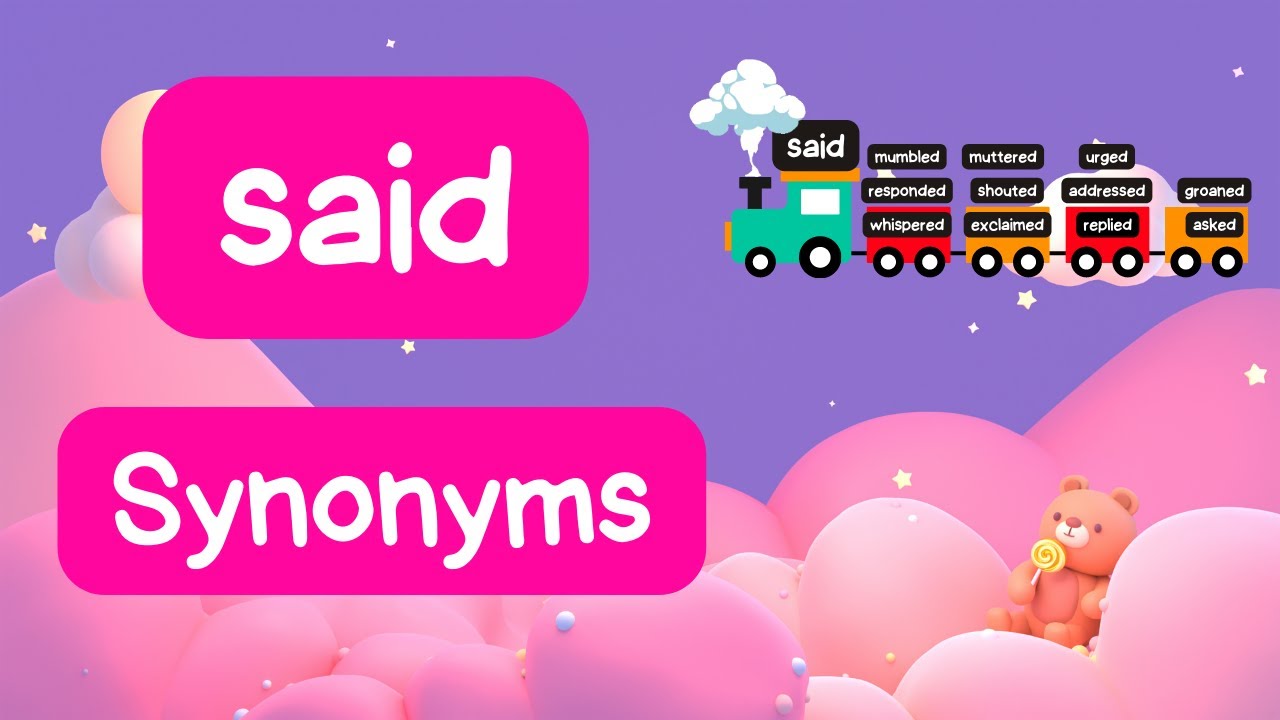
What are some synonyms for said is one of the most searched writing questions on the internet, and for good reason.
The word “said” appears in virtually every piece of fiction, academic writing, journalism, and storytelling ever written.
While “said” is useful, reliable, and often invisible to readers, repeating it over and over weakens the texture of your writing.
The right synonym adds emotion, pace, and character in a single word.
Why Writers Look for Synonyms for Said
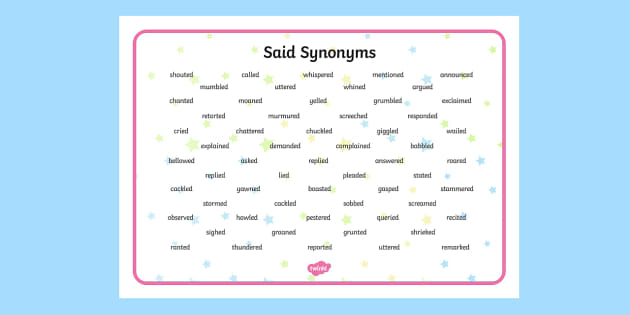
Every writer eventually hits the same wall. You are writing a conversation between two characters and you have typed “said” fifteen times in three paragraphs. It starts to feel mechanical and flat.
The desire to replace “said” with something more expressive is natural. But the goal is not to eliminate “said” entirely. The goal is to use the right word at the right moment — whether that is “said,” “whispered,” “snapped,” or an action beat with no tag at all.
Understanding why you are replacing “said” is the first step. Are you trying to show emotion? Describe how the character sounds? Establish pacing? Each reason leads to a different category of synonym.
What Is a Dialogue Tag and Why Does It Matter
A dialogue tag is the phrase that follows or precedes a line of spoken dialogue. It attributes the words to a specific speaker and sometimes tells the reader how those words were delivered.
The most common dialogue tags are “he said,” “she said,” “they said,” and “I said.” These tags are considered invisible — readers process them without consciously registering them, which keeps the focus on the actual dialogue.
Strong synonyms replace the invisible tag with a more expressive verb that carries emotional weight. Instead of simply telling you who spoke, they tell you how the words landed — and that distinction is what elevates good writing into great writing.
The Three Methods of Dialogue Attribution
Before diving into synonyms, understanding the three attribution methods gives you a complete toolkit for writing dialogue.
The Invisible Tag uses “said” or “asked.” Readers skip over these unconsciously. They keep the rhythm fast and the attention on the words being spoken. Most professional writers default to this method the majority of the time.
The Strong Synonym replaces “said” with a precise verb that shows emotion or delivery — whispered, snapped, laughed, murmured. Used sparingly, these add texture and character without distracting the reader.
The Action Beat removes the dialogue tag entirely and replaces it with a physical action. Instead of “Stop,” he said, you write “Stop.” He slammed his palm on the table. Action beats are powerful because they show rather than tell.
The most compelling dialogue uses all three methods in rotation. Leaning too heavily on any single one creates a monotonous reading experience.
What Are Some Synonyms for Said — The Master List by Category
The best way to use synonyms for “said” is to organize them by the emotional purpose they serve. Here is a comprehensive categorized master list.
Neutral and Everyday Alternatives
These synonyms carry minimal emotional charge and work as light substitutes when “said” feels too plain but you do not want to introduce strong emotion.
| Word | Tone | Example Use |
|---|---|---|
| replied | Neutral response | “I was there,” she replied. |
| responded | Neutral response | “We’ll see,” he responded. |
| stated | Formal, matter-of-fact | “The facts are clear,” she stated. |
| remarked | Casual observation | “It’s raining again,” he remarked. |
| noted | Observational | “You’re late,” she noted. |
| expressed | General | “I’m not sure,” he expressed. |
| commented | Casual | “Interesting choice,” she commented. |
| mentioned | Offhand | “He mentioned it earlier,” she said. |
| added | Supplementary | “And another thing,” he added. |
| continued | Ongoing speech | “But that’s not all,” she continued. |
Synonyms for Said That Show Quiet or Soft Delivery
These words replace “said” when a character is speaking softly, secretively, or gently. They tell the reader about volume and intimacy without requiring an adverb.
| Word | Delivery | Example Use |
|---|---|---|
| whispered | Very quiet, private | “Don’t tell anyone,” she whispered. |
| murmured | Low, gentle | “It’s okay,” he murmured. |
| breathed | Barely audible | “Help me,” she breathed. |
| sighed | Exhaled with words | “I don’t know anymore,” he sighed. |
| hushed | Deliberately quiet | “They’ll hear us,” she hushed. |
| mouthed | Silent lip movement | “Run,” he mouthed. |
| uttered | Soft, deliberate | “I’m sorry,” she uttered. |
| intoned | Low, musical | “We are gathered here,” he intoned. |
Synonyms for Said That Show Loud or Intense Delivery
These words are for moments of high emotion, conflict, urgency, or drama. Use them when the character’s volume or intensity is the most important thing to convey.
| Word | Delivery | Example Use |
|---|---|---|
| shouted | Loud, urgent | “Get out!” he shouted. |
| yelled | Loud, emotional | “That’s not fair!” she yelled. |
| screamed | High-pitched, intense | “Stop!” she screamed. |
| bellowed | Deep, booming | “Enough!” he bellowed. |
| roared | Powerful, angry | “I will not stand for this!” he roared. |
| thundered | Deep and imposing | “You are done here,” he thundered. |
| barked | Short, sharp | “Move!” she barked. |
| called | Projecting at distance | “Wait for me!” he called. |
| cried | Emotional outburst | “Please, no,” she cried. |
| shrieked | High and frantic | “There it is!” she shrieked. |
Synonyms for Said That Show Anger or Aggression
Angry dialogue tags shift the emotional temperature of a scene instantly. These words communicate hostility, frustration, and confrontation.
| Word | Tone | Example Use |
|---|---|---|
| snapped | Sharp, irritated | “I heard you the first time,” he snapped. |
| snarled | Aggressive, teeth-clenched | “Back off,” she snarled. |
| hissed | Low, venomous | “You lied to me,” he hissed. |
| spat | Contemptuous | “You disgust me,” she spat. |
| growled | Threatening | “Don’t push me,” he growled. |
| fumed | Barely controlled rage | “This is outrageous,” she fumed. |
| glared | Conveys look + tone | “Don’t you dare,” he glared. |
| scoffed | Dismissive | “As if,” she scoffed. |
| gritted | Forced through clenched jaw | “We had a deal,” he gritted. |
| snorted | Dismissive contempt | “That’s ridiculous,” she snorted. |
Synonyms for Said That Show Sadness or Vulnerability
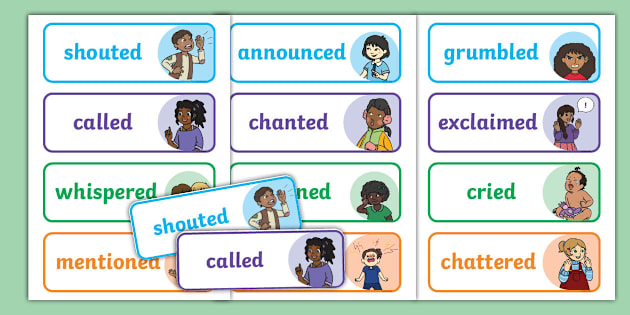
These words work in emotionally tender scenes, moments of grief, confession, or loss. They soften a line of dialogue without requiring extra description.
| Word | Tone | Example Use |
|---|---|---|
| sobbed | Crying while speaking | “I miss him so much,” she sobbed. |
| wept | Tearful delivery | “It’s all gone,” he wept. |
| choked | Emotional, struggling | “I tried,” she choked. |
| lamented | Sorrowful, regretful | “Those days are over,” he lamented. |
| mourned | Grieving | “We’ll never get it back,” she mourned. |
| whimpered | Small, weak | “Please don’t go,” he whimpered. |
| confessed | Vulnerable admission | “I was afraid,” she confessed. |
| admitted | Reluctant truth | “I didn’t know what to do,” he admitted. |
| pleaded | Desperate, emotional | “Give me one more chance,” she pleaded. |
| faltered | Unsteady delivery | “I thought you—” he faltered. |
Synonyms for Said That Show Happiness or Excitement
Positive emotion deserves expressive dialogue tags just as much as conflict. These words convey joy, enthusiasm, and delight.
| Word | Tone | Example Use |
|---|---|---|
| laughed | Amused, joyful | “That’s hilarious,” she laughed. |
| cheered | Celebratory | “We did it!” he cheered. |
| gushed | Enthusiastic overflow | “It was absolutely perfect,” she gushed. |
| exclaimed | Sudden excitement | “Look at that!” he exclaimed. |
| beamed | Radiant happiness | “You passed!” she beamed. |
| sang | Musical enthusiasm | “What a glorious day,” he sang. |
| chuckled | Mild amusement | “You’re something else,” he chuckled. |
| giggled | Light, playful | “Stop it,” she giggled. |
| crowed | Triumphant | “I knew it!” he crowed. |
| rejoiced | Deep happiness | “It’s over,” she rejoiced. |
Synonyms for Said That Show Hesitation or Nervousness
Nervous dialogue often breaks up the flow of speech. These words mimic the hesitations, pauses, and trembling that anxiety produces.
| Word | Tone | Example Use |
|---|---|---|
| stammered | Repetitive hesitation | “I—I didn’t mean to,” he stammered. |
| stuttered | Broken syllables | “W-wait,” she stuttered. |
| fumbled | Struggling for words | “It’s not what it looks like,” he fumbled. |
| hesitated | Pause before speaking | “I’m not sure,” she hesitated. |
| mumbled | Unclear, quiet | “Whatever,” he mumbled. |
| muttered | Low and indistinct | “This is a waste of time,” she muttered. |
| trailed | Words fading out | “Maybe we should—” he trailed. |
| wavered | Unsteady voice | “I thought I knew,” she wavered. |
| quavered | Trembling voice | “Is it safe?” he quavered. |
| stumbled | Awkward delivery | “The thing is—” she stumbled. |
Synonyms for Said That Show Persuasion or Authority
These words convey power, assertion, and influence. They work in scenes involving leadership, negotiation, teaching, or manipulation.
| Word | Tone | Example Use |
|---|---|---|
| declared | Bold, official | “This is not over,” he declared. |
| announced | Public, formal | “The decision has been made,” she announced. |
| insisted | Firm, persistent | “I will be there,” he insisted. |
| commanded | Authoritative order | “Stand down,” she commanded. |
| urged | Encouraging pressure | “You have to try,” he urged. |
| persuaded | Convincing tone | “It’s the only way,” she persuaded. |
| argued | Debate-style delivery | “That makes no sense,” he argued. |
| reasoned | Logical, calm | “If you think about it,” she reasoned. |
| advised | Guiding tone | “Take your time,” he advised. |
| asserted | Confident, firm | “I am right about this,” she asserted. |
Synonyms for Said for Questions and Curiosity
Question-based dialogue benefits from specific tags that distinguish simple queries from urgent demands, wonder, or sarcasm.
| Word | Tone | Example Use |
|---|---|---|
| asked | Standard question | “What time is it?” she asked. |
| questioned | Probing inquiry | “But why?” he questioned. |
| wondered | Curious, open | “Do you think it matters?” she wondered. |
| inquired | Formal question | “May I help you?” he inquired. |
| probed | Investigative | “What exactly happened?” she probed. |
| challenged | Confrontational question | “You think you can do it?” he challenged. |
| demanded | Urgent, intense | “Where did you go?” she demanded. |
| pressed | Insistent questioning | “Tell me the truth,” he pressed. |
| prompted | Encouraging response | “And then what?” she prompted. |
| quizzed | Testing, playful | “Name three capitals,” he quizzed. |
When to Use “Said” vs. a Synonym
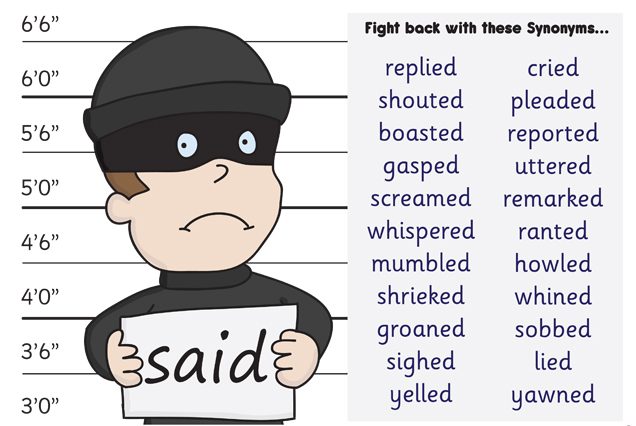
The most important skill is not knowing the synonyms — it is knowing when to use them and when to let “said” do the job quietly.
Use “said” when the identity of the speaker is the only information needed. Use a synonym when the delivery itself tells the reader something important that the dialogue alone cannot convey.
The rule applied by most professional authors is this: if you could cut the dialogue tag and lose nothing, cut it or replace it with an action beat. If the tag adds emotional information that is not already present in the spoken words, a strong synonym earns its place.
Overusing synonyms makes your writing feel theatrical and exhausting. Every word demanding attention creates noise, not music.
Words to Avoid as Dialogue Tags
Not every word belongs as a dialogue tag. Some words describe physical actions that cannot logically produce speech. Using them is a common beginner mistake that damages the credibility of your prose.
| Incorrect Usage | Why It Fails | Better Alternative |
|---|---|---|
| “Sure,” he smiled. | You cannot smile words | “Sure,” he said, smiling. |
| “Hello,” she nodded. | You cannot nod words | “Hello.” She nodded. |
| “Yes,” he laughed. | Laughing prevents clear speech | “Yes,” he said, laughing. |
| “Come in,” she gestured. | Gesturing is not speech | “Come in.” She gestured toward the chair. |
| “No way,” he shrugged. | Shrugging is not speech | “No way,” he said with a shrug. |
The fix is always the same: separate the physical action from the dialogue tag or restructure as an action beat.
Action Beats as an Alternative to Said
An action beat is a description of what a character is doing that replaces the dialogue tag entirely. It is one of the most powerful tools in fiction writing.
Action beats do three things simultaneously: they attribute the dialogue to a speaker, they show emotion through physical behavior, and they ground the scene in physical space. They do the work of three separate sentences in one efficient line.
“I’m leaving.” She grabbed her coat from the chair and walked to the door without looking back.
That single action beat tells you who is speaking, shows determination, conveys emotional distance, and moves the scene forward — all without a single dialogue tag.
How Many Times Should You Use Said vs. Synonyms
Professional editorial guidelines across the industry generally suggest that “said” should carry the majority of dialogue attribution — somewhere between 60 and 80 percent of all tags in a typical fiction scene.
Synonyms and action beats fill the remaining space. This ratio feels natural to readers because it mirrors the way we absorb speech in real life — most of the time the fact that someone spoke is unremarkable, but occasionally how they spoke is the most important information in the room.
| Attribution Type | Recommended Frequency | Purpose |
|---|---|---|
| “Said” / “asked” | 60–80% | Attribution without distraction |
| Strong synonyms | 10–20% | Emotional delivery, tone |
| Action beats | 10–20% | Physical grounding, show-not-tell |
| No tag (implied) | Occasional | Fast-paced exchange between two speakers |
Synonyms for Said in Academic and Professional Writing
Fiction is not the only context where “said” gets replaced. Academic writing, journalism, and business communication also use a range of reporting verbs to convey how a source expressed information.
In these contexts the alternatives are not about emotion — they are about accuracy and nuance in attribution.
| Word | Academic Context | Example |
|---|---|---|
| stated | Formal assertion | The researcher stated that results were inconclusive. |
| argued | Theoretical position | Smith argued that the model was flawed. |
| claimed | Unverified assertion | The report claimed no losses occurred. |
| noted | Observation | The author noted three exceptions. |
| suggested | Tentative proposal | Jones suggested further study was needed. |
| concluded | End of reasoning | The panel concluded the policy had failed. |
| reported | Factual account | Officials reported a 12% increase. |
| emphasized | Highlighted point | The director emphasized speed over accuracy. |
| maintained | Held position firmly | The defendant maintained his innocence. |
| acknowledged | Admitted | The CEO acknowledged the error publicly. |
Using precise reporting verbs in academic writing signals the writer’s critical engagement with sources. “Stated” is more neutral than “claimed,” and “claimed” carries more skepticism than “argued.” Each word sends a subtle signal about the credibility or completeness of the information.
Common Synonyms for Said — Quick Reference Chart
For writers who need fast access during a drafting session, here is a compact all-purpose reference organized alphabetically.
| A–F | G–M | N–S | T–Z |
|---|---|---|---|
| added | gasped | nagged | taunted |
| admitted | growled | noted | told |
| announced | grumbled | objected | urged |
| argued | gushed | offered | uttered |
| asked | hesitated | ordered | voiced |
| barked | hissed | pleaded | warned |
| breathed | insisted | pressed | wept |
| called | inquired | proclaimed | wondered |
| chided | interrupted | promised | yelled |
| cried | laughed | protested | — |
| declared | lamented | reasoned | — |
| demanded | mentioned | replied | — |
| expressed | murmured | retorted | — |
| faltered | mumbled | snapped | — |
Tips for Using Synonyms for Said Without Overwriting
The biggest mistake writers make with dialogue synonyms is using too many of them, too close together. This creates what editors call “purple prose” — writing that draws attention to itself rather than to the story.
A single scene with “she exclaimed,” “he protested,” “she fumed,” “he snapped,” “she retorted” in rapid succession becomes exhausting. The reader starts noticing the tags instead of the conversation.
The solution is restraint. Drop a strong synonym at a moment of emotional peak. Let “said” carry everything else. Trust the reader to feel the scene through the dialogue itself rather than through constant labeling.
Stephen King wrote in On Writing that adverbs with dialogue tags — “he said angrily,” “she said quietly” — are often a signal that the dialogue itself is not doing its job. Strong dialogue rarely needs an adverb. Strong synonyms rarely need a qualifier.
Synonyms for Said for Children’s Writing and ESL Learners
For young writers and ESL learners, the simplest and clearest synonyms are the most useful. These are the ten words that children and language learners can master first before expanding their vocabulary.
The beginner tier of “said” synonyms includes: asked, told, answered, called, whispered, shouted, laughed, cried, replied, and explained. These ten words cover the most common emotional situations in children’s fiction and ESL writing practice.
Each of these words is simple, intuitive, and almost universally understood across reading levels. Building from this base makes expanding into more complex synonyms much easier as the writer’s confidence grows.
Summary: What Are Some Synonyms for Said — At a Glance
Here is a final quick-reference summary of the most useful synonyms for “said” organized by the function they serve.
| Function | Best Synonyms |
|---|---|
| Neutral alternatives | replied, stated, remarked, noted, added |
| Quiet / soft delivery | whispered, murmured, breathed, sighed |
| Loud / intense | shouted, yelled, bellowed, roared, called |
| Anger / aggression | snapped, hissed, snarled, spat, growled |
| Sadness / vulnerability | sobbed, pleaded, confessed, admitted, choked |
| Happiness / excitement | exclaimed, laughed, cheered, gushed, crowed |
| Hesitation / nervousness | stammered, mumbled, muttered, faltered, trailed |
| Authority / persuasion | declared, insisted, commanded, argued, urged |
| Questions / curiosity | asked, questioned, demanded, pressed, probed |
| Academic / professional | stated, argued, claimed, noted, concluded |
Frequently Asked Questions (FAQs)
What are some synonyms for said in creative writing?
Common creative writing synonyms include whispered, snapped, murmured, declared, insisted, pleaded, and stammered. Use them when the delivery matters more than just the identity of the speaker.
Is it okay to use said in writing or should I always replace it?
It is absolutely fine — and often preferable — to use “said.” Professional authors use “said” for 60–80% of their dialogue tags because it is invisible to readers and does not distract from the actual conversation.
What are some strong synonyms for said that show anger?
The best angry synonyms for “said” are snapped, snarled, hissed, spat, growled, fumed, and barked. Use them when short, sharp, or threatening dialogue needs its delivery confirmed.
What words can replace said in an essay or academic writing?
Academic replacements for “said” include stated, argued, noted, claimed, suggested, concluded, reported, emphasized, maintained, and acknowledged. Each carries a different level of certainty or critical distance.
What is the difference between a dialogue tag and an action beat?
A dialogue tag follows the speech and names or describes the speaker — “she said,” “he whispered.” An action beat is a physical description that replaces the tag entirely and shows the reader what the character is doing while speaking.
What are beginner-friendly synonyms for said?
The easiest synonyms for young writers and ESL learners are asked, answered, told, called, whispered, shouted, laughed, cried, replied, and explained. These ten words cover most situations in simple storytelling.
Should I avoid adverbs with dialogue tags like said?
Most professional writers and editors recommend avoiding adverbs with dialogue tags — “she said quietly” — and instead choosing a single precise synonym like “whispered.” A strong verb does more work than a weak verb plus an adverb.
How many times can I use said on a single page?
There is no hard rule, but if “said” appears more than six to eight times on a single page, the pacing likely needs work. Mix in action beats and occasional strong synonyms to vary the rhythm and reduce visual repetition.
What are some synonyms for said that show nervousness or fear?
For nervous or fearful dialogue, use stammered, stuttered, mumbled, whispered, faltered, quavered, wavered, trailed, breathed, or hesitated. These all communicate unsteady or quiet delivery linked to anxiety.
Can I use words like smiled or nodded as dialogue tags?
No. Smiling, nodding, and gesturing are physical actions, not speech actions. Writing “she smiled” or “he nodded” as dialogue tags is a common grammatical error. Separate the action from the speech or use it as an action beat instead.
Conclusion
What are some synonyms for said is a question every writer asks at some point — and the answer is both simpler and more nuanced than a list of hundreds of words suggests.
The real skill is not memorizing synonyms. It is understanding when “said” works best, when a strong synonym earns its place, and when an action beat does the job better than any tag could.
The most compelling dialogue writing uses all three tools in deliberate rotation: the invisible “said,” the precise expressive synonym, and the physical action that shows what words alone cannot.
In 2026 and beyond, the writers who master this balance will produce dialogue that feels alive, real, and emotionally resonant on every page.
Keep this guide close, use the master lists as a reference during drafting, and remember the golden rule: your dialogue itself should carry most of the emotional weight. The tag is just the label on the door. What matters is what’s on the other side.