What Are Two Synonyms? Easy Guide for Writers 2026
What are two synonyms? They are two words that share the same or nearly the same meaning in a language. Writers use them every day to avoid repetition, improve clarity, and make their writing more engaging.
The two primary types of synonyms are absolute synonyms and partial synonyms.
Understanding the difference between them helps you choose the right word every single time. Whether you are writing a novel, a school essay, or a professional email, knowing how synonyms work gives you a significant advantage.
What Is a Synonym?
A synonym is a word that has the same or nearly the same meaning as another word. The term comes from the Ancient Greek word synónymos, where syn means “with” and onyma means “name.”
Synonyms exist in every part of speech. You can find them in nouns, verbs, adjectives, adverbs, and prepositions. For example, “happy,” “joyful,” and “elated” are all synonyms.
They all describe a positive emotional state, but each carries its own unique intensity and tone.
What Are Two Synonyms? The Core Answer
The two primary types of synonyms recognized by most linguists and writing experts are absolute synonyms and partial synonyms. These two categories sit at opposite ends of the meaning spectrum.
Absolute synonyms share the exact same meaning in all contexts. Partial synonyms share a similar meaning but differ in subtle ways.
Microsoft 365’s writing guide and Grammarly both confirm these two as the main categories every writer should understand.
Type 1: Absolute Synonyms
Absolute synonyms are two words that mean precisely the same thing and can be used interchangeably in any context without changing the meaning of a sentence.
They are the rarest form of synonym in the English language. Most linguists agree that truly absolute synonyms are difficult to find.
A simple real-life example: “couch” and “sofa” can almost always be swapped without any change in meaning.
Examples of Absolute Synonyms
| Word | Absolute Synonym |
|---|---|
| Couch | Sofa |
| Airman | Pilot |
| Automobile | Car |
| Begin | Start |
| Purchase | Buy |
| Lift | Elevator (in British English) |
| Autumn | Fall |
| Groundhog | Woodchuck |
These pairs can replace each other in most sentences without changing the intended message.
Why Absolute Synonyms Are Rare
Language naturally resists having two words that mean exactly the same thing. Over time, one word either falls out of use or develops a new shade of meaning.
Linguist Lyons stated that absolute synonymy is rarely possible and is generally accepted as a theoretical concept rather than a practical reality. Even “big” and “large,” which seem identical, differ in certain contexts.
For example, “I will tell my big sister” does not mean the same as “I will tell my large sister.” This subtle difference proves true absolute synonyms are uncommon.
When to Use Absolute Synonyms in Your Writing
Use absolute synonyms when you want to avoid repeating the same word within a short passage. If you have used “start” twice in a paragraph, switching to “begin” keeps the text fresh.
They are especially useful in creative writing, academic essays, and professional documents. Just make sure the context remains natural and the word fits the surrounding tone.
Never swap a word blindly. Always read the sentence aloud after substituting to confirm it still sounds right.
Type 2: Partial Synonyms
Partial synonyms are two words that share a similar but not completely identical meaning. They are the most common type of synonym you will encounter in everyday writing.
These words can often substitute for each other, but the meaning of the sentence will shift slightly. The change is usually subtle but can matter in precise or formal writing.
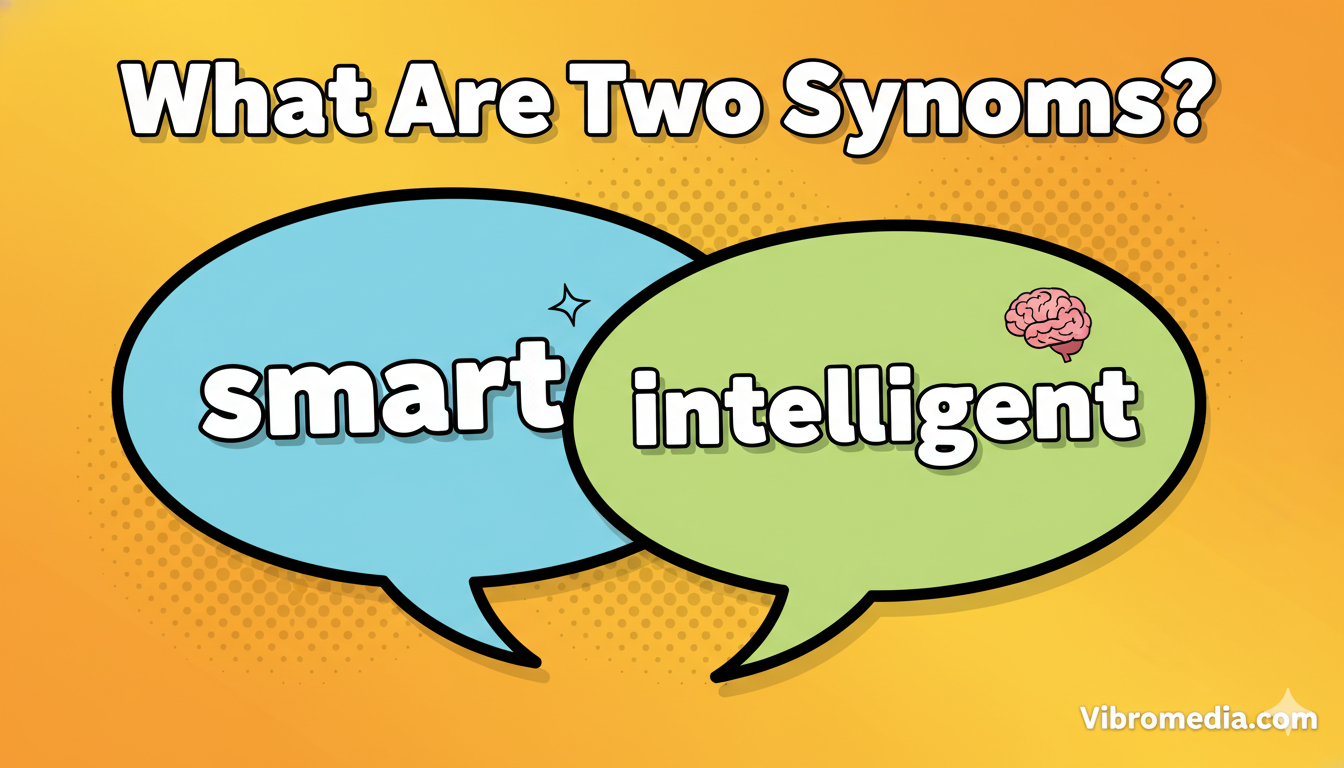
For example, “smart” and “intelligent” are partial synonyms. Both describe mental ability, but “intelligent” implies a deeper, more measured level of intellect.
Examples of Partial Synonyms
| Word | Partial Synonym | Key Difference |
|---|---|---|
| Happy | Joyful | Joyful implies a more intense feeling |
| Big | Large | Large suggests greater physical size |
| Car | Vehicle | Vehicle includes all forms of transport |
| Good | Excellent | Excellent implies a higher degree of quality |
| Sad | Melancholy | Melancholy has a deeper, lingering tone |
| Thin | Slender | Slender carries a more positive connotation |
| Old | Ancient | Ancient suggests extreme age |
| Angry | Furious | Furious implies a much stronger emotion |
| Tired | Exhausted | Exhausted is far more intense |
| Cold | Freezing | Freezing implies an extreme temperature |
Choosing between partial synonyms is one of the most important skills a writer can develop.
Why Partial Synonyms Matter for Writers
Every partial synonym adds a layer of nuance. Choosing “slender” instead of “thin” instantly tells the reader you are describing something elegant rather than just narrow.
Grammarly’s writing guide explains that partial synonyms differ in degree, scope, or specific type. One word might be a broader category while the other is a specific subset.
This difference shapes tone, clarity, and even the emotional impact of your writing on the reader.
How to Use Partial Synonyms Correctly
Always consider the connotation before choosing a partial synonym. Connotation is the emotional weight or feeling a word carries beyond its literal definition.
For instance, “childish” and “youthful” both relate to children. But “childish” usually carries a negative judgment while “youthful” is almost always positive.
Read the full sentence, consider your audience, and choose the word whose connotation matches your intended message.
The Third Type: Near Synonyms (Bonus)
While the two primary types are absolute and partial, many writing guides now recognize a third category called near synonyms.
Near synonyms are words that are related in meaning but are not directly interchangeable. They share a conceptual connection without being truly equivalent.
For example, “run” and “sprint” are near synonyms. Both describe movement on foot, but “sprint” implies maximum speed over a short distance.
Examples of Near Synonyms
| Word | Near Synonym | Difference |
|---|---|---|
| Hot | Scorching | Scorching implies extreme, uncomfortable heat |
| Run | Sprint | Sprint implies maximum speed |
| Talk | Lecture | Lecture implies formal, one-way communication |
| Look | Stare | Stare implies intensity or fixation |
| Walk | Trudge | Trudge implies difficulty or reluctance |
Near synonyms give writers the most expressive flexibility. They are also the most commonly misused.
Absolute vs Partial vs Near Synonyms: Side-by-Side Comparison
| Feature | Absolute Synonyms | Partial Synonyms | Near Synonyms |
|---|---|---|---|
| Meaning | Identical | Very similar | Related but distinct |
| Interchangeable? | Yes, in most contexts | Yes, with slight change | Rarely interchangeable |
| Common in English? | Rare | Very common | Very common |
| Example Pair | Sofa / Couch | Happy / Joyful | Run / Sprint |
| Risk of Misuse | Low | Medium | High |
| Best Used For | Avoiding exact repetition | Adding nuance | Expressing fine distinctions |
Understanding this table helps writers select the right synonym with confidence every time.
Why Knowing the Two Types of Synonyms Matters
Mastering the two primary synonym types directly improves your writing quality. It helps you avoid repetition, sharpen your word choice, and express ideas with greater precision.
Poor word choice is one of the most common grammar-related writing mistakes. Swapping a word for the wrong type of synonym creates confusion or shifts the tone unintentionally.
When you understand whether your synonym is absolute or partial, you make a conscious and informed writing decision.
Synonyms Improve Vocabulary
Learning synonyms is one of the most effective ways to expand your vocabulary. When you learn that “colossal” is a synonym of “big,” the new word becomes easier to remember.
Your vocabulary grows not in isolation but through connections. Every synonym pair you learn adds two words to your mental dictionary at once.
This paired learning approach is recommended by language teachers and vocabulary coaches alike.
Synonyms Prevent Repetition
Using the same word repeatedly within a short passage bores the reader. Synonyms solve this problem instantly.
A writer describing an amazing painting can cycle through “brilliant,” “stunning,” “incredible,” and “breathtaking” to keep the passage alive. Each word reinforces the same idea while keeping the reader engaged.
This technique is especially powerful in long-form content, essays, blog posts, and fiction writing.
Synonyms Add Emotional Depth
The right synonym does more than replace a word. It adds emotional texture to your writing.
Saying someone walked “slowly” is functional. Saying they “trudged” tells the reader the person was tired, burdened, or reluctant. That single word change transforms the sentence.
This is why professional writers treat their thesaurus as one of their most important tools.
How to Find Two Synonyms for Any Word
Finding the right synonyms is easier than ever in 2026. Here are the best methods available to writers today.
Use a Thesaurus
A thesaurus is a reference book or online tool specifically designed for finding synonyms. It is the oldest and most reliable method.
Online thesauruses like Merriam-Webster, Thesaurus.com, and Collins Dictionary offer instant synonym lists organized by meaning and context. Most entries include example sentences to help you choose correctly.
Always check the example sentences before selecting a synonym from a thesaurus.
Use Your Word Processor
Microsoft Word and Google Docs both offer built-in synonym tools. In Word, simply right-click any word and hover over Synonyms in the menu.
A short list of alternatives will appear instantly. If you need more options, click Thesaurus for the full list.
This method is quick and ideal for writers who do not want to leave their document.
Use AI Writing Tools
In 2026, AI writing assistants can generate accurate synonyms in seconds with a single prompt. Tools like Microsoft Copilot, Grammarly, and others offer contextual synonym suggestions.
AI tools consider the surrounding sentence when suggesting synonyms, which reduces the risk of choosing a word with the wrong connotation.
Always verify AI suggestions against your own judgment before using them in formal writing.
Read Widely
Regular reading is the most natural way to build a synonym vocabulary. The more genres and styles you read, the more synonym pairs you absorb passively.
Exposure to different writers introduces you to word choices you would never find by searching a thesaurus. This method takes longer but produces deeper, more intuitive word knowledge.
Even reading for thirty minutes a day consistently expands your synonym bank over time.
Common Mistakes Writers Make with Synonyms
Using synonyms incorrectly is a common problem, especially for newer writers. Here are the most frequent mistakes to avoid.
Mistake 1: Overusing Synonyms
Using too many synonyms in one sentence makes writing sound forced and confusing. If every other word is a rare substitute, readers struggle to follow the meaning.
Keep your language natural. Use synonyms selectively, not as a constant replacement strategy for every common word.
Plain language is often more powerful than a parade of sophisticated substitutes.
Mistake 2: Ignoring Connotation
Treating all synonyms as perfectly equal is a serious mistake. Every synonym carries its own emotional weight.
Replacing “slim” with “skinny” might seem harmless, but “skinny” often carries a slightly negative judgment while “slim” is neutral or positive. That difference can change how a reader feels about your subject.
Always check the connotation of a synonym before using it in an important piece of writing.
Mistake 3: Using Synonyms in the Wrong Register
Some synonyms belong to formal writing while others fit casual speech. Using “commence” instead of “start” in a casual text message sounds unnatural.
Match the register of your synonym to the context and audience. Formal documents call for formal synonyms. Casual writing benefits from conversational alternatives.
This awareness is what separates skilled writers from beginners.
Mistake 4: Swapping Without Checking Context
A synonym that works in one sentence may not work in another. “Slid” and “skidded” both describe movement over a slippery surface, but they suggest very different levels of control.
Always read the full sentence after substituting a synonym. If it sounds odd or changes the intended meaning, revert to the original or try a different option.
Context is king when it comes to synonym selection.
Synonyms Across Different Parts of Speech
Synonyms exist across all word categories in English. Here is a quick reference for each part of speech.
| Part of Speech | Word | Two Synonyms |
|---|---|---|
| Noun | Home | House / Residence |
| Verb | Look | See / Observe |
| Adjective | Beautiful | Attractive / Gorgeous |
| Adverb | Quickly | Rapidly / Swiftly |
| Preposition | About | Concerning / Regarding |
| Noun | Friend | Companion / Ally |
| Verb | Help | Assist / Aid |
| Adjective | Brave | Courageous / Bold |
| Adverb | Quietly | Softly / Silently |
| Verb | Speak | Talk / Communicate |
This table shows that no matter what type of word you are writing, there are synonyms available to help.
Synonyms in Literature and Poetry
Writers have used synonyms throughout literary history to create rhythm, avoid repetition, and deepen meaning.
William Wordsworth used “crowd” and “host” as synonyms in his famous poem “I Wandered Lonely as a Cloud.” By using two words with the same meaning, he painted a richer and more vivid image of the daffodils he saw.
Charles Dickens used antonyms and synonyms together in the opening of A Tale of Two Cities to create one of literature’s most memorable sentences. The technique of pairing and contrasting synonyms gives prose its depth and music.
Synonyms and SEO Writing in 2026
For content creators and bloggers in 2026, synonyms are not just a literary tool. They are an SEO strategy.
Search engines like Google use NLP (Natural Language Processing) to understand the full semantic context of a page. Using synonyms, LSI keywords, and related terms signals to Google that your content is comprehensive and authoritative.
A blog post about “happy” that also includes “joyful,” “content,” “pleased,” and “elated” ranks better than one that uses only the exact keyword. Synonyms literally help your content perform in search results.
This is why professional SEO writers treat synonym research as a core part of content strategy.
Frequently Asked Questions (FAQs)
What are two synonyms in English grammar?
The two primary types of synonyms are absolute synonyms and partial synonyms. Absolute synonyms share an identical meaning while partial synonyms share a similar but slightly different meaning.
What is an example of two synonyms?
“Sofa” and “couch” are absolute synonyms. “Happy” and “joyful” are partial synonyms. Both pairs are commonly used examples in English grammar and writing guides.
What is the difference between absolute and partial synonyms?
Absolute synonyms can replace each other in any sentence without changing the meaning. Partial synonyms shift the meaning slightly when substituted, often due to differences in degree, connotation, or scope.
Are there really only two types of synonyms?
The two primary types are absolute and partial. Many modern linguists and writing tools also recognize a third category called near synonyms, which are related in meaning but not truly interchangeable.
How do I use two synonyms correctly in writing?
Check the connotation and context of each synonym before using it. Always read the sentence aloud after substituting a word to confirm the meaning and tone remain accurate and natural.
Why are absolute synonyms rare in English?
Language naturally eliminates redundancy. Over time, two words with identical meanings either develop different nuances or one falls out of use, making true absolute synonyms uncommon in modern English.
What tools help me find two synonyms quickly?
The fastest tools are online thesauruses like Merriam-Webster and Thesaurus.com, the built-in synonym feature in Microsoft Word, and AI writing assistants. All provide synonym suggestions within seconds.
Can synonyms hurt my writing if used incorrectly?
Yes. Using a synonym with the wrong connotation, register, or context can confuse readers or shift your intended meaning. Always verify a synonym’s exact usage before replacing the original word.
What is the role of synonyms in SEO writing?
Search engines use semantic analysis to rank content. Using synonyms, related terms, and LSI keywords tells Google your content is comprehensive, which improves search visibility and ranking potential.
How many synonyms should I use per paragraph?
There is no fixed number, but the goal is natural variation. Avoid repeating any single word more than twice in a paragraph, and only substitute synonyms when the replacement genuinely fits the context.
Conclusion
What are two synonyms? They are the two most important word relationship tools in the English language: absolute synonyms and partial synonyms.
Absolute synonyms let you swap words freely without changing meaning. Partial synonyms let you add nuance, depth, and precision to your writing.
Both types are essential for every writer in 2026, from beginners to professionals. Using synonyms correctly prevents repetition, expands vocabulary, adds emotional depth, and even improves SEO performance.
The key is to always check connotation, match your register, and read the sentence aloud after substituting. Language is your most powerful tool. The more you understand how synonyms work, the more confidently and precisely you will wield that tool in every piece of writing you create.