Deal or No Deal Island: Tips & Strategies 2026

Deal or No Deal Island is one of the most talked-about hybrid reality game shows in recent TV history, blending the classic briefcase drama of Deal or No Deal with the physical grit and social warfare of Survivor.
The NBC series ran for two thrilling seasons between February 2024 and March 2025, with prize money reaching record-breaking levels.
Whether you are a new fan catching up on both seasons, a strategy lover breaking down every move, or someone hoping to compete in a potential revival — this complete guide covers everything you need to know.
What Is Deal or No Deal Island?

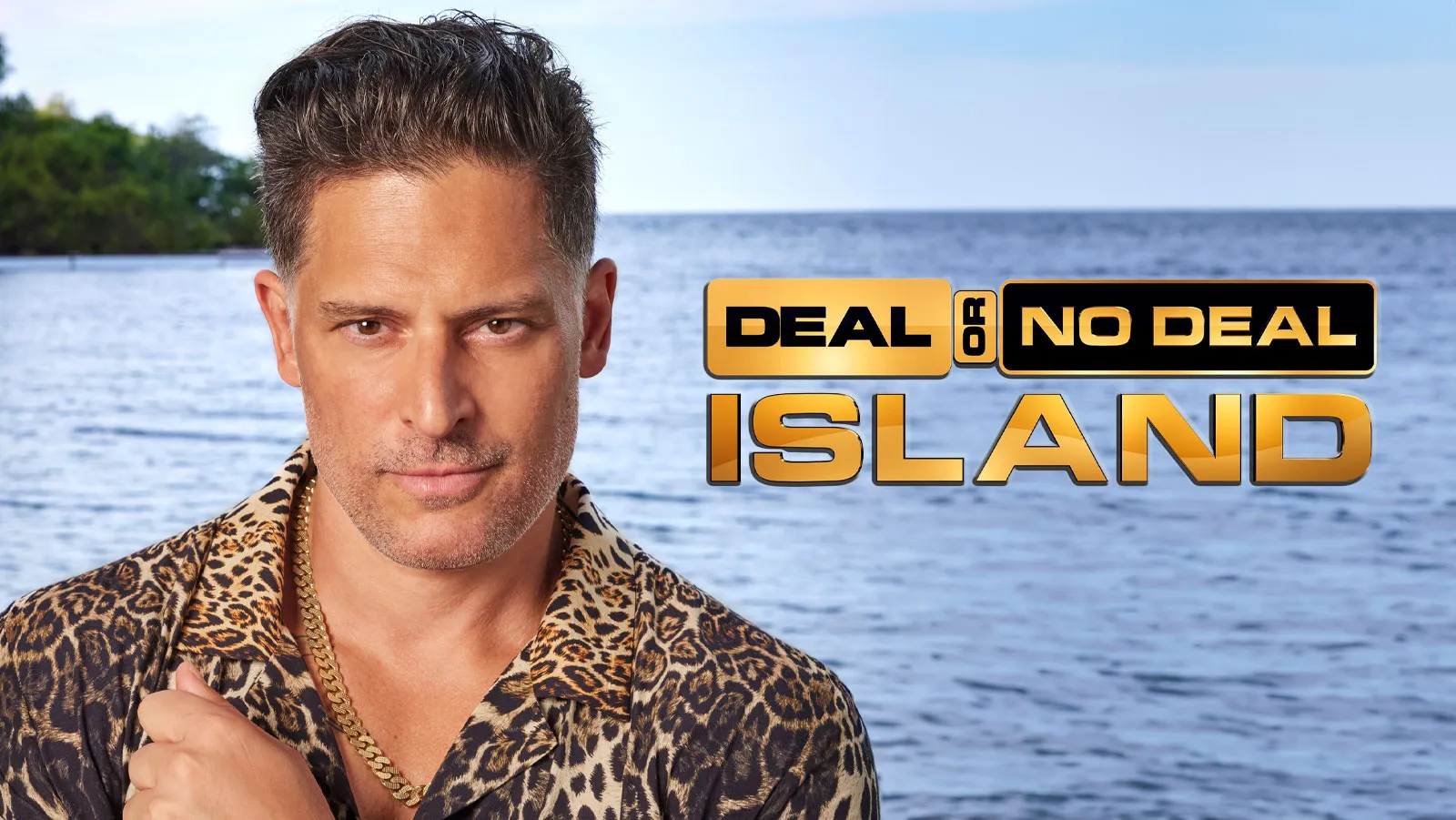
Deal or No Deal Island is an American reality competition series that aired on NBC from February 26, 2024, to March 25, 2025. It is hosted by Joe Manganiello and was executive produced by Howie Mandel, the original host of the classic Deal or No Deal.
The show is a spin-off that takes the iconic briefcase game and throws it into a wild tropical setting. Instead of standing on a studio stage, contestants fight through physical challenges on the Banker’s private island in the Panama Islands to retrieve hidden briefcases loaded with cash.
The series was cancelled by NBC in December 2025 after two seasons. However, Endemol Shine North America is actively shopping a revival of the original Deal or No Deal format, keeping the franchise very much alive.
How Does Deal or No Deal Island Work? Full Rules Explained
Understanding the rules of Deal or No Deal Island is the first step to understanding the strategy behind every move. The format is more layered than it first appears.
The Excursion (Physical Challenge)
Each episode begins with an Excursion — a physical team or individual challenge set across the island. Contestants must locate and retrieve briefcases hidden throughout the terrain, which can include mud, ocean platforms, jungle obstacles, and more.
Every briefcase carries a different cash value. Some challenges also include “red cases,” which can either let a player steal someone else’s briefcase or contain a minimal cash amount — adding a layer of sabotage to every round.
The contestant or team with the highest combined case value earns immunity for that episode. The two contestants holding the lowest-valued cases are placed at risk of elimination.
The Banker’s Temple
The player who wins the Excursion chooses which at-risk contestant will face the Banker’s Challenge, known as the Banker’s Temple. At the Temple, the chosen player plays a standard game of Deal or No Deal against the Banker.
A “Good Deal” means the player accepts an offer worth more than the value in their chosen case, or they play through every round and their case value ends up being higher than the Banker’s final offer. A Good Deal means the player survives and earns the power to eliminate a fellow contestant.
A “Bad Deal” means the player accepted an offer lower than what was in their case. A Bad Deal results in immediate elimination from the game.
The Prize Pot (Final Case)
Every offer accepted at the Banker’s Temple — win or lose — is added to a growing group prize pot called the Final Case. This pot builds throughout the season. The last player standing gets to play one final high-stakes game of Deal or No Deal for the entire accumulated sum.
In Season 1, the Final Case reached nearly $14 million. In Season 2, it reached just over $12 million.
The Banker’s Bonus Case
At the Banker’s discretion, if a player sets a record-breaking offer, the Banker may offer a personal cash bonus. Accepting this bonus often means leaving the game immediately — a brutal but tempting choice that tests every player’s greed vs. self-preservation instinct.
Deal or No Deal Island: Season-by-Season Breakdown
| Season | Premiere Date | Episodes | Winner | Final Prize Won | Banker |
|---|---|---|---|---|---|
| Season 1 | Feb 26, 2024 | 12 | Jordan Fowler | $1,230,000 | Howie Mandel |
| Season 2 | Jan 7, 2025 | 12 | David Genat | $5,800,000 | Chrissy Teigen |
Season 1 featured 13 contestants including Boston Rob Mariano (Survivor legend) and Claudia Jordan (original Deal or No Deal case model). Jordan Fowler won the season finale, playing for a top case worth $13,857,000 and accepting a deal of $1,230,000 — with only $1,000 inside her selected case.
Season 2 brought back 14 players including David Genat, Parvati Shallow, and Dr. Will Kirby. Genat won the season finale, playing for a top prize of $12,232,001 and dealing at $5,800,000 — with just $75 in his case. Host Joe Manganiello confirmed Season 2’s winner used a strategy he called “psycho” — refusing every deal throughout the game while clearing every other case off the board.
Deal or No Deal Island Key Gameplay Concepts
Before diving into strategy, it helps to understand the core terms every serious viewer and potential player needs to know.
| Term | Definition |
|---|---|
| Excursion | The physical island challenge held each episode |
| Briefcase / Case | Hidden container with a secret cash value |
| Red Case | Special case allowing player to steal another’s case or holding minimal cash |
| Banker’s Temple | The Deal or No Deal game played for elimination each episode |
| Good Deal | Accepting an offer higher than the case value — you survive |
| Bad Deal | Accepting an offer lower than the case value — you are eliminated |
| Immunity | Protection from being sent to the Banker’s Temple, earned by winning the Excursion |
| Final Case | The growing prize pot played for by the last contestant standing |
| Banker’s Bonus Case | A personal cash bonus offered by the Banker, often requiring immediate exit |
| Gaming Liaison | Joe Manganiello’s role — intermediary between the Banker and contestants |
Deal or No Deal Island Strategy Tips: How to Actually Win
The combination of physical challenges, social gameplay, and high-stakes decision-making makes Deal or No Deal Island uniquely demanding. Here are the most important strategies broken down by phase of the game.
Tip 1: Win the Excursion — Immunity Is Everything
The single most valuable position in any episode is immunity. The player who wins the Excursion cannot be sent to the Banker’s Temple and holds the power to decide who faces elimination.
This means your priority in every physical challenge should be securing the highest-value case, not necessarily finishing the challenge fastest. As Season 2’s David Genat explained, every challenge has a strategic layer — it is not just physical. You have to think about what you are grabbing at every step.
Tip 2: Understand the Excursion Challenge Structure
Unlike Survivor challenges, which David Genat noted are “linear” — from Point A to Point B — Deal or No Deal Island challenges require constant in-the-moment decision-making. You are choosing which cases to go for, whether to let a teammate take a risk, and when to use a red case to steal or sabotage.
Physical fitness helps, but reading the challenge terrain and making smart case selection calls matters just as much. Players who combine athleticism with strategic thinking — like Parvati Shallow and Genat in Season 2 — last the longest.
Tip 3: Build Alliances Early But Keep Them Hidden

Social strategy on Deal or No Deal Island mirrors Survivor. Alliances form from day one and strongly influence who gets sent to the Banker’s Temple week after week.
The player with immunity chooses who faces elimination, not the group. This means whoever controls the immunity winner controls the game. Forming quiet, durable alliances with strong physical players keeps you out of the Temple chair for longer.
Dr. Will Kirby in Season 2 famously formed the first alliance in Big Brother history — he applied the same thinking to Deal or No Deal Island, aligning early and often to avoid becoming a target.
Tip 4: Know When to Make a Good Deal vs. Play Through
When you are sitting in the Banker’s Temple, your goal is not to win big — it is to survive. A Good Deal, meaning an offer higher than your case value, keeps you in the game.
However, every accepted offer also gets added to the Final Case prize pot. Players who accept early and accept high contribute more to the pot — meaning the last surviving player benefits from your deals even if you get eliminated.
The tension is real: accept a large deal to stay alive, or push the Banker to increase the offer and risk going home. Understanding your personal risk tolerance before entering the Temple is critical.
Tip 5: Evaluate the Banker’s Offer Mathematically
The Banker’s offer in any given round of Deal or No Deal can be roughly compared to the expected value of remaining cases on the board. If the offer is below 80% of the average remaining case values, statistically, playing on is favorable. If it is above that average, taking the deal is a strong move.
Most contestants play emotionally rather than mathematically. The players who stay cool, track the board, and compare offers to remaining averages consistently make better decisions under pressure.
Tip 6: Treat the Red Case as a Political Tool
When a red case appears in an Excursion, it is not just a physical item — it is a power move. Using a red case to steal a high-value briefcase from a competing player directly changes their standing in the game.
Targeting a strong player’s briefcase puts them at risk without any confrontation. It is one of the cleanest ways to use the Excursion phase as a social strategy tool rather than just a physical one.
Tip 7: Never Accept the Banker’s Bonus Case Too Early
The Banker’s Bonus Case is a personal cash offer that tempts players into leaving the competition with guaranteed money. It sounds appealing — but accepting it means walking away from potentially millions in the Final Case prize.
Unless the bonus offer is genuinely life-changing and you have already reached your personal financial goal, holding out and continuing to build the pot is nearly always the better decision from a strategic standpoint.
Tip 8: Control Your Social Perception
How other players perceive you shapes every vote about who gets sent to the Temple. Being seen as too strong physically makes you a threat. Being too visible strategically makes you a target.
Parvati Shallow in Season 2 actively managed her reputation from day one — asking players not to reveal her Survivor history to others, blending charm with deception, and pulling people in through personal connection rather than dominance.
The goal is to appear useful but not unstoppable. Players who master this balance stay in the game longest.
Tip 9: Watch the Board During the Temple — Every Case Counts
When watching the Banker’s Temple play out as a spectator (if you hold immunity), pay close attention to the remaining case values after each round. The higher-value cases removed from the board directly affect the Banker’s offer curve for future rounds.
This information gives you a strategic advantage when it is your turn at the Temple. Players who observe carefully during others’ games develop intuition for when the Banker is likely to make strong or weak offers.
Tip 10: Build Goodwill Before the Final Stretch
In the final episodes of both seasons, eliminated contestants returned as factors in challenges. In Season 2’s penultimate episode, former players directly influenced which finalists received help — and which were sabotaged.
Players who treated others well throughout the season received valuable assistance in the endgame. Players who burned bridges found themselves sabotaged by former allies at the worst possible moment. Goodwill is a currency that compounds over time on this show.
Season 1 Strategy Breakdown: What Jordan Fowler Did Right
Jordan Fowler won Season 1 with a final payout of $1,230,000. Her case had only $1,000 inside it, meaning she accepted the Banker’s offer at the perfect moment — walking away with more than 1,000 times the value of her own case.
Fowler’s strategy combined quiet social navigation with sharp in-the-moment decision-making at the Temple. She avoided becoming a primary target during the middle phases of the game and capitalized when rivals were eliminated around her.
Her final Temple game had a top case worth $13,857,000 — one of the biggest numbers in Deal or No Deal history. The fact that she dealt at $1.23 million rather than pushing for more reflects either smart risk management or a moment of deliberate caution that still resulted in a life-changing sum.
Season 2 Strategy Breakdown: What David Genat Did Right
David Genat won Season 2 with a final payout of $5,800,000 — the biggest cash prize in network television history at the time. Joe Manganiello called his approach “psycho” — he never accepted a deal throughout the entire game, eliminating case after case until only the highest values remained.
Genat was dominant in physical challenges throughout the season, regularly securing immunity or high-value briefcases. His background as a two-time Australian Survivor player gave him a complete toolkit — physical, social, and psychological.
His final Temple was described by viewers and the production team as one of the most emotionally intense moments in the show’s history. Playing for over $12 million with just $75 in his case, Genat accepted $5.8 million in a performance that left no money on the table given his risk position.
Deal or No Deal Island vs. Other Reality Shows: Where It Fits
| Feature | Deal or No Deal Island | Survivor | Big Brother | The Traitors |
|---|---|---|---|---|
| Physical Challenges | Yes — every episode | Yes — key mechanic | Limited | Minimal |
| Social Strategy | Yes — alliances critical | Yes | Yes | Yes — core mechanic |
| Game Theory / Probability | Yes — Banker offers | No | No | Partial |
| Luck Component | High — case values | Low | Low | Low |
| Celebrity Players | Mixed cast | Occasional | Occasional | Frequent |
| Prize Type | Cash payout | Fixed prize | Fixed prize | Split prize |
| Viewer Engagement | Very High | Very High | High | High |
Deal or No Deal Island sits in a unique category. It demands physical performance, social strategy, and mathematical decision-making all at once. Few other formats require players to excel across all three in a single episode.
The Banker: A Key Character in Every Episode
The Banker is one of the most important figures in Deal or No Deal Island, even when unseen. The Banker sets offer amounts, plants twists, and raises stakes whenever the game gets comfortable.
In Season 1, the Banker was revealed at the finale to be Howie Mandel — the original host of Deal or No Deal. His identity had been one of the most closely guarded secrets of the season.
In Season 2, the Banker was female for the first time in the franchise’s history. On March 21, 2025, it was revealed to be Chrissy Teigen — a former Deal or No Deal model on the original series and wife of John Legend. The reveal generated significant viewer reaction online.
The Banker’s offers are not random. They are calibrated to psychological pressure points. Offers tend to be more aggressive (closer to or above expected value) when the board still contains high-value cases, and more conservative when risk is high. Reading the Banker’s pattern over multiple episodes is one of the highest-value skills a contestant can develop.
Who Should Watch Deal or No Deal Island?
Deal or No Deal Island appeals to a specific kind of viewer — someone who enjoys the social dynamics of Survivor but wants the added tension of genuine financial stakes in every episode.
Fans of classic Deal or No Deal get the briefcase drama they love, but with individual personalities and stories attached to every elimination. Reality TV veterans appreciate the alliance gameplay. Casual viewers can follow the money without needing to track complex social webs.
The show ran for only two seasons, which means binge-watchers can experience the complete story — from the first muddy Excursion in the Panama jungle to David Genat’s record-breaking finale — in a single weekend.
Where to Watch Deal or No Deal Island
Both seasons of Deal or No Deal Island are available to stream on Peacock. New episodes originally premiered on NBC on Monday nights at 10 p.m. ET/PT during Season 1, moving to Tuesday nights for Season 2 at 8 p.m. ET/PT.
For international viewers, availability varies by region and platform. The show is also available to purchase episode-by-episode on major digital platforms including Amazon Prime Video and Apple TV.
Will There Be a Season 3 of Deal or No Deal Island?
The series was officially cancelled by NBC in December 2025 after two seasons. The cancellation was reported on December 2, 2025, ending the island format of the franchise.
However, Endemol Shine North America, the production company behind the show, confirmed it is actively shopping a revival of the original Deal or No Deal format. This suggests the franchise will continue in some form, though the island setting and Survivor-style mechanics may not return.
No official Season 3 or revival announcements have been made as of April 2026. Fans interested in the franchise should follow NBC and Peacock for any updates on a potential return.
Lessons From Deal or No Deal Island for Real-Life Decision Making
Beyond entertainment, Deal or No Deal Island offers a fascinating look at how humans handle risk, greed, and pressure in real time. Every Temple game is a live experiment in behavioral economics.
One key insight from watching both seasons is that players who enter the Temple with a pre-set walk-away number — an offer they have decided in advance they will accept — perform more consistently than those who improvise. Having a plan before pressure hits is more valuable than making decisions in the moment.
Another lesson is that avoiding elimination early is more important than making big moves. Players who stay safe through the middle episodes accumulate social capital and survive long enough to actually compete for the Final Case. Early heroics rarely pay off if they make you a target.
The show also reveals how powerful loss aversion is under real stakes. Players hold onto cases they know logically they should swap, simply because letting go of something feels like losing. The Banker exploits this tendency with every single offer.
Frequently Asked Questions (FAQs)
What is the basic premise of Deal or No Deal Island?
Contestants compete in physical island challenges to retrieve hidden briefcases containing cash, then face the Banker in a high-stakes game where a bad deal means elimination and a good deal means survival.
Who hosted Deal or No Deal Island?
Joe Manganiello hosted both seasons as the gaming liaison, with Howie Mandel serving as executive producer and secretly acting as the Banker in Season 1.
Who won Deal or No Deal Island Season 1?
Jordan Fowler won Season 1, taking home $1,230,000 after dealing against a top case worth nearly $14 million — with only $1,000 inside her own case.
Who won Deal or No Deal Island Season 2?
David Genat won Season 2, winning $5,800,000 — the biggest cash prize in network television history — after playing through the entire game without accepting a single deal before the finale.
Who was the Banker in Season 2?
Season 2’s Banker was revealed on March 21, 2025, to be Chrissy Teigen, a former Deal or No Deal case model and wife of John Legend — the first female Banker in franchise history.
How many contestants compete each season?
Season 1 featured 13 contestants and Season 2 featured 14. Both seasons included a mix of everyday players and reality TV veterans.
Is Deal or No Deal Island cancelled?
Yes. NBC cancelled the series in December 2025 after two seasons. The production company is shopping a revival of the original Deal or No Deal format separately.
Where can I watch Deal or No Deal Island?
Both seasons are available to stream on Peacock. Episodes can also be purchased on Amazon Prime Video and Apple TV digital platforms.
What is a Good Deal vs. a Bad Deal on the show?
A Good Deal means accepting an offer worth more than your case value — you survive and earn elimination power. A Bad Deal means accepting less than your case value — you are immediately eliminated.
What strategy won Season 2?
David Genat refused every Banker offer throughout the entire game, methodically eliminating all other cases from the board before the finale — a pure expected-value strategy that Manganiello called “the most insane thing” he had ever seen.
Conclusion
Deal or No Deal Island packed two full seasons of physical challenge, psychological pressure, social warfare, and genuine financial stakes into one of the most original reality formats in recent memory.
From Jordan Fowler’s cool-headed $1.23 million win in Season 1 to David Genat’s record-shattering $5.8 million finale in Season 2, the show proved that the best players combine physical ability, alliance management, and mathematical thinking under real pressure.
The series may have been cancelled, but its two seasons stand as a masterclass in competitive strategy and risk management.
For anyone who wants to understand how to play the game — whether as a contestant in a potential revival or simply as a fan who wants to get more out of rewatching — the answer is simple: win immunity, know your walk-away number, protect your alliances, and never let the Banker sense your fear.