Why Do Hunters Pattern Their Shotguns? What It Means 2026
Why do hunters pattern their shotguns — and why does it matter so much before a hunt? Patterning a shotgun is the process of shooting at a large paper target from a set distance to see exactly how the pellets spread downrange.
It tells you which choke and ammunition combination performs best in your specific gun, at your specific hunting distance, for your specific game. Without this step, you are guessing.
With it, you are hunting with real knowledge and real confidence. This guide breaks down everything — what patterning means, how to do it correctly, and why skipping it costs hunters birds every single season.
What Does Patterning a Shotgun Mean?
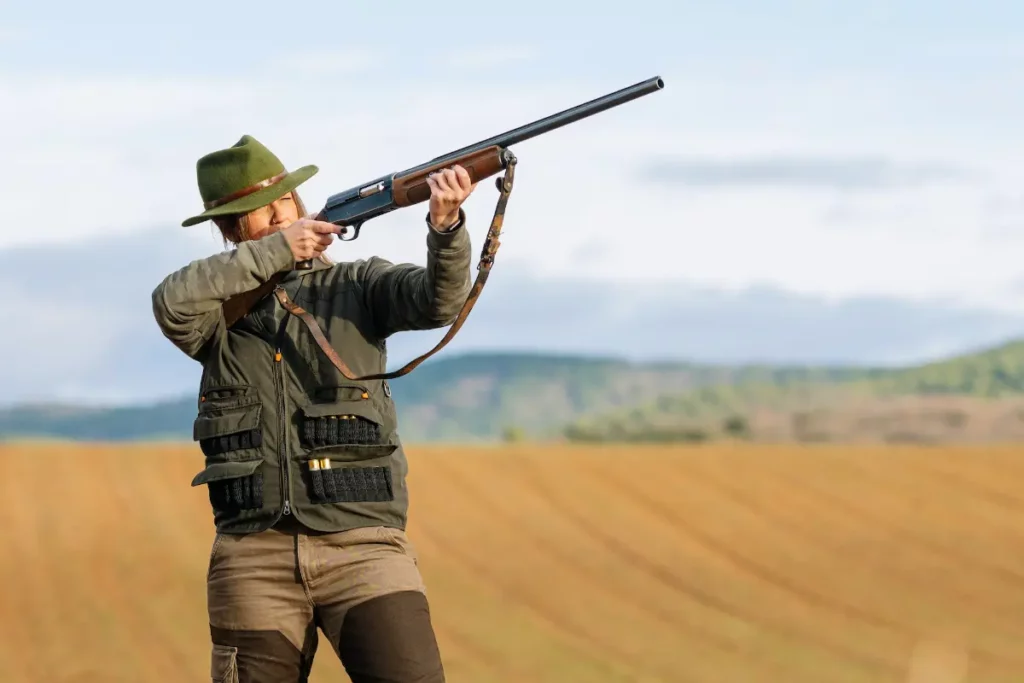
Patterning a shotgun means firing at a large flat target — typically paper or cardboard — to study how the pellets spread from the muzzle to the point of impact.
The result is a visual map of your shotgun’s performance. You can see the size of the spread, the density of the pellet distribution, where the center of the pattern lands relative to your point of aim, and whether any gaps or voids exist in the pattern. Every shot you fire during patterning tells you something specific about how your gun, choke, and ammunition are working together.
This is the shotgun equivalent of zeroing a rifle scope. You would never take a scoped rifle to the field without confirming the zero — and your shotgun deserves the same discipline.
Why Is Shotgun Patterning So Important?
No two shotguns pattern identically, even when using the same choke and ammunition.
A full choke from one manufacturer may produce tight, consistent patterns at 40 yards. The same full choke label from a different brand may open up significantly at 30 yards. Your specific barrel, its length, its bore diameter, the quality of the choke threads, and even the shell’s wad design all interact to produce a pattern unique to your setup.
Patterning removes the guesswork entirely. It replaces assumptions with data you can trust.
The Core Reasons Hunters Pattern Their Shotguns
1. To Find the Best Choke and Ammunition Combination
The single most important reason hunters pattern their shotguns is to find the optimal combination of choke tube and ammunition for their gun and their game.
A choke that works brilliantly for one shell brand may perform terribly with another. Two shells with identical shot size from different manufacturers can produce radically different patterns in the same gun. You simply cannot know which combination delivers the best results without testing them on a patterning board.
Patterning lets you test multiple combinations before you spend a full season hunting with a setup that might be working against you.
2. To Understand Pellet Spread at Hunting Distances
Shotguns do not fire a single projectile. They fire a cloud of pellets that spreads wider the farther it travels from the muzzle.
That spread — the pattern — changes dramatically between 20, 30, and 40 yards. A choke that gives a perfect 25-inch spread at 30 yards might open up to 38 inches at 40 yards, or tighten to a dangerously narrow 12 inches at 20 yards. Knowing exactly how your pattern behaves at your actual hunting distances is essential for making clean, ethical shots.
3. To Confirm Point of Aim vs. Point of Impact
Many hunters assume their shotgun shoots exactly where they aim. This is often wrong.
Shotguns can pattern high, low, left, or right depending on the barrel, the choke, and the load. Benelli shotguns, for example, are famously known to pattern high so that hunters can “float” their target and still see it while aiming. But your individual gun may not follow the manufacturer’s typical pattern. Only a patterning session on paper will reveal where your specific shotgun actually shoots relative to where you point it.
Knowing this allows you to compensate your aim correctly in the field.
4. To Hunt Ethically
Wounding game instead of making a clean kill is the worst outcome in any hunt. Patterning your shotgun is fundamentally an ethical responsibility.
A pattern with too few pellets reaching the target, or a pattern with large gaps that let a bird fly through unscathed, means you are taking shots you should not be taking. Patterning tells you the maximum effective range at which your setup can deliver enough pellets to the vital zone for a clean, humane kill. Hunting within that range — and only within that range — is what separates ethical hunters from reckless ones.
5. To Improve Accuracy and Confidence
When you have patterned your gun and know exactly how it performs, you shoot with total confidence.
You know the range at which your pattern is lethal. You know which side your pattern favors. You know the choke and shell combination that delivers the most even, dense distribution. That knowledge eliminates hesitation in the field. Confident hunters make cleaner shots, and cleaner shots mean more birds in the bag and fewer wounded animals.
6. To Match Equipment to the Game Being Hunted
Different game requires dramatically different pattern characteristics. A setup that is perfect for doves is completely wrong for turkeys.
Patterning helps you verify that your current choke and ammunition combination is appropriate for the specific animal you are pursuing. A turkey hunter needs a tight, dense pattern at 40 yards. A dove or quail hunter needs a wide, open spread at 25 yards. A waterfowl hunter needs a balanced mid-range pattern that handles crossing shots on birds in motion. Patterning confirms you have the right tool configured correctly for each job.
Understanding Shotgun Chokes and Their Role in Patterning
The choke is the constriction at the muzzle end of the barrel that controls how tightly or loosely the shot exits the gun.
Different choke constrictions produce different pattern sizes at a given distance. Choosing the right choke is one of the most impactful decisions a shotgun hunter makes — and patterning is the only reliable way to verify a choke is performing as expected with your chosen load.
Choke Types and Their Typical Uses
| Choke Type | Constriction | Pattern at 40 Yards | Best For |
|---|---|---|---|
| Cylinder (no choke) | None | Very Wide (40+ inches) | Close brush hunting, home defense |
| Improved Cylinder | 0.010″ | Wide (34–38 inches) | Upland birds, quail, doves, close flushing |
| Modified | 0.020″ | Medium (28–32 inches) | Ducks, pheasants, general purpose |
| Improved Modified | 0.025″ | Moderately Tight (24–28 inches) | Longer waterfowl shots, geese |
| Full | 0.035″ | Tight (20–24 inches) | Long-range ducks, squirrels |
| Extra Full / Turkey | 0.040″+ | Very Tight (12–18 inches) | Turkey hunting, 40+ yard shots |
These are general guidelines. Your actual pattern at 40 yards depends on your specific gun and load — which is exactly why patterning is essential.
Shot Size and Its Effect on Patterning
Shot size affects how the pellets travel through the air, how they interact with the choke, and how they distribute on the target.
Larger shot pellets are heavier and retain energy better at longer distances but there are fewer of them in a given load, so pattern density is lower. Smaller shot pellets are more numerous, creating denser patterns, but they lose energy faster and are less effective at longer range. Finding the right balance for your game and distance is part of what patterning reveals.
Shot Size Guide by Game Type
| Shot Size | Pellet Count (per oz.) | Game Targets | Effective Range |
|---|---|---|---|
| #9 | ~585 | Doves, skeet, sporting clays | 15–20 yards |
| #8 | ~410 | Doves, quail, trap | 20–25 yards |
| #7.5 | ~350 | Quail, doves, clay targets | 25–30 yards |
| #6 | ~225 | Pheasants, rabbits, squirrels | 25–35 yards |
| #5 | ~170 | Pheasants, ducks, geese | 30–40 yards |
| #4 | ~135 | Ducks, geese, turkeys | 35–45 yards |
| #2 | ~90 | Large ducks, geese, predators | 40–50 yards |
| BB | ~50 | Geese, large predators | 45–55 yards |
| TSS #9 | ~1,100 | Turkeys (tungsten super shot) | 40–60 yards |
Tungsten Super Shot (TSS) deserves special mention. Because TSS is far denser than lead, it delivers far more pellets per ounce and patterns dramatically tighter at longer distances — making it a game-changer for turkey hunters willing to invest in premium shells. Only shoot TSS through chokes specifically rated for it to avoid damaging your tube.
How to Pattern a Shotgun Step by Step
Step 1: Gather Your Equipment
Before heading to the range, collect everything you need for a productive patterning session.
You will need large sheets of paper (butcher paper or cardboard works well — at least 30 by 30 inches per target), a stable backstop, a measuring tape or rangefinder, and a marker to draw an aiming point on each target. Bring multiple choke tubes you want to test, and several boxes of different ammunition you are considering. Ear protection and eye protection are non-negotiable. A shooting rest or sandbag helps eliminate shooter error and produces more consistent, comparable results.
Step 2: Set Your Patterning Distance
Choose a distance that matches your typical hunting scenario.
Do not pattern at a distance you never shoot in the field. Common patterning distances by game type:
| Game Type | Recommended Patterning Distance |
|---|---|
| Dove and quail (upland) | 20–25 yards |
| Pheasant, partridge | 30–35 yards |
| Duck hunting | 35–40 yards |
| Goose hunting | 40–50 yards |
| Turkey hunting | 40 yards (primary) |
| Sporting clays | 21 yards (standard) |
Most experienced hunters pattern at both 30 yards and 40 yards to get a baseline across two important distances. This gives you a comprehensive picture of how your pattern opens up as range increases.
Step 3: Draw Your Aiming Point
Mark a clear, distinct center aiming point on each target — a three-inch black dot or a simple cross works well.
This is critical. You need a consistent reference point to aim at for every shot. Without a clear aiming point, you cannot accurately determine where the center of your pattern falls relative to your point of aim. This is how you detect whether your gun shoots high, low, or to one side.
Step 4: Fire Your Shots
Take a steady shooting position and aim directly at the center mark. Fire one shot per target.
Resist the urge to fire multiple shots at the same target — overlapping patterns make analysis impossible. Fire with the same grip, cheek weld, and stance you use in the field. If you are concerned about flinching affecting your results, use a shooting rest for patterning. Always fire one shot per target, per choke and load combination you are testing.
Step 5: Analyze the Pattern
Step back and study each target carefully. You are looking for several specific things.
Pattern size: Draw a 30-inch circle around the densest part of the pattern. What percentage of the total pellets landed inside it? A 70% or better pattern is generally considered effective for most hunting applications.
Pattern center vs. point of aim: Did the densest part of the pattern fall where you aimed? Or is it consistently high, low, or to one side?
Pattern uniformity: Are the pellets distributed evenly throughout the circle, or are there large gaps — especially in the center? Gaps in the center mean birds can fly through the pattern without being hit.
Pellet count: For turkey hunting specifically, count the pellets inside a 10-inch circle (approximating the size of a turkey’s head and neck). Most experienced turkey hunters consider 100 pellets in that 10-inch circle the minimum standard for a reliable, ethical shot.
Step 6: Adjust and Repeat
Switch choke tubes or try a different shell and repeat the process.
Note your results for each combination on the target or in a notebook. After testing all your combinations, compare the results side by side. The winning combination is the one that delivers the most even, dense, appropriately sized pattern at your target hunting distance, with the center of impact landing where you aimed.
Reading Your Pattern Results
Knowing what a good pattern looks like — and what a bad one looks like — is just as important as firing the shots.
A good pattern has pellets distributed evenly throughout the 30-inch circle with no large voids. The densest area sits right at or very near your aiming point. Pellet count meets the minimum standard for your target game. The pattern is consistent from shot to shot.
A poor pattern has large gaps — especially through the center — where a bird could pass unscathed. The densest area is significantly off from your aiming point. Pellet count is too low to guarantee a clean kill at the distance tested. The pattern is wildly inconsistent between shots.
Poor patterns mean you need to try a different choke, a different load, or both. Do not accept a poor pattern and head to the field hoping for the best.
What a 30-Inch Circle Pattern Percentage Means
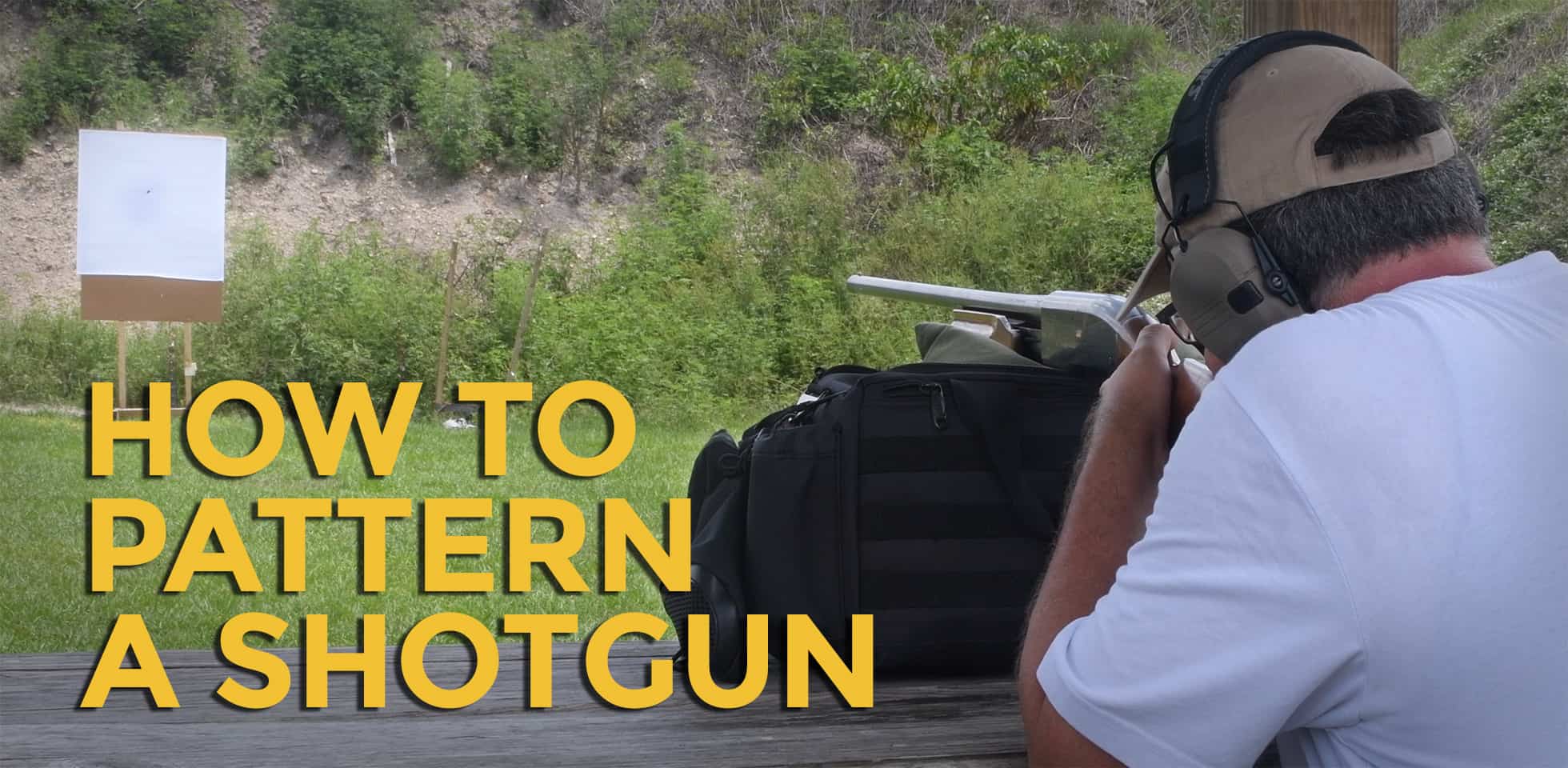
Shotgun patterns are expressed as a percentage of total pellets landing inside a 30-inch circle at the test distance.
To calculate: divide the number of pellet holes inside the circle by the total pellet count in the shell, then multiply by 100. A shell loaded with 200 pellets that puts 140 pellets inside a 30-inch circle at 40 yards is delivering a 70% pattern.
| Pattern Percentage | What It Means |
|---|---|
| 90–100% | Very tight — possible overkill at close range |
| 70–90% | Excellent — ideal for most hunting applications |
| 55–70% | Acceptable for close to medium range |
| 40–55% | Marginal — acceptable only at very close range |
| Below 40% | Poor — not suitable for ethical hunting |
Most hunters should aim for a pattern of 65–80% for general bird hunting. Turkey hunters specifically want the tightest possible pattern — a 10-inch circle with 100+ pellets — because the kill zone on a turkey head and neck is very small.
Patterning for Different Types of Hunting
Turkey Hunting
Turkey hunting demands the tightest, most dense pattern of any shotgun hunting situation.
Turkeys are shot at a dead hold — the gun is still, the bird is stationary, and you are aiming at a precise kill zone on the head and neck. The distance is often 30 to 50 yards. You need at least 100 pellets inside a 10-inch circle at your maximum shooting distance. Use an Extra Full or specialized turkey choke, and test premium loads including TSS, heavyweight, or high-velocity lead shells until you find the combination that delivers that pellet count consistently.
Waterfowl Hunting
Duck and goose hunting presents unique patterning challenges because you are almost always shooting at moving birds.
You need a pattern wide enough to intercept a flying bird with a lead shot, but dense enough to deliver enough energy for a clean kill at 35 to 50 yards. Modified to Improved Modified chokes work well for most duck hunting. Steel shot — the required non-toxic alternative — does not compress through tight chokes the way lead does, so steel generally requires a more open choke than lead at the same distance. Never run steel shot through a Full choke rated only for lead — it can damage or destroy the tube.
Upland Bird Hunting
Pheasants, quail, doves, partridge, and grouse are typically shot at closer ranges and often on the wing as they flush and fly away quickly.
You want a pattern that is wide enough to give you a margin of error on fast-moving birds at 20 to 35 yards. Improved Cylinder to Modified chokes work well for most upland situations. Tight patterns actually hurt you here — if your pattern is only 15 inches wide at 30 yards and a flushing bird is a foot outside that cone, you miss cleanly even with a good shot.
Small Game (Squirrels, Rabbits)
Small game hunters benefit from patterning too, even though the game is relatively stationary compared to birds.
Rabbits and squirrels require enough pellet density to ensure clean kills at close to medium range without destroying too much meat. A Modified choke with medium shot sizes (#5 or #6) typically performs well. Patterning confirms the density is adequate and the pattern size is appropriate.
Common Patterning Mistakes to Avoid
Many hunters make the same mistakes when they first attempt to pattern a shotgun. Knowing these errors in advance saves time, money, and frustration.
Firing multiple shots at one target. Overlapping holes make it impossible to count pellets or analyze any single pattern. One shot, one target — every time.
Patterning at unrealistic distances. If you never shoot beyond 25 yards in the upland field, patterning at 50 yards produces data you will never use. Always match your patterning distance to your real-world hunting situation.
Ignoring point of impact vs. point of aim. Many hunters count pellets and declare success without checking whether the pattern is centered on the aiming point. If your gun shoots 6 inches high, every shot in the field is going over your target.
Testing too many variables at once. Change one thing at a time — either the choke or the ammunition, not both simultaneously. Otherwise you cannot determine which change actually improved the pattern.
Using a choke not rated for your ammunition. Running steel shot through a lead-only Full choke, or TSS through a standard choke, risks cracking or destroying the tube. Always verify choke compatibility before patterning.
How Often Should Hunters Pattern Their Shotguns?
Patterning is not a one-time task. It needs to happen in specific situations throughout your hunting life.
Pattern before every new hunting season, especially if you have changed your shell brand, shot size, or choke tube since last year. Pattern any time you acquire a new shotgun — even a used gun of the same make and model as your old one may pattern differently. Pattern when you switch from lead to non-toxic shot or vice versa. Pattern if you have had work done on your barrel or choke threads. Pattern if you change the ammunition you use mid-season because your previous choice became unavailable.
Ammo availability has been inconsistent in recent years. Many hunters are forced to use whatever shells they can find. When that happens, patterning the new shells is not optional — it is essential.
Equipment That Helps With Patterning
A few simple tools make patterning sessions more productive and your results more reliable.
A rangefinder is the most important accessory for patterning. Do not guess your distance — measure it precisely. Even a few yards of error changes the pattern size and density enough to skew your results meaningfully.
A shooting bench or sandbag rest eliminates human error from the patterning data. Your job during patterning is to remove yourself as a variable so the results reflect your equipment, not your shooting form.
A pellet counting template — a 30-inch ring drawn on acetate or cardboard — makes counting pellets in the pattern circle faster and more accurate. For turkey hunters, a 10-inch ring template is essential.
Multiple target frames let you hang fresh targets quickly without stopping to rebuild a frame between shots. More shots per session means more data and a clearer picture of your gun’s performance.
Frequently Asked Questions (FAQs)
Why do hunters pattern their shotguns?
Hunters pattern their shotguns to find the best choke and ammunition combination for their specific gun and game. It removes guesswork, confirms where the gun shoots relative to aim, and ensures ethical, clean kills in the field.
What distance should I pattern my shotgun at?
Pattern at the distance you actually hunt. Most hunters use 30 to 40 yards as a baseline, with turkey hunters focusing on 40 yards and upland bird hunters often patterning at 25 to 30 yards.
What choke is best for patterning a turkey gun?
An Extra Full or specialized turkey choke produces the tightest patterns needed for head and neck shots. Pattern multiple choke brands with your chosen shells — the best-performing combination wins regardless of the name on the tube.
How many pellets should be in a 10-inch circle for turkey hunting?
Most experienced turkey hunters require a minimum of 100 pellets inside a 10-inch circle at 40 yards for a reliable, ethical kill. Fewer than 80 pellets at that distance means the range is too far for that setup.
Can I use steel shot through any choke?
No. Steel shot should never be used through a Full choke rated only for lead. Steel does not compress through tight constrictions and can crack or rupture the choke tube. Use Modified or more open chokes with steel shot.
Does every shotgun need to be patterned?
Yes, every shotgun should be patterned — even if it is the same brand and model as a gun you previously owned. Individual guns of identical specs can pattern differently due to manufacturing tolerances and barrel variations.
What does a 70% pattern mean?
A 70% pattern means 70% of the total pellets in the shell landed inside a 30-inch circle at the test distance. This is generally considered a good standard for most bird hunting applications.
Why does my shotgun pattern high?
Many shotguns are intentionally designed to pattern slightly high so the shooter can float the target and still see it while aiming. However, your gun’s actual point of impact may differ. Patterning reveals exactly how high (or low) your setup shoots.
How often should I pattern my shotgun?
Pattern at the start of every new hunting season, whenever you change your choke or ammunition, when you acquire a new shotgun, and any time you switch from lead to non-toxic shot or vice versa.
What paper should I use for shotgun patterning?
Large sheets of butcher paper (at least 30 by 30 inches) work perfectly. White freezer paper is another excellent option for high-volume sessions. Mark a clear three-inch aiming dot at the center and use a fresh sheet for every single shot.
Conclusion
Why do hunters pattern their shotguns? Because hunting with an unpatterned shotgun is like hunting with a rifle you have never zeroed — you are working on hope rather than knowledge. Patterning gives you something hope cannot: verified data about your exact setup, at your exact hunting distance, with your exact shells and choke combination.
The process is simple, inexpensive relative to the cost of a hunting season, and directly responsible for more birds harvested and fewer animals wounded. It confirms your point of impact, reveals your effective range, identifies the best choke and load pairing, and builds the kind of genuine confidence that only comes from knowing your equipment instead of assuming it.
Pattern your shotgun before every season. Test different chokes and shells. Count your pellets. Know your range. The time you spend on the patterning board translates directly into cleaner kills, more ethical hunts, and a better experience in the field every single time you pull the trigger.