Why Are Flies So Annoying? How to Stop Them 2026
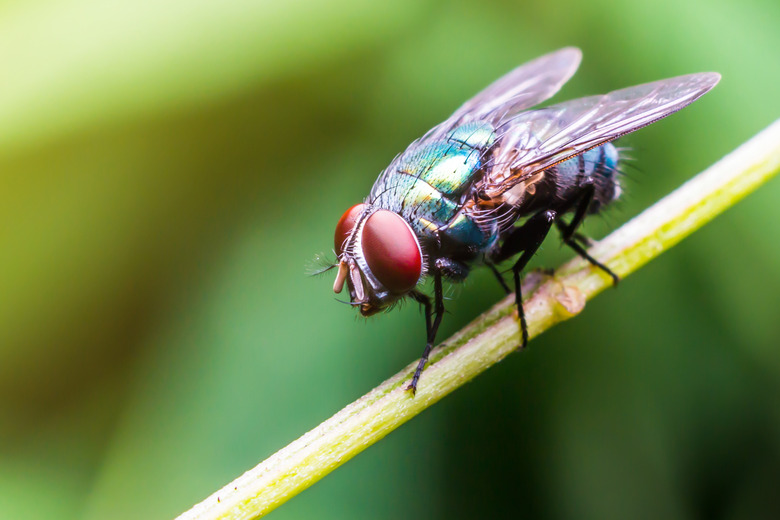
Why are flies so annoying is a question nearly every person asks the moment one of these buzzing pests invades their personal space. Flies do not bite, they do not sting, and yet they manage to be one of the most universally despised creatures on Earth.
They circle your face, land on your food, dodge every swat, and return a second after you chase them away. None of it feels random — and it is not. There is real biology behind every irritating behavior a fly performs.
The Real Reason Flies Are So Annoying
Most people assume flies are just mindless pests wandering into their space by accident. The truth is far more deliberate — and more unsettling.
Flies are driven by survival instincts that have been refined over millions of years. Every time a fly lands on you, hovers near your face, or keeps returning after you swat it, it is following a precise set of biological signals. You are, from a fly’s perspective, an extremely attractive resource.
Understanding why they behave this way is the first step to stopping them effectively.
Why Flies Target Humans Specifically
Your Body Is a Fly Buffet
The human body constantly emits a cocktail of chemicals that flies find irresistible. According to entomologists at Cornell University, if you could see smell, you would see a cloud of attractants surrounding every person at all times.
Flies detect several specific compounds that signal a food source. Carbon dioxide (CO₂), which you exhale with every breath, can be detected by certain fly species from up to 30 feet away. Lactic acid and carboxylic acid, naturally present in sweat, register as strong signals to a fly’s olfactory sensors.
Ammonia released when skin bacteria break down urea in perspiration draws flies toward the skin surface. Uric acid and fatty acids present in skin secretions mimic the odors of decomposing organic matter — exactly what flies are biologically programmed to seek out.
Sweat Is Fly Food
According to entomologist Sammy Ramsey of the University of Colorado Boulder, sweaty humans are essentially “sweat slurpees” to flies. Sweat contains water, salt, amino acids, and organic compounds that flies need for hydration and nutrition.
The more a person sweats, the more attractive they become to flies. This is why you notice more flies pestering you during outdoor exercise, in hot weather, or on humid days. Bigger body surface area, higher metabolic rate, and greater perspiration output all increase how attractive you are to flies.
Flies Are Attracted to Your Face for a Specific Reason
Your face is the most chemically active part of your body from a fly’s perspective. It concentrates multiple attractants in one small area.
The mouth and nose release CO₂ constantly. The eyes produce tears and mucus — moisture and minerals that flies consume. The skin around the face generates sweat, sebum, and dead skin cells. All of these overlap in a concentrated zone, making the face the most targeted landing spot on the human body.
This is not flies choosing you personally — it is pure chemistry.
Why Flies Keep Coming Back After You Swat Them
One of the most infuriating things about flies is their persistence. You wave them off, they circle and return. You swat and miss, they land two inches away. There are specific biological reasons for this behavior.
Houseflies process visual information approximately seven times faster than humans. They effectively see your swatting hand in slow motion, giving them ample time to adjust and escape. Their compound eyes provide nearly 360-degree vision, so they detect movement from almost any direction before you complete a swat.
Additionally, waving your hands at a fly often makes things worse. Movement generates heat and air currents — both of which are signals flies follow. Every swat you take essentially sends a “here I am” signal that draws them back.
The Disgusting Truth About What Flies Are Doing When They Land
This is where things get genuinely revolting — and it is the real reason flies are more than just annoying.
They Cannot Chew
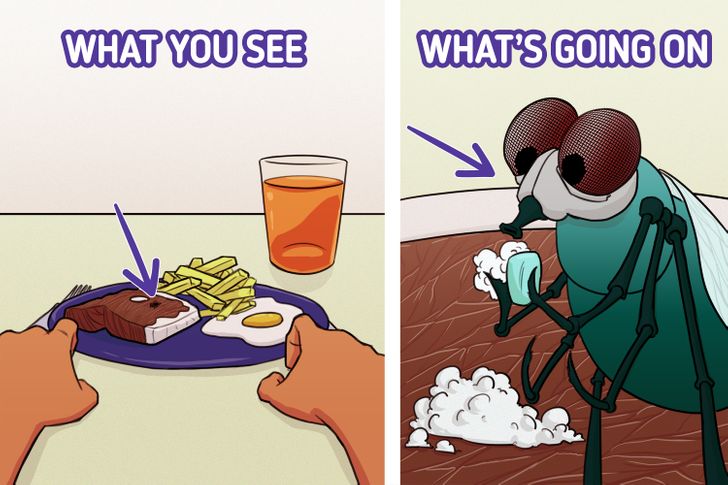
Houseflies have no teeth and cannot eat solid food. Instead, they regurgitate digestive enzymes onto whatever they land on, partially liquefy the surface material, and then suck it back up through their sponge-like mouthparts. Every time a fly lands on your food, it is vomiting on it first.
They Taste With Their Feet
A fly’s taste receptors are located on its feet — not its mouth. When a fly lands on your arm or your dinner plate, it is tasting the surface through the pads on its legs before deciding whether to feed. The moment it lands, a taste assessment is already underway.
They Defecate Constantly
Flies have extremely rapid digestive cycles. Because they eat liquid material almost continuously, they produce waste at a similarly constant rate. A fly can defecate nearly every time it lands on a new surface. When it lands on your food, there is a genuine probability it is leaving fecal matter behind along with whatever it picked up from the last surface it visited.
Where They Have Just Been
The most disturbing aspect of a fly landing on you or your food is not what it does when it arrives — it is where it was before it got there. Flies routinely travel between decaying organic matter, animal feces, garbage, and carcasses, then land directly on human food or exposed skin without any cleaning process in between.
How Dangerous Are Flies? The Disease Risk
Why are flies so annoying matters less once you understand the actual health risk they represent. The answer is significant.
Houseflies (Musca domestica) are confirmed mechanical vectors for over 100 different pathogens. They carry bacteria, viruses, protozoan parasites, and parasitic worm eggs on their bodies, feet, mouthparts, and in their digestive tracts.
Diseases transmitted by flies include typhoid fever, cholera, salmonellosis, dysentery, tuberculosis, anthrax, and E. coli infections. They can also carry Giardia and other gastrointestinal parasites. Flies do not inject these pathogens like a needle — they deposit them mechanically through regurgitation, defecation, and contact with contaminated body parts.
Disease-causing organisms on the surface of a fly may survive for a few hours. Those inside a fly’s digestive system can remain viable for several days — meaning a fly that fed on contaminated material can continue spreading that contamination across multiple surfaces long after the initial contact.
The Life Cycle That Makes Flies Impossible to Ignore
Understanding the fly life cycle explains why a “few flies” problem can become an infestation so quickly, and why dealing with them reactively is never enough.
Four Stages, Frighteningly Fast
| Life Stage | Duration | What Happens |
|---|---|---|
| Egg | 8–24 hours | Female lays 75–150 eggs per batch; up to 500 total per lifetime |
| Larva (maggot) | 3–5 days | Maggots feed intensively on decaying organic matter |
| Pupa | 4–6 days | Transformation into adult fly inside hardened casing |
| Adult | 15–30 days | Feeds, mates, lays eggs; immediately begins new cycle |
The entire life cycle from egg to adult can be completed in as few as 7 to 10 days under warm conditions. During a single summer, a fly population can produce 10 to 12 generations. A single female fly can produce up to 500 eggs in her lifetime — meaning that one fly that enters your home and finds a breeding site can theoretically seed hundreds of offspring within weeks.
Breeding Sites Inside Your Home
Flies do not need outdoor space to breed. Inside your home, potential breeding sites include the inside of trash cans, kitchen drains and garbage disposals, uncovered compost containers, overripe or rotting fruit left on counters, and pet food bowls left out for extended periods.
Any overlooked patch of moisture combined with organic material is a potential nursery. Flies do not need much. A forgotten piece of fruit behind a kitchen appliance, a moist drain with accumulated food residue, or an uncleaned recycling bin is enough to support a full reproductive cycle.
Why Some People Attract More Flies Than Others
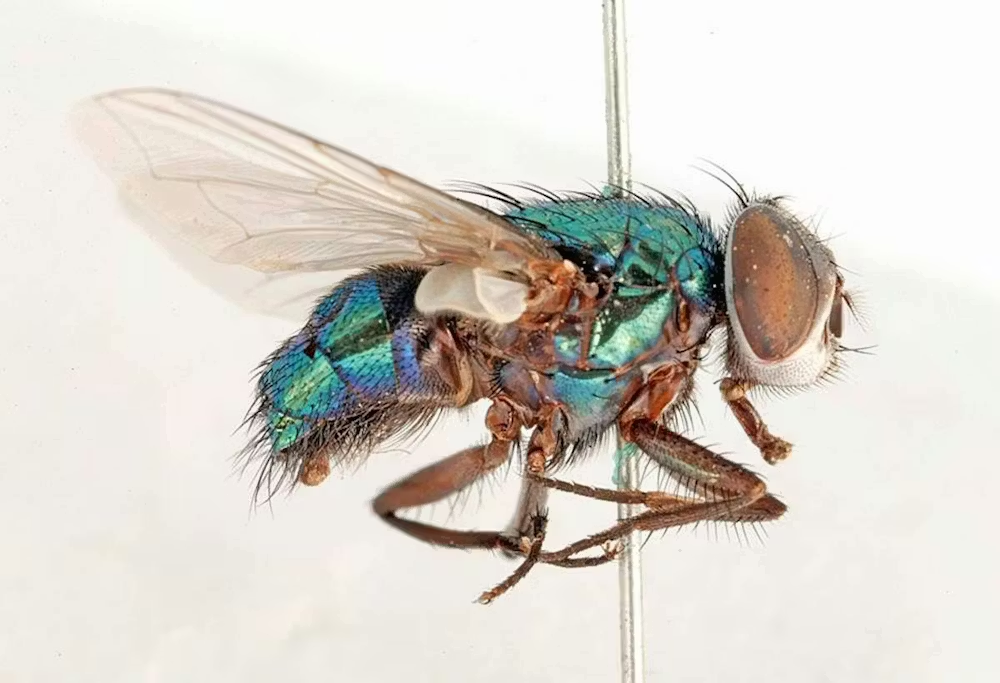
If you have ever stood with a group of people and felt like flies targeted you specifically, you were probably right. Fly attraction is not random — it is based on what your body is emitting at any given moment.
People with higher sweat output, higher body temperature, or more active skin microbiomes emit stronger chemical signals. Those who have consumed high-protein diets produce more ammonia and uric acid in their perspiration, making them more attractive. Hormonal fluctuations, including those associated with pregnancy, menstrual cycles, or stress, can alter skin chemistry enough to change fly attraction.
Dark-colored clothing absorbs more heat than light colors, raising the surface temperature and making the wearer a more prominent heat signal to thermotactic flies that track warm bodies. Wearing lighter colors during outdoor activities in summer can modestly reduce how often flies land on you.
Body odor, which is largely determined by the specific composition of your skin’s microbial community, also plays a major role. Two people standing side by side can have very different attractiveness to flies based entirely on their unique microbial signatures — something no amount of hygiene can fully eliminate.
Types of Flies and Why Each Is Annoying in Its Own Way
Not all flies are the same, and the reasons each type bothers you differ by species.
| Fly Type | Why They Are Annoying | Main Attractant |
|---|---|---|
| Housefly (Musca domestica) | Lands on food; carries 100+ pathogens; defecates constantly | Decaying matter, food waste, warmth |
| Fruit fly (Drosophila) | Infests kitchens; breeds rapidly in overripe fruit | Fermented sugars, overripe produce, alcohol |
| Blowfly | Loud buzz; attracted to meat and wounds | Protein-rich materials, carrion |
| Horse fly | Painful bite; relentless pursuit | Blood, carbon dioxide, movement |
| Drain fly | Emerges from drains; indicates unsanitary conditions | Organic buildup in pipes and drains |
| Bush fly | Swarms around the face; impossible to shoo away | Moisture from eyes, nose, and mouth |
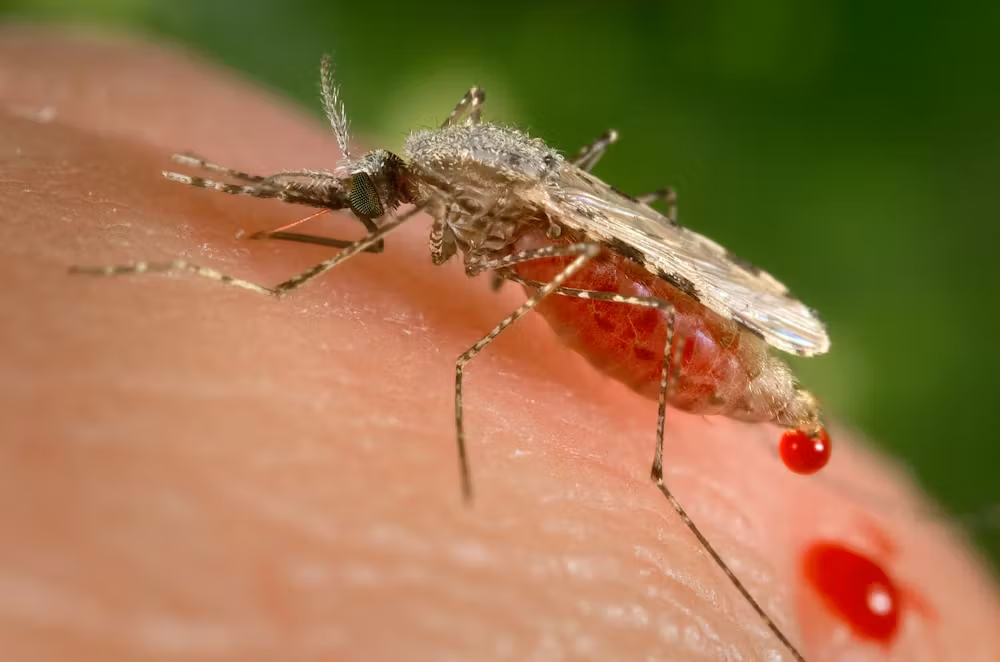
| Mosquito | Itchy bites; transmits serious disease | Carbon dioxide, body heat, lactic acid |
Each species has evolved a specific ecological niche, and each intrudes on human space for its own biological reason. Understanding which fly you are dealing with points you toward the most effective control strategy.
10 Proven Ways to Stop Flies in 2026
Method 1: Eliminate Breeding Sites First
Everything else is temporary if you leave breeding sites intact. Remove all decaying organic matter from inside and outside your home. Empty trash cans frequently, clean the inside of bins with disinfectant, and keep lids tightly sealed at all times.
Clean kitchen drains and garbage disposals weekly using a drain gel or a baking soda and vinegar flush. Fruit flies and drain flies breed specifically in the organic buildup inside pipes — standard cleaning products do not reach it.
Method 2: Seal Entry Points
Flies cannot annoy you if they cannot get in. Inspect all window screens for tears and repair or replace them. Check weather stripping on doors and reseal any gaps around pipes, vents, and cable entries with caulk or foam.
Door sweeps on exterior doors prevent flies from walking in under gaps. Remember that houseflies need only a small gap to enter — any hole larger than 2mm is a potential entry point for an adult fly.
Method 3: Use Fans Strategically
Flies are weak fliers and strongly prefer still air. A fan running at medium or high speed in an outdoor dining area, porch, or open doorway creates a wind barrier that flies cannot navigate effectively.
This is one of the simplest and most underappreciated fly deterrents available. Restaurants that use outdoor fans near entrances report significantly fewer fly problems during warm months. A box fan positioned to blow outward at an open doorway also helps prevent flies from entering when you need ventilation.
Method 4: Apple Cider Vinegar Trap
Fruit flies are particularly susceptible to vinegar traps. Fill a small glass or jar with apple cider vinegar, add a few drops of dish soap, cover with plastic wrap, and poke small holes in the top.
The vinegar attracts the flies with its fermented scent. The dish soap breaks the surface tension of the liquid so flies sink and drown rather than escaping. Place traps near fruit bowls, kitchen counters, or anywhere fruit flies congregate.
Method 5: Natural Plant Repellents
Flies have strong aversions to certain plant aromas. Basil, lavender, mint, marigolds, and citronella are the most effective fly-repelling plants you can grow near windows, doorways, or in outdoor entertaining areas.
Essential oils from these plants — particularly eucalyptus, peppermint, lemongrass, and lavender — can be diluted with water and sprayed on surfaces, window frames, and outdoor furniture to create a chemical barrier flies avoid. Reapply every few days for continued effectiveness.
Method 6: Keep Food Completely Covered
This seems obvious but is consistently the most overlooked factor in home fly problems. Never leave food uncovered on counters or tables, even briefly. Flies can detect food odors from significant distances and will locate an uncovered dish within minutes.
Use mesh food covers for outdoor dining. Store fruit in the refrigerator rather than on counters during summer. Keep pet food bowls covered or removed between feeding times — pet food is one of the most common indoor fly attractants that people overlook.
Method 7: Light Traps and Sticky Traps
UV light traps attract flies using ultraviolet light and trap them on a sticky surface or kill them with an electric grid. These work well as passive, always-on control measures in kitchens, garages, and areas near entry points.
Sticky fly strips, while visually unappealing, are highly effective in confined spaces like pantries, utility rooms, or garages. Place them away from main living areas where you will see them constantly — the goal is to catch flies before they reach your living space, not to decorate your kitchen.
Method 8: Proper Yard and Garden Maintenance
Flies breed outdoors and then migrate inside. Eliminating outdoor breeding sites reduces the incoming population at its source. Remove pet waste from the yard daily. Eliminate standing water in pots, bird baths, gutters, and low spots in the lawn.
Keep compost bins tightly sealed or placed well away from the house. Clear fallen fruit from beneath fruit trees immediately — a single pile of rotting fruit can support thousands of fly larvae. Store firewood and yard waste away from exterior walls.
Method 9: Address Drains Regularly
Drain flies and fruit flies breed specifically inside the organic film that coats the inside of kitchen and bathroom drains. Pouring bleach down a drain clears the visible residue but does not reach the biofilm where eggs are laid.
Enzymatic drain cleaners or bioremediation gels containing bacteria that digest organic matter are significantly more effective at eliminating drain-based fly breeding. Treat kitchen and bathroom drains monthly during warm seasons as preventive maintenance.
Method 10: Call a Professional for Infestations
If flies are appearing consistently in large numbers despite implementing the above steps, you likely have an active breeding site you have not located — possibly inside a wall void, in a crawlspace, or from a dead animal somewhere in the structure.
Professional pest management practitioners who use integrated pest management (IPM) combine targeted treatments with a thorough source identification process. They do not simply spray — they find the origin of the infestation and eliminate it at the source. Broad chemical spraying without source elimination is a temporary fix that rarely solves a persistent fly problem.
What Scents Repel Flies Most Effectively
| Scent | Form | Effectiveness |
|---|---|---|
| Peppermint | Essential oil, plants, sprays | Very high — flies strongly avoid it |
| Eucalyptus | Essential oil, diffuser | High — effective indoors and outdoors |
| Lavender | Plants, oil, candles | High — also repels mosquitoes |
| Lemongrass | Essential oil, plants | High — particularly effective outdoors |
| Citronella | Candles, oil | High — widely used outdoor repellent |
| Cloves | Whole cloves, oil | Moderate — especially for fruit flies |
| Basil | Living plants | Moderate — best directly near entry points |
| Pine | Pine-scented cleaners | Moderate — repels while cleaning surfaces |
Using multiple scent-based repellents together creates a layered effect that is significantly more difficult for flies to navigate around than a single deterrent used alone.
Why Flies Seem Worse in Summer
Fly populations peak in summer for straightforward biological reasons. Houseflies develop fastest and reproduce most successfully at temperatures between 25–30°C (77–86°F). Below 10°C, development essentially stops. Above 35°C, mortality rises sharply.
In warm summer conditions, a fly can complete its entire life cycle — from egg to reproducing adult — in as little as 8 days. Twelve consecutive generations can develop in a single season. Each generation compounds the population, which is why a moderate fly presence in May can become a serious infestation by July without active management.
Humidity also plays a role. Warm, moist conditions preserve food sources and organic breeding material longer, supporting larger larval populations through the critical feeding stage.
The Ecological Role of Flies (Yes, There Is One)
As much as flies deserve their reputation as pests, intellectual honesty requires acknowledging what they contribute to functioning ecosystems — even if it does not make them any less annoying in your kitchen.
Fly larvae are among nature’s most efficient decomposers. Without them, carcasses, feces, and organic waste would accumulate far more slowly. Blow flies and their maggots can process a dead animal carcass with remarkable speed, recycling nutrients back into the soil.
Flies are also important pollinators. Certain fly species pollinate crops that bees do not effectively service, including cacao — meaning without flies, chocolate production would be significantly impacted. Flies are also a primary food source for birds, bats, spiders, frogs, and countless other animals throughout the food chain.
None of this makes the fly that just landed on your lunch acceptable. But it does explain why the planet would have serious problems if flies were eliminated entirely. The goal is pest management, not extinction.
A Quick Reference: Fly Prevention Checklist
Use this checklist to confirm your home is minimizing fly attractants across all the key areas:
Kitchen: All food covered or refrigerated, fruit stored away in summer, drains cleaned monthly, trash emptied daily, counters wiped down after cooking, compost bin sealed with tight lid.
Bathroom: Drain treated regularly, bins emptied frequently, no standing moisture in sink or shower.
Yard: Pet waste removed daily, standing water eliminated, compost bin sealed and positioned away from the house, fallen fruit cleared.
Entry points: All window screens intact, door gaps sealed, weather stripping in good condition, fans used near open doors in summer.
Ongoing traps: Vinegar trap near fruit bowl, UV trap near kitchen entry, sticky strips in utility areas.
Checking each of these areas systematically and keeping them maintained throughout the warm season eliminates the conditions flies need to breed, feed, and re-enter your home in large numbers.
Frequently Asked Questions (FAQs)
Why do flies always land on me and not other people?
Flies are drawn to the specific chemicals your body emits — including CO₂, sweat compounds, and body heat. People who sweat more, eat high-protein diets, or have more active skin microbiomes tend to attract significantly more flies than others.
Why do flies keep landing on my face specifically?
Your face concentrates multiple fly attractants simultaneously — exhaled CO₂, moisture from eyes and nose, warmth, and sweat — making it the highest-signal target on your entire body for most fly species.
Are flies actually dangerous or just annoying?
Houseflies are confirmed carriers of over 100 pathogens including Salmonella, E. coli, typhoid, and cholera. Every time a fly lands on your food after visiting waste or feces, it can deposit bacteria through regurgitation and defecation.
Why do flies always come back after you swat them?
Flies process visual information around seven times faster than humans, effectively seeing your hand in slow motion. Your swatting movements also generate heat and air currents that attract them further rather than driving them away.
What smell do flies absolutely hate?
Peppermint, eucalyptus, lavender, and lemongrass are the scents flies avoid most strongly. Essential oils from these plants used in sprays or diffusers act as effective chemical deterrents when applied consistently near entry points and food areas.
Why are flies worse in summer than other seasons?
Flies reproduce optimally at 25–30°C and can complete a full life cycle in just 8 days in warm conditions. A single summer can support 10 to 12 fly generations, causing populations to multiply exponentially compared to cooler months.
How do I get rid of fruit flies that keep coming back?
Eliminate the breeding source — usually overripe fruit, moist drains, or spilled alcohol. Use a vinegar-and-dish-soap trap to catch existing adults, clean drains with enzymatic gel, and refrigerate fruit during summer months to stop the cycle.
Can flies breed inside my house?
Yes. Flies can breed in kitchen drains, trash cans, compost bins, pet food bowls, and anywhere damp organic material accumulates. If you have persistent indoor flies, there is likely an active indoor breeding site that needs to be found and eliminated.
Does killing one fly make any difference?
A single female housefly can lay up to 500 eggs in her lifetime. Killing one fly before it breeds can prevent hundreds of offspring. Combined with source elimination, every fly you remove actually does make a meaningful difference to the developing population.
Why do flies rub their legs together after landing?
Flies rub their legs to clean their sensory receptors, including the taste receptors on their feet. Because they use their legs to taste every surface they land on, keeping those sensors clean is essential to their ability to find food — so they clean up immediately after every landing.
Conclusion
Why are flies so annoying comes down to a perfect storm of biology, chemistry, and evolution working entirely against your comfort. Flies target humans because our bodies emit the exact chemical signals — carbon dioxide, sweat compounds, body heat, and skin secretions — that flies are evolutionarily hardwired to pursue. Their persistence comes from visual systems far superior to ours for detecting movement and avoiding swats.
Their disgustingness comes from feeding behaviors that involve regurgitation and constant defecation on every surface they touch. And their health risk is very real — over 100 documented pathogens make every fly landing on food a genuine contamination event.
The good news is that flies are entirely manageable with the right combination of source elimination, entry point control, natural repellents, and targeted trapping. Stop the breeding sites, seal the entry points, and use scent-based deterrents consistently — and you will dramatically reduce the fly problem that has been driving you up the wall.