Why Do Owls Hoot? Surprising Reasons Revealed 2026
Why do owls hoot is one of the most searched wildlife questions online, and the answer is far more fascinating than most people expect.
Owls hoot to communicate, claim territory, attract mates, warn of danger, and bond with their young. These nighttime calls are not random sounds in the dark.
Each hoot carries a specific message designed for a precise purpose.
Understanding owl vocalizations unlocks a hidden language that has evolved over millions of years.
Whether you hear one hoot or a full chorus echoing through the woods, there is always a reason behind it.
What Is an Owl Hoot and How Is It Produced?
Owls produce their hoots using a specialized vocal organ called the syrinx. Unlike the human larynx, the syrinx sits at the base of the trachea and allows birds to create powerful, complex sounds with minimal effort.
The syrinx gives owls the ability to produce deep, resonant tones that carry over long distances. On a cold, still night, a Great Horned Owl’s hoot can travel up to several miles through the air.
Larger owl species tend to produce deeper, lower-pitched hoots. Smaller species produce higher-pitched calls. This is not just biology. It directly relates to how far the sound needs to travel and what message it is sending.
The 7 Main Reasons Why Owls Hoot
Understanding owl behavior starts with knowing exactly why they vocalize. Researchers have identified several core reasons that explain almost every hoot you will ever hear.
1. Territorial Defense
The most common reason owls hoot is to claim and defend territory. A hooting owl is essentially posting a “no trespassing” sign across its hunting and nesting grounds.
Male owls perch at high, exposed spots and send out repetitive hoots across the night. Rival owls hear these calls and typically move on to avoid conflict.
Territorial hoots become louder and more frequent during breeding season. This is when competition for prime nesting spots and hunting areas is at its peak.
2. Attracting a Mate
During breeding season, male owls hoot to advertise themselves to potential female partners. A strong, consistent hoot signals good health, a secure territory, and the ability to provide for offspring.
Females listen carefully and assess males based on the quality of their calls. A deep, powerful hoot communicates fitness and reliability as a partner.
After a female shows interest, the pair often performs a coordinated duet. These vocal exchanges help establish and reinforce the pair bond before nesting begins.
3. Communication Between Mates
Once paired, owls continue to hoot to stay connected with each other. These calls help mates coordinate hunting, locate each other in dense woodland, and share information about their surroundings.
Mated pairs often develop unique duet patterns that are specific to their relationship. The female’s voice is typically higher in pitch than the male’s, making it easy to distinguish the two.
This ongoing vocal communication is critical for successful nesting and chick-rearing throughout the breeding season.
4. Warning of Predators and Danger
When a predator enters an owl’s territory, the hoot changes dramatically. Owls shift to sharp, urgent alarm calls that alert nearby birds and other wildlife to the threat.
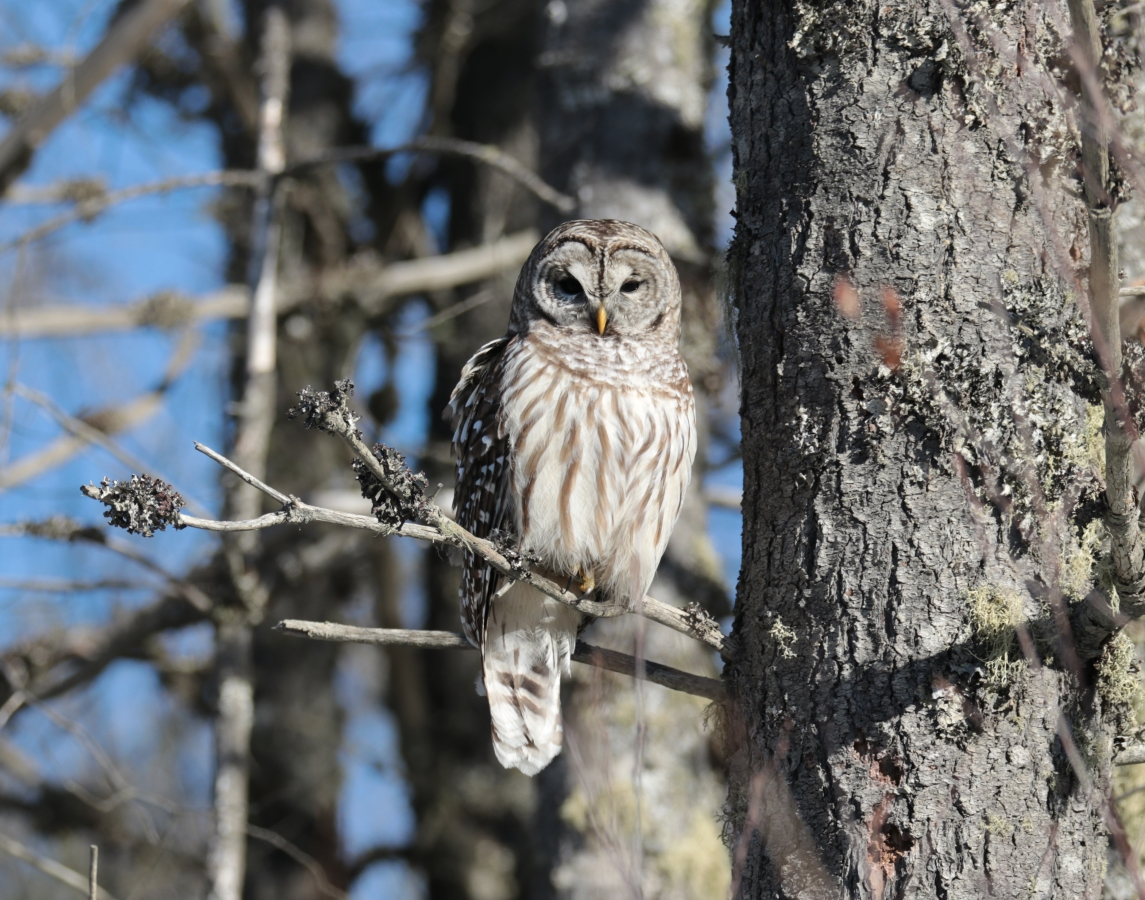
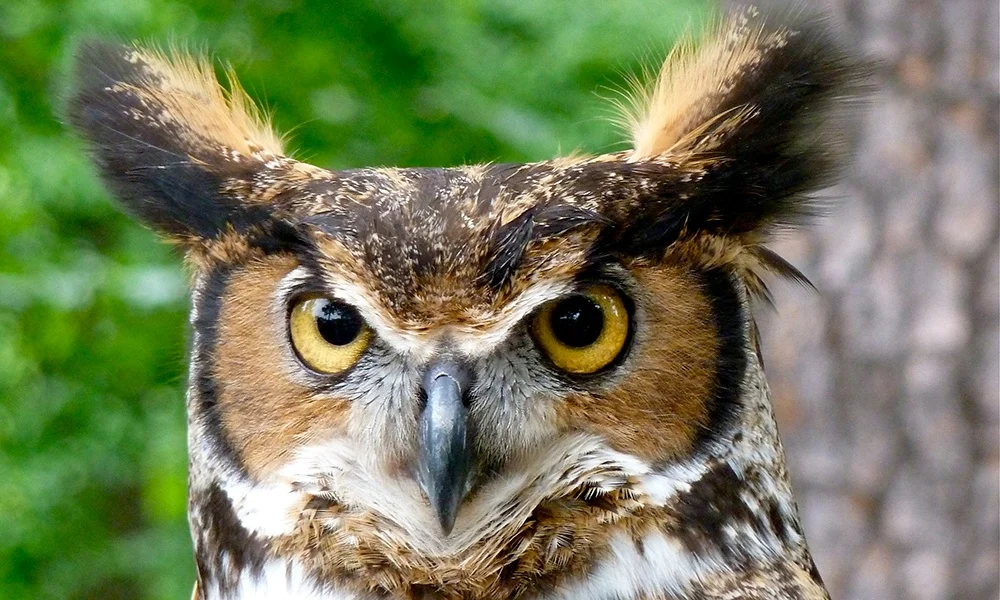
Great Horned Owls screech or chitter when disturbed. Barred Owls bark and rasp aggressively near their nests. These sounds are distinctly different from the slow, regular territorial hoot.
The alarm call serves a dual purpose. It warns the owl’s mate and young while also signaling the predator that it has been spotted, which can discourage further intrusion.
5. Parent-Owlet Communication
Adult owls use specific calls to stay in contact with their owlets in the nest. Young owls respond with high-pitched begging screams when they are hungry and need food.
As owlets grow older, parents use vocalizations to guide them through their first hunting attempts. This vocal coaching is essential for survival after the young owls leave the nest.
Young owls also begin practicing their own calls during this period, which is why you may hear slightly imperfect or irregular hoots near known nesting sites during late spring and summer.
6. Marking Seasonal Boundaries
Owls are most vocal at specific times of year that align with their breeding cycle. Understanding this seasonal pattern explains why you may suddenly hear owls after months of silence.
| Season | Owl Vocal Activity | Primary Reason |
|---|---|---|
| November – February | Very High | Territory establishment, mate attraction |
| March – April | Moderate | Pair bonding, nesting begins |
| May – June | Low | Incubation, minimal disturbance needed |
| July – August | Very Low | Chick-rearing, parents focused on hunting |
| September – October | Building | Young owls practice calls, adults resume hooting |
This seasonal rhythm explains why owls seem loudest during cold winter nights. Those conditions coincide perfectly with their peak communication period.
7. Individual Recognition
Research has shown that owls can identify individual neighbors by the unique qualities of their hoots. Each owl has its own vocal signature, similar to how humans have distinct voices.
Owls are typically more aggressive toward strangers than toward established neighbors. Recognizing a known neighbor reduces unnecessary conflict and energy expenditure.
This individual recognition system is a sophisticated social tool that helps owls manage relationships across overlapping territories without constant physical confrontation.
Why Do Owls Hoot at Night Specifically?
The answer to why owls hoot at night connects directly to their biology and environment. Most owls are nocturnal, meaning they are naturally most active after dark.
Nighttime offers specific acoustic advantages. There is less background noise from wind, insects, and other animals. Sound travels further through cool, dense night air compared to warm daytime air.
These conditions allow an owl’s hoot to carry significantly greater distances at night. This means a single call from a high perch can cover an enormous area and communicate with multiple owls simultaneously.
Some owl species, like Short-eared Owls and Burrowing Owls, are actually active during the day. You can hear these species vocalizing in daylight hours, which challenges the idea that all owls are purely nocturnal.
Do All Owls Hoot? Species-by-Species Breakdown
Not all owls produce the classic hoot sound. The type of call an owl makes depends heavily on its species, size, and ecological niche.
| Owl Species | Primary Sound | Pattern |
|---|---|---|
| Great Horned Owl | Deep hoot | “hoo-h’HOO-hoo-hoo” |
| Barred Owl | Hooting phrase | “Who cooks for you?” |
| Barn Owl | Screech/hiss | No classic hoot |
| Eastern Screech-Owl | Whinny/trill | Descending whinny |
| Boreal Owl | Rapid toots | Series of up to 20 toots |
| Snowy Owl | Booming hoot | Carries several miles |
| Burrowing Owl | Coo/bark | Active during the day |
| Northern Saw-whet Owl | Repetitive toot | “toot-toot-toot” |
The Great Horned Owl and the Barred Owl produce the most recognizable hooting calls heard across North America. The Barn Owl, by contrast, skips hooting entirely and instead relies on raspy screeches and hisses to communicate.
How Far Can an Owl Hoot Be Heard?
The carrying distance of an owl’s hoot is genuinely impressive. Most owl hoots can be heard from at least a quarter mile away under typical nighttime conditions.
The Great Horned Owl stands out even among owls. On a still, cold winter night, its call has been reported to travel several miles. Some researchers have documented Snowy Owl calls carrying close to seven miles under ideal conditions.
Low temperatures and calm air dramatically extend sound travel. This is why owls always seem loudest during cold, quiet winter evenings. The physics of sound propagation actually works in their favor during peak breeding season.
Male vs. Female Owl Hoots: What Is the Difference?
There is a clear difference between male and female owl hoots, and this difference is intentional. Male calls are primarily designed for territorial broadcasting and tend to be deeper, requiring low, far-traveling frequencies.
Female calls are generally higher in pitch and used for closer-range communication with their mate and owlets. When you hear a pair of Great Horned Owls hooting back and forth, the lower pitch always belongs to the male.
This pitch difference allows mated pairs to identify each other instantly in the dark, even across long distances through dense forest canopy.
The Unique Vocal Anatomy Behind the Hoot
The science behind how owls produce their distinctive calls is remarkable. The syrinx allows owls to modulate pitch, rhythm, and volume with extraordinary precision.
Owls can produce hoots, screeches, barks, hisses, whistles, coos, and even bill snaps. This wide range of sounds gives them a versatile communication toolkit suited to multiple situations.
Some owls, like Great Horned Owls, also produce non-vocal bill snapping sounds when they feel threatened or disturbed near their young. This adds a physical dimension to their vocal warning system.
When Do Owls Hoot the Most?
Peak hooting activity is concentrated in the late evening and pre-dawn hours. This timing aligns with active hunting periods and the hours when acoustic conditions are best for long-distance communication.
The months from November through February represent the highest period of owl vocalization across most North American species. This is when territory is being established and potential mates are being assessed.
If you want to hear owls in the wild, the best strategy is to stand quietly outdoors on a cold, still night between December and February and listen carefully near areas of mature forest or woodland edge.
What Do Different Owl Hoots Mean?
Learning to decode owl calls gives you real insight into what is happening in your local wildlife community. Different hooting patterns convey distinctly different messages.
Slow, evenly spaced hoots from a single perch indicate territorial marking. The owl is simply broadcasting its presence and ownership of the surrounding area.
Rapid, escalating hoots with shorter gaps between calls suggest the owl is responding to a perceived intruder. The increased urgency and frequency communicates heightened aggression.
Two owls exchanging alternating calls is almost always a mated pair communicating. If the exchange has a rhythmic, back-and-forth quality, you are likely listening to a duet between bonded partners.
Owl Hooting and Cultural Significance
Across many cultures throughout history, owl hoots have carried deep symbolic meaning. In Ancient Greece, owls were connected to Athena, the goddess of wisdom, and were considered sacred birds that brought good fortune before battles.
In various Indigenous cultures across North America, owl calls are treated as spiritual messages carrying guidance and protection. Hearing an owl was often interpreted as a sign that required attention and reflection.
In East Asian cultures, the owl is frequently seen as a symbol of prosperity and good fortune. The hoot is viewed as a positive omen rather than the omen of doom associated with some Western European folklore traditions.
Owl Hooting and Conservation
Understanding why owls hoot also matters for conservation. Vocal activity is one of the primary methods researchers use to monitor owl populations and assess habitat health.
Declines in owl hooting in a specific area can indicate habitat loss, prey population collapse, or environmental disturbance. Scientists from the Cornell Lab of Ornithology and similar institutions use acoustic monitoring to track owl presence across large landscapes.
Protecting old-growth forests, reducing light pollution, and maintaining healthy prey populations are all critical factors in preserving the environments where owls can continue to hoot freely.
Interesting Facts About Owl Hooting
There are several surprising facts about owl hooting that most people are not aware of, even among regular birdwatchers.
The Flammulated Owl is a small species that produces a surprisingly deep hoot that seems completely out of proportion with its tiny body size. Researchers believe this is an adaptation to make the bird appear larger to rivals.
Owls can identify strangers versus known neighbors by hoot alone and are significantly more aggressive toward unfamiliar owls. This shows a level of social intelligence rarely discussed in popular accounts of owl behavior.
The Barred Owl is one of the most vocal owl species in North America and will often respond to human imitations of its call, making it one of the easiest owls to attract using vocal playback in the field.
Tips for Hearing Owls Hoot in the Wild
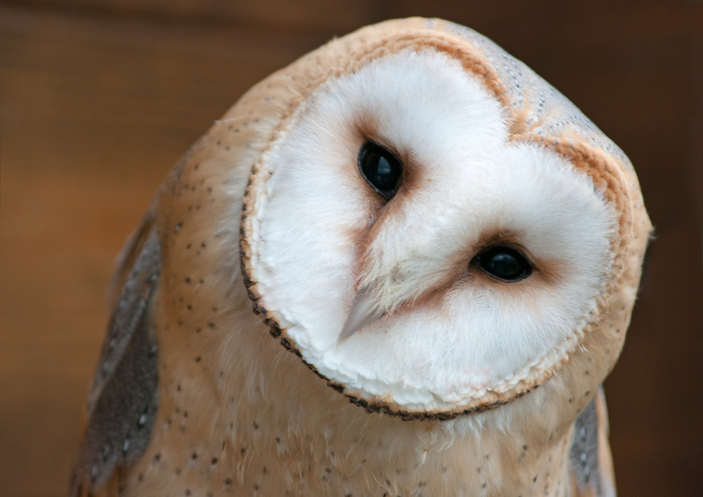
Barn Owl, Tyto alba,
If you want to experience owl hooting firsthand, timing and location are everything. The following tips will maximize your chances.
Go out on cold, still nights between November and February. This is peak hooting season for most North American owls.
Choose locations near mature forest edges, wooded river valleys, or old growth woodland. These habitats support the highest owl densities.
Stand quietly and listen for at least 15 to 20 minutes before moving. Owls often hoot in cycles with several minutes of silence between calling sessions.
Avoid using strong flashlights, which can disturb roosting owls. Red-filtered lights are preferred by experienced birdwatchers for nighttime wildlife observation.
Frequently Asked Questions (FAQs)
Why do owls hoot at night?
Owls hoot at night because they are mostly nocturnal and nighttime air carries sound much farther than daytime air does. It is the ideal acoustic environment for long-distance communication.
What does it mean when an owl hoots outside your window?
It almost always means a territorial owl is nearby and actively claiming the area around your home as its hunting ground. It is a normal, natural behavior and not a negative omen.
Do all owl species hoot?
No, not all owls hoot. Barn Owls screech, Eastern Screech-Owls produce a descending whinny, and Northern Saw-whet Owls make repetitive tooting sounds instead of a classic hoot.
Why do owls hoot so much in winter?
Winter, especially November through February, is peak breeding season preparation for most owls. They hoot frequently to establish territory and attract mates before nesting begins in early spring.
Can owls recognize each other by their hoot?
Yes. Research shows owls can identify individual neighbors by their unique vocal signatures and are consistently more aggressive toward unfamiliar owls than toward known neighbors.
How far can an owl hoot travel?
Most owl hoots travel at least a quarter mile. Great Horned Owls can be heard several miles away on cold, still nights, and Snowy Owl calls have been recorded traveling close to seven miles under ideal conditions.
Why do two owls hoot back and forth?
Two owls exchanging alternating calls are almost always a bonded pair performing a duet. This coordinated calling reinforces their pair bond and helps them coordinate nesting and hunting duties.
Is it bad luck to hear an owl hooting?
From a scientific perspective, no. An owl hoot is simply communication between wildlife. Many cultures, including Ancient Greek and East Asian traditions, actually view owl calls as omens of wisdom and good fortune.
Why does an owl hoot repeatedly without stopping?
Repeated, sustained hooting usually means the owl is actively broadcasting a territorial claim or responding to a rival owl nearby. The urgency and repetition communicate heightened territorial aggression.
When do owls stop hooting?
Owl hooting decreases significantly once nesting begins in late winter and early spring. During incubation and chick-rearing, owls stay much quieter to avoid drawing attention to the nest site.
Conclusion
Why do owls hoot is a question with a richly layered answer that touches on territory, survival, reproduction, and communication. Owls hoot to defend their space, find and bond with mates, guide their young, and warn of danger.
Every hoot serves a purpose shaped by millions of years of evolutionary pressure.
The type, pitch, frequency, and rhythm of each call tells a detailed story about what that owl is doing and why.
Recognizing these patterns transforms a simple nighttime sound into a window into one of nature’s most sophisticated communication systems.
Whether you are a birdwatcher, a wildlife enthusiast, or simply someone who heard an owl outside your window and wanted to know more, understanding the reasons behind the hoot deepens your connection to the natural world.
Next time you hear that haunting sound in the dark, you will know exactly what the owl is saying.