Why ESR Is High in Female? Causes Explained 2026
Why ESR is high in female is one of the most common questions women ask after getting a blood test report, and the answer is almost never simple or one-size-fits-all.
ESR, which stands for Erythrocyte Sedimentation Rate, is a blood test that measures how fast red blood cells settle at the bottom of a test tube in one hour. A faster rate signals that inflammation is present somewhere in the body.
Women naturally tend to have higher ESR values than men due to hormonal fluctuations, menstrual cycles, pregnancy, and biological differences in red blood cell counts. But elevated ESR can also point to infections, autoimmune conditions, thyroid disorders, and other health concerns that deserve proper attention.
What Is ESR and How Does It Work?

ESR stands for Erythrocyte Sedimentation Rate. It is a simple, affordable blood test that has been used since 1921 to detect inflammation inside the body.
During the test, a small sample of blood is placed in a narrow upright tube called a Westergren tube. After one hour, the lab technician measures how far the red blood cells have settled toward the bottom, recorded in millimeters per hour (mm/hr).
When inflammation is present in the body, special proteins called acute-phase reactants — including fibrinogen and globulins — increase in the bloodstream. These proteins cause red blood cells to clump together in stacks (called rouleaux formation), making them heavier and causing them to settle faster. The faster they settle, the higher the ESR reading.
ESR is a non-specific test. It tells the doctor that inflammation exists but does not identify which disease or organ is causing it. It is always interpreted alongside other tests, symptoms, and the patient’s medical history.
Why ESR Is High in Female? ESR Normal Range in Females
Understanding what counts as a normal ESR level in females requires knowing that the normal range changes with age and physiological state. Women naturally have higher ESR values than men at every age.
The most widely used method is the Westergren method, which is considered the gold standard for ESR measurement worldwide.
ESR Normal Range Table (Westergren Method)
| Group | Normal ESR Range |
|---|---|
| Women under 50 years | 0 – 20 mm/hr |
| Women over 50 years | 0 – 30 mm/hr |
| Men under 50 years | 0 – 15 mm/hr |
| Men over 50 years | 0 – 20 mm/hr |
| Pregnant women (2nd/3rd trimester) | 30 – 70 mm/hr (physiological) |
| ESR above 100 mm/hr (any adult) | Requires urgent investigation |
These are general reference values. Individual labs may vary slightly. Always discuss your specific result with a doctor who can interpret it in context.
A mildly elevated ESR of 25 to 40 mm/hr in a woman of reproductive age is quite common and frequently caused by harmless physiological factors. An ESR above 100 mm/hr always requires prompt medical evaluation to rule out serious infection or malignancy.
Why ESR Is Naturally Higher in Females
Before examining disease-related causes, it is important to understand why ESR is physiologically higher in women compared to men. Several biological differences contribute to this baseline elevation.
Women generally have a lower red blood cell count than men. Fewer red blood cells in the same volume of blood means they settle faster during the ESR test, producing a higher reading even in the absence of any disease.
The female hormones oestrogen and progesterone directly influence inflammatory markers in the blood. These hormones fluctuate throughout the menstrual cycle, during pregnancy, and through the transition of menopause — each phase capable of temporarily raising ESR.
Women are also significantly more likely than men to develop autoimmune conditions such as rheumatoid arthritis, lupus, and Sjögren’s syndrome — all of which produce chronic inflammation and persistently elevated ESR.
Main Causes of High ESR in Females
1. Menstrual Cycle
Hormonal fluctuations during menstruation — particularly changes in oestrogen and progesterone — can cause a temporary increase in ESR. This is a normal physiological response and does not signal illness.
ESR values during or just after menstruation may be slightly above the standard threshold. These values typically return to baseline once the cycle ends.
If a blood test is taken during menstruation, the doctor should be informed so the result can be interpreted accurately.
2. Pregnancy
ESR rises significantly during pregnancy and is considered a normal physiological change. Increased plasma volume, hormonal shifts, and immune system modulation all contribute to higher readings during gestation.
ESR can reach 40 to 70 mm/hr during the second and third trimester without indicating any pathological condition. After delivery, ESR typically normalizes within four to six weeks.
Extremely high ESR during pregnancy — especially above 80 mm/hr — combined with other symptoms such as fever, joint pain, or urinary symptoms should always be evaluated by a doctor.
3. Menopause and Perimenopause
As women enter perimenopause and menopause, declining oestrogen levels trigger changes in immune function and low-grade systemic inflammation. This causes a natural rise in ESR that can persist for several years.
Postmenopausal women frequently show ESR values above 30 mm/hr without any identifiable disease. This is why the normal upper limit for women over 50 is set at 30 mm/hr rather than 20 mm/hr.
4. Infections
Bacterial, viral, and fungal infections are among the most common causes of acutely elevated ESR in women. The immune response to any infection triggers a rapid rise in acute-phase proteins, which speeds up red blood cell sedimentation.
Common infections that raise ESR in women include urinary tract infections (UTIs), pelvic inflammatory disease (PID), sinusitis, tonsillitis, pneumonia, and tuberculosis (TB).
Viral infections like influenza and COVID-19 can also raise ESR during and after the illness. Post-COVID ESR elevation is common and typically temporary, resolving within a few weeks of recovery.
Bacterial infections tend to raise ESR more significantly than viral infections. ESR of 40 to 80 mm/hr is typical during an active bacterial infection.
5. Iron-Deficiency Anaemia
Iron-deficiency anaemia is extremely common in women, particularly those with heavy menstrual bleeding or inadequate dietary iron intake. It is one of the most frequently overlooked causes of elevated ESR in females.
When red blood cells are fewer in number or abnormally shaped due to iron deficiency, they settle faster in the test tube — producing a falsely elevated ESR that does not directly reflect inflammatory disease.
Correcting iron deficiency through dietary changes or supplementation often normalises ESR in these women without any additional medical treatment.
6. Autoimmune Diseases
Autoimmune diseases disproportionately affect women and are a leading cause of persistently elevated ESR in the female population. In these conditions, the immune system mistakenly attacks the body’s own tissues, creating chronic inflammation.
The most common autoimmune conditions associated with high ESR in women include:
- Rheumatoid Arthritis (RA): Causes joint inflammation with ESR often above 60 mm/hr during flares
- Systemic Lupus Erythematosus (SLE): A multisystem autoimmune disease more prevalent in women of reproductive age
- Sjögren’s Syndrome: Causes dry eyes, dry mouth, and chronic systemic inflammation
- Polymyalgia Rheumatica: Affects older women with severe muscle pain and very high ESR, often above 80 mm/hr
- Multiple Sclerosis (MS): A neurological autoimmune disease more common in women
- Autoimmune Thyroiditis (Hashimoto’s): Thyroid-specific autoimmune inflammation
ESR is routinely used to monitor disease activity in autoimmune conditions. A rising ESR in a known autoimmune patient often signals a flare requiring treatment adjustment.
7. Thyroid Disorders
Both hypothyroidism (underactive thyroid) and hyperthyroidism (overactive thyroid) can raise ESR in women. Thyroid hormones regulate protein metabolism, and any disruption in thyroid function affects the acute-phase proteins that influence ESR.
Hypothyroidism is far more prevalent in women than in men. When thyroid function is restored with appropriate treatment, ESR typically returns toward normal.
Women with unexplained elevated ESR alongside symptoms of fatigue, weight changes, hair loss, or cold intolerance should be tested for thyroid dysfunction.
8. PCOS and Endometriosis

Polycystic Ovary Syndrome (PCOS) and endometriosis are two gynaecological conditions that involve chronic low-grade inflammation unique to women. Both can cause mild to moderate ESR elevation that persists over time.
PCOS affects hormone balance and is associated with insulin resistance and chronic systemic inflammation. Endometriosis involves the growth of uterine-like tissue outside the uterus, triggering persistent immune activation.
Women with these conditions may notice consistently elevated ESR even when they feel relatively well. Regular monitoring and appropriate gynaecological management help keep inflammation in check.
9. Chronic Kidney Disease
The kidneys play a key role in clearing inflammatory proteins from the blood. When kidney function declines, albumin levels drop and other plasma proteins accumulate — directly raising ESR.
Nephrotic syndrome, a condition where the kidneys leak large amounts of protein, is associated with particularly high ESR readings. Chronic kidney disease of any cause produces a sustained elevation in ESR over time.
Women with known kidney disease should have ESR interpreted alongside kidney function tests (creatinine, eGFR) for accurate clinical context.
10. Tuberculosis (TB)
Tuberculosis is a chronic bacterial infection that produces very high and sustained ESR elevation — typically ranging from 60 to over 100 mm/hr. It remains a leading infectious cause of markedly elevated ESR worldwide.
TB can present with subtle symptoms in its early stages, including mild fever, night sweats, fatigue, and weight loss. An ESR above 80 mm/hr without an obvious cause should always include TB in the differential diagnosis.
11. Inflammatory Bowel Disease (IBD)
Crohn’s disease and ulcerative colitis are chronic inflammatory conditions affecting the digestive tract. Both diseases cause persistent systemic inflammation, reflected in consistently elevated ESR.
Women with IBD often notice their ESR rises during disease flares and drops during remission. ESR is used alongside CRP and other markers to monitor IBD activity and treatment response.
12. Obesity and Metabolic Syndrome
Excess body fat triggers low-grade chronic inflammation throughout the body. Fat tissue, particularly visceral fat around the abdomen, releases inflammatory cytokines that raise acute-phase proteins and subsequently elevate ESR.
Women with obesity, insulin resistance, or metabolic syndrome may have persistently mildly elevated ESR even without any identifiable acute illness. Weight management and an anti-inflammatory diet help address this root cause.
13. Cancer
Certain malignancies can cause persistently elevated ESR through chronic immune activation and tumour-related inflammation. Cancers most commonly associated with high ESR in women include breast cancer, ovarian cancer, lymphoma, and multiple myeloma.
ESR is not a cancer screening test and should never be used as one. However, a very high ESR above 100 mm/hr combined with unexplained weight loss, persistent fatigue, night sweats, or a palpable lump warrants urgent investigation.
Testicular cancer in men and Waldenstrom’s macroglobulinaemia (a white blood cell cancer) are associated with some of the highest ESR values recorded.
14. Chronic Stress
Chronic psychological stress increases cortisol levels and triggers low-grade systemic inflammation over time. This inflammatory state raises acute-phase proteins, which directly elevates ESR.
Sleep deprivation compounds the effect of stress on inflammatory markers. Women managing high workloads, caregiving responsibilities, and emotional stress may show mildly elevated ESR that has no identifiable medical cause.
Addressing stress through lifestyle changes often leads to gradual normalisation of ESR in these cases.
15. Medications and Contraceptives
Certain medications directly influence ESR readings. Oral contraceptive pills and hormone replacement therapy (HRT) raise ESR through their effect on oestrogen and plasma proteins.
Corticosteroids lower ESR by suppressing inflammation. NSAIDs slightly reduce ESR. Chemotherapy drugs can raise or lower ESR depending on their mechanism.
Always inform your doctor about all medications, supplements, and contraceptives you are taking when interpreting ESR results.
Comprehensive Cause Reference Table
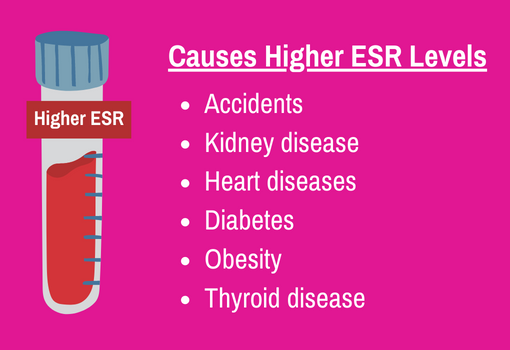
| Cause | Typical ESR Range | Common in Women? | Requires Doctor? |
|---|---|---|---|
| Menstrual cycle | 20 – 35 mm/hr (mild, temporary) | Yes | Only if persistent |
| Pregnancy (2nd/3rd trimester) | 30 – 70 mm/hr | Yes | Monitor regularly |
| Menopause | 25 – 40 mm/hr | Yes | Context dependent |
| Iron deficiency anaemia | 25 – 50 mm/hr | Very common | Yes |
| UTI / sinusitis / PID | 30 – 60 mm/hr | Yes | Yes |
| Tuberculosis | 60 – 100+ mm/hr | Global concern | Urgently |
| Rheumatoid arthritis | 40 – 80 mm/hr | Very common | Yes |
| Lupus (SLE) | 40 – 100 mm/hr | Very common | Yes |
| Polymyalgia rheumatica | 80 – 100+ mm/hr | Older women | Yes |
| PCOS / Endometriosis | 25 – 50 mm/hr | Women only | Yes |
| Thyroid disorders | 25 – 60 mm/hr | Common in women | Yes |
| Chronic kidney disease | 40 – 80 mm/hr | Yes | Yes |
| Obesity / metabolic syndrome | 25 – 45 mm/hr | Yes | Yes |
| Cancer (lymphoma, ovarian, breast) | 60 – 100+ mm/hr | Varies | Urgently |
| Chronic stress | 20 – 40 mm/hr (mild) | Yes | If persistent |
| Oral contraceptives / HRT | Mild elevation | Yes | Inform doctor |
Symptoms Associated with High ESR in Females
ESR itself does not produce symptoms. The symptoms a woman experiences are caused by the underlying condition that is raising the ESR. Common symptoms reported alongside elevated ESR in women include:
- Persistent fatigue or unusual weakness that does not improve with rest
- Joint pain, stiffness, or swelling — especially in the morning
- Low-grade fever or intermittent fever with no clear cause
- Unexplained weight loss over weeks or months
- Night sweats that soak clothing or bedding
- Headaches, neck pain, or scalp tenderness (possible temporal arteritis in older women)
- Pelvic pain, painful periods, or unusual vaginal discharge (possible PID or endometriosis)
- Dry eyes, dry mouth, or persistent skin rashes
- Urinary burning or frequency (possible UTI)
- Shortness of breath, persistent cough, or chest tightness
None of these symptoms alone confirms a diagnosis. They must be evaluated together with ESR results and additional diagnostic tests for an accurate picture.
ESR vs CRP — Understanding the Difference
Doctors often order both ESR and C-Reactive Protein (CRP) tests together. Understanding the difference helps women make sense of their results.
| Feature | ESR | CRP |
|---|---|---|
| What it measures | Rate of red blood cell settling | Specific acute-phase protein level |
| Response time to inflammation | 24 – 48 hours | 6 – 12 hours (faster) |
| Normalises after inflammation | 2 – 4 weeks (slowly) | 3 – 7 days (quickly) |
| Best for | Chronic inflammation monitoring | Acute infection detection |
| Specificity | Low (non-specific) | Moderately higher |
| Used together | Yes — more informative as a pair | Yes |
CRP rises faster and falls faster than ESR. ESR is better for tracking long-term chronic conditions like rheumatoid arthritis or lupus. When both are elevated together, inflammation is almost certainly present. When only one is elevated, the doctor will interpret the discordance to understand the nature of the inflammatory process.
How to Lower High ESR — Treatment and Lifestyle
There is no direct treatment to lower ESR on its own. ESR is a symptom indicator, not a disease. The goal of treatment is always to identify and address the underlying cause.
Medical Treatments
Once the cause is diagnosed, the doctor will prescribe targeted treatment:
- Antibiotics for bacterial infections like UTI, PID, sinusitis, or tuberculosis
- NSAIDs (Ibuprofen, Naproxen) for pain and inflammation reduction in arthritis and mild inflammatory conditions
- Corticosteroids for severe autoimmune flares and conditions like polymyalgia rheumatica
- Disease-Modifying Antirheumatic Drugs (DMARDs) such as methotrexate or hydroxychloroquine for rheumatoid arthritis and lupus
- Thyroid medications (levothyroxine for hypothyroidism) to restore thyroid balance and reduce ESR
- Iron supplementation to correct iron-deficiency anaemia and normalise ESR
- Biologics for moderate-to-severe autoimmune disease not controlled by standard DMARDs
Natural and Lifestyle Approaches
For mildly elevated ESR or as a complement to medical treatment, lifestyle measures can meaningfully reduce systemic inflammation over time.
Anti-inflammatory diet: Eat omega-3-rich foods like fatty fish, walnuts, and flaxseeds. Include turmeric, ginger, garlic, berries, leafy green vegetables, and olive oil. Reduce refined carbohydrates, sugary drinks, processed meats, and trans fats. These dietary changes directly influence inflammatory markers including ESR.
Regular moderate exercise: Walking, yoga, swimming, and cycling for 30 minutes most days improves circulation, supports immune regulation, and reduces chronic low-grade inflammation. Avoid extreme over-exercise, which can temporarily raise inflammatory markers.
Stress management: Chronic stress elevates cortisol and drives systemic inflammation. Mindfulness meditation, deep breathing exercises, yoga, and adequate sleep all help reduce stress-induced inflammation that contributes to elevated ESR.
Adequate sleep: Seven to eight hours of consistent quality sleep is essential for immune balance and recovery. Sleep deprivation is a proven driver of inflammatory marker elevation.
Hydration: Drinking two to three litres of water daily supports kidney function, blood circulation, and the body’s ability to clear inflammatory proteins efficiently.
Weight management: Achieving a healthy weight reduces visceral fat and the chronic low-grade inflammation it produces. Even moderate weight loss in overweight women measurably reduces ESR over time.
Avoid smoking and excess alcohol: Both are independent drivers of systemic inflammation. Quitting smoking and limiting alcohol intake directly support ESR normalisation.
When to See a Doctor for High ESR
Not every elevated ESR requires an emergency appointment. But certain scenarios always warrant prompt medical evaluation.
See a doctor soon if:
- ESR is above 40 mm/hr with no clear cause like recent illness or menstruation
- ESR has been elevated across multiple tests over weeks or months
- Elevated ESR is accompanied by joint pain, persistent fatigue, or unexplained weight loss
- You have symptoms of a possible infection such as fever, pelvic pain, or urinary burning
- You are managing a known chronic condition and notice a significant rise in ESR
Seek urgent care immediately if:
- ESR is above 100 mm/hr for the first time with no obvious explanation
- ESR above 70 mm/hr combined with unexplained weight loss, night sweats, or persistent fever
- You have a new lump, swelling, or mass anywhere in the body alongside high ESR
- ESR is rising on serial testing rather than stabilising or falling
ESR above 100 mm/hr must always be investigated urgently to exclude serious infection, active autoimmune disease, or malignancy.
What Happens If High ESR Is Left Untreated?
Leaving a persistently elevated ESR uninvestigated means leaving the underlying condition untreated. The ESR itself causes no harm. But the conditions driving it — infections, autoimmune disease, cancer — can progress and cause serious damage if ignored.
Untreated rheumatoid arthritis leads to permanent joint destruction. Untreated lupus damages the kidneys, heart, and brain. Untreated tuberculosis spreads and becomes drug-resistant. Untreated pelvic inflammatory disease causes infertility and chronic pelvic pain.
A high ESR is the body’s signal that something needs attention. Taking that signal seriously and investigating it promptly is always the right approach.
ESR Test — What to Expect
The ESR test is a routine blood test with minimal preparation required. No fasting is necessary before an ESR test, making it easy to fit into any health check appointment.
A small blood sample is drawn from a vein in the arm and placed into a Westergren tube. After one hour, the laboratory reads how far the red blood cells have settled and reports the result in millimetres per hour.
The test takes only minutes to perform. Results are typically available within the same day or the following day. The test itself carries minimal risk — only the brief discomfort of a needle prick and a small chance of minor bruising at the puncture site.
Inform your doctor about all medications, supplements, oral contraceptives, and any recent illness before the test. These factors can all influence the result and must be considered during interpretation.
Frequently Asked Questions (FAQs)
Why is ESR high in female more often than in male?
Women have lower red blood cell counts, higher oestrogen levels, and are more prone to autoimmune diseases — all of which naturally raise ESR. Menstruation, pregnancy, and menopause further contribute to higher baseline readings in females.
What is the normal ESR range for females?
Women under 50 should have ESR below 20 mm/hr. Women over 50 should have ESR below 30 mm/hr. Pregnant women may have values between 30 and 70 mm/hr, which is considered physiologically normal.
Is a high ESR always a sign of serious disease in women?
No. Mild elevation is very common in women and can result from menstruation, anaemia, minor infections, stress, or pregnancy. Persistent elevation above 50 mm/hr or values above 100 mm/hr always warrant further investigation.
What is the most common cause of high ESR in females?
Iron-deficiency anaemia, infections (especially UTI and PID), and autoimmune diseases like rheumatoid arthritis and lupus are the most common causes of elevated ESR specifically in women.
Can PCOS or endometriosis cause high ESR?
Yes. Both PCOS and endometriosis involve chronic low-grade inflammation unique to women, causing mild to moderate ESR elevation that can persist over time even when symptoms are not severe.
What does ESR above 100 mm/hr mean in a woman?
ESR above 100 mm/hr is considered markedly elevated and requires urgent medical evaluation. Possible causes include severe infections, active autoimmune disease, tuberculosis, polymyalgia rheumatica, or certain cancers.
Can stress raise ESR levels in females?
Yes. Chronic psychological stress elevates cortisol, drives low-grade systemic inflammation, and raises acute-phase proteins that directly increase ESR. Managing stress through lifestyle changes can help lower ESR in such cases.
How is ESR different from CRP?
ESR responds to inflammation slowly (24–48 hours) and normalises over 2–4 weeks, making it better for monitoring chronic conditions. CRP rises faster (6–12 hours) and falls faster (3–7 days), making it better for detecting acute infections.
How can I lower high ESR naturally?
Eat an anti-inflammatory diet rich in omega-3s, turmeric, and leafy greens. Exercise regularly, manage stress, sleep seven to eight hours, stay well hydrated, and correct any iron or vitamin deficiencies. Always treat the underlying cause with a doctor’s guidance.
When should I see a doctor for high ESR?
See a doctor if ESR is above 40 mm/hr without a clear reason, if it has been elevated on multiple tests, or if it is accompanied by joint pain, fatigue, fever, or unexplained weight loss. Go urgently if ESR exceeds 100 mm/hr for the first time.
Conclusion
Why ESR is high in female is a question that reflects one of the most important and commonly misunderstood aspects of women’s health. ESR is not a diagnosis — it is a signal. A signal that inflammation is present somewhere in the body and that the underlying cause needs to be identified and addressed.
For many women, a mildly elevated ESR is completely harmless and related to hormonal changes, iron deficiency, or a recent minor infection that is already resolving. For others, it is the first indicator of an autoimmune disease, a chronic infection, or a systemic condition that will benefit enormously from early diagnosis and treatment.
The key is never to ignore a persistently elevated ESR, especially when it comes with symptoms. Work with your doctor to interpret the result in full context, follow through with additional tests when recommended, and take the lifestyle steps that support lower inflammation every day. Your ESR is your body talking — it is worth listening to.