Why Is Diversity Important? Simple Real-Life Examples 2026
Why is diversity important is one of the most searched questions in education, business, and social policy — and for very good reason.
Diversity shapes the way teams think, the way communities grow, and the way societies progress.
When people from different backgrounds, cultures, genders, abilities, and experiences come together, the outcomes are measurably better — in creativity, decision-making, financial performance, and human connection.
What Does Diversity Actually Mean?
Diversity is not a single concept — it is a broad umbrella that covers many dimensions of human difference.
In its simplest form, diversity refers to the presence of a wide range of people and perspectives within a group, organization, or community. It includes visible differences like race, gender, and age, as well as less visible ones like religion, socioeconomic background, disability, sexual orientation, education, and lived experience.
Understanding the full scope of diversity is essential before asking why it matters, because each dimension carries its own significance and contributes differently to outcomes.
Types of Diversity: A Complete Overview
There are multiple categories of diversity that matter across different contexts:
| Type of Diversity | What It Includes |
|---|---|
| Cultural Diversity | Different nationalities, ethnicities, customs, and traditions |
| Gender Diversity | Men, women, non-binary, and gender-diverse individuals |
| Racial and Ethnic Diversity | People of different racial backgrounds and heritage |
| Age Diversity | Multiple generations working or living together |
| Cognitive Diversity | Different thinking styles, problem-solving approaches, and learning methods |
| Socioeconomic Diversity | People from different income levels and class backgrounds |
| Religious Diversity | People of different faiths and belief systems |
| Disability Diversity | People with physical, cognitive, or sensory disabilities |
| Sexual Orientation Diversity | LGBTQ+ inclusion and representation |
| Educational Diversity | People with different academic and vocational backgrounds |
Each type of diversity brings unique value and fills different gaps in how organizations and communities think, operate, and serve others.
Why Is Diversity Important? The Core Answer
The core answer is this: diversity makes groups smarter, organizations stronger, and communities more resilient.
When everyone in a room thinks the same way, has the same background, and brings the same experiences, the range of ideas is narrow. Blind spots are shared rather than corrected. Mistakes go unnoticed because no one has a different frame of reference.
Diversity breaks that pattern. It introduces different perspectives that challenge assumptions, different experiences that identify overlooked problems, and different ideas that lead to better solutions.
The evidence is not anecdotal. It is backed by decades of research from McKinsey, Deloitte, Harvard Business Review, and major universities worldwide.
Reason 1: Diversity Drives Innovation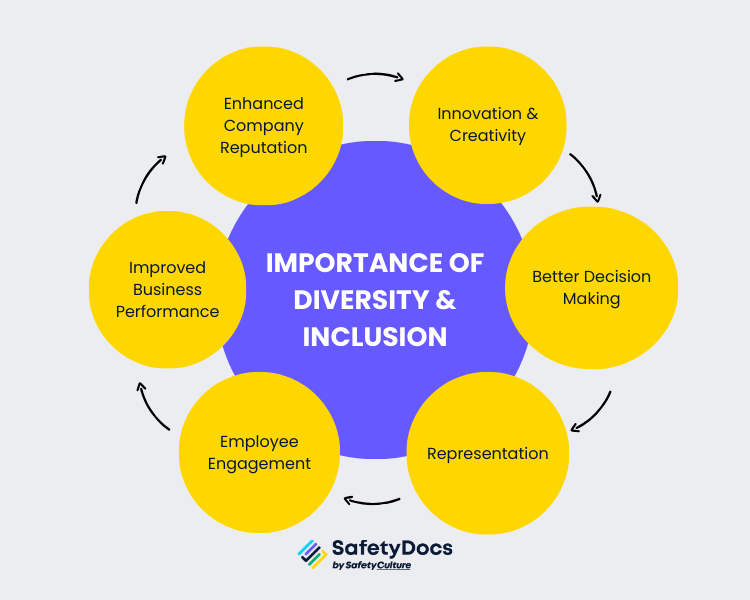
Innovation is the most widely cited outcome of diversity — and the most consistently supported by data.
Diverse teams approach problems from multiple angles. They draw on different cultural references, different technical backgrounds, and different life experiences. This variety of input produces a richer range of ideas and a greater willingness to challenge the status quo.
Research from Deloitte found that organizations with inclusive cultures are six times more likely to be innovative and agile. Diverse management teams earn 19% more revenue from innovation than their less diverse counterparts.
Real-Life Example: Apple’s design philosophy has long credited diverse engineering and design teams for producing products that work intuitively across cultures. When teams include people who experience accessibility needs firsthand, accessibility features like VoiceOver and Dynamic Type emerge as core functionality rather than afterthoughts.
Reason 2: Diversity Improves Decision-Making
Diverse teams make better decisions — not just occasionally, but consistently and measurably.
Research shows that teams with gender diversity make better decisions 87% of the time compared to individual decision-makers. When people with different perspectives evaluate an option, they identify more potential risks, question more assumptions, and consider a wider range of outcomes.
Cognitive diversity is particularly powerful in decision-making. When a team includes people who think differently — analytically, creatively, systematically, or intuitively — the quality of the final decision improves because it has been stress-tested from multiple angles.
Real-Life Example: In medicine, diverse research teams are more likely to catch that a drug affects women and men differently, or that a symptom presents differently in patients of different racial backgrounds. Homogeneous research teams historically missed these distinctions, leading to clinical outcomes that were worse for underrepresented groups.
Reason 3: Diversity Boosts Business Performance
The financial case for diversity is now the strongest it has ever been, according to McKinsey’s most recent report.
Companies in the top quartile for gender diversity on executive teams are 39% more likely to outperform financially than those in the bottom quartile. For ethnic and cultural diversity on executive teams, the figure is also 39%.
Companies with racial and ethnic diversity are 35% more likely to have financial returns above their industry average — in part because they better understand and serve diverse customer bases.
| Diversity Metric | Business Outcome |
|---|---|
| Gender diversity on executive teams | 39% increased likelihood of financial outperformance |
| Ethnic diversity on executive teams | 39% increased likelihood of financial outperformance |
| Diverse management teams | 19% more revenue from innovation |
| Inclusive culture | 6x more likely to be innovative |
| Diverse teams | 70% more likely to capture new markets |
| Companies with inclusive cultures | Employees 87% more likely to stay |
These numbers represent real competitive advantages, not soft benefits.
Reason 4: Diversity Attracts and Retains Top Talent
Job seekers in 2026 actively seek employers who demonstrate a genuine commitment to diversity.
According to Glassdoor, 76% of employees and job seekers say a diverse workforce is an important factor when evaluating companies and job offers. For millennials and Gen Z — who now make up the majority of the workforce — DEI (diversity, equity, and inclusion) is often a decisive factor in choosing between employers.
Organizations that fail to prioritize diversity face a measurable talent disadvantage. They lose candidates before the interview and lose employees shortly after hiring them.
Retention improves significantly in inclusive environments. Deloitte found that if just 10% more employees felt included, a company of 10,000 people would retain approximately 70 additional employees per year — a direct reduction in hiring, onboarding, and training costs.
Real-Life Example: Companies like Salesforce and Microsoft have made public commitments to pay equity and representation targets. Both consistently rank among the most desirable employers in tech — and both cite their DEI commitments as a direct contributor to their talent pipeline strength.
Reason 5: Diversity Enhances Creativity
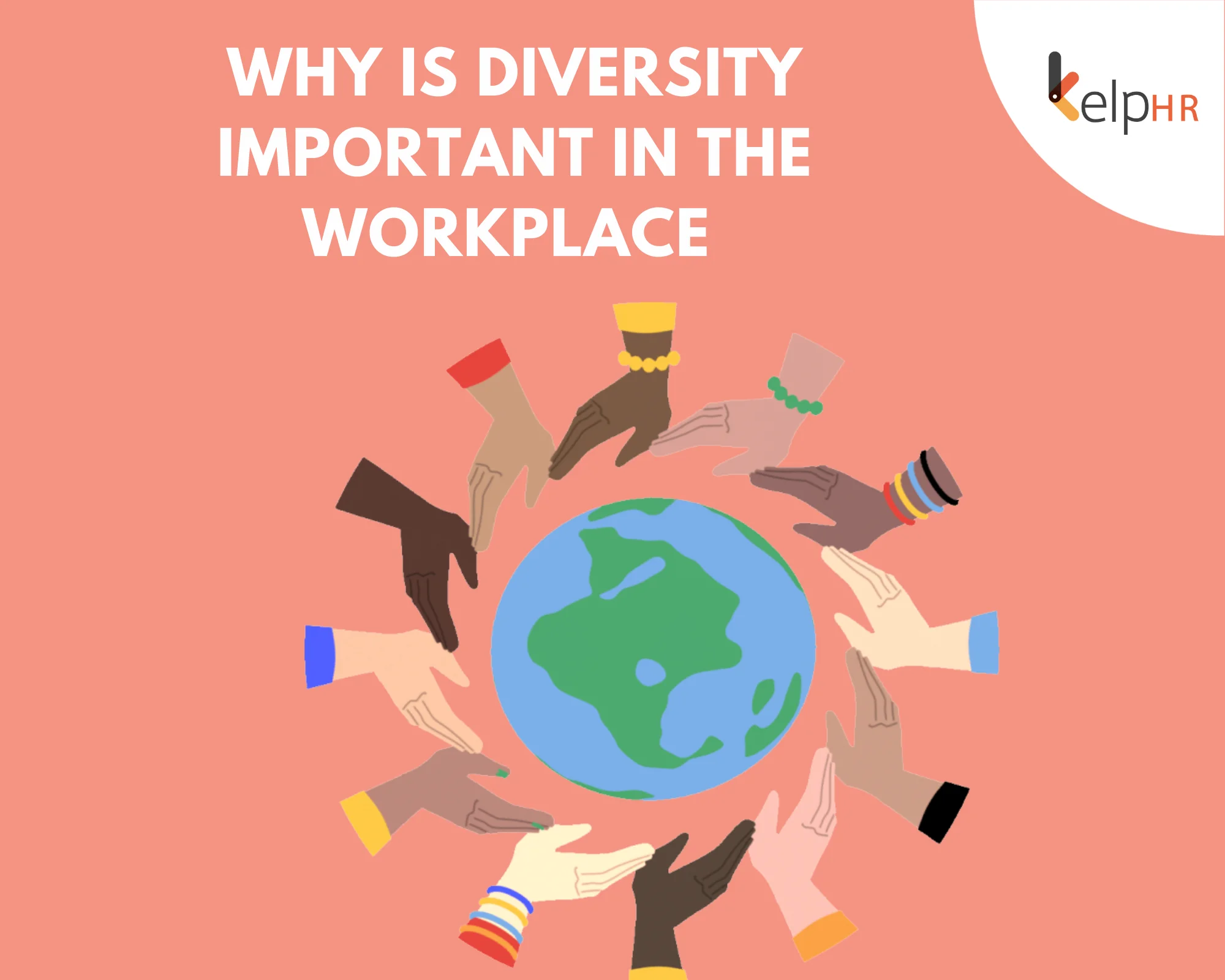
Creativity thrives on difference. The more varied the experiences in a room, the wider the creative range of the output.
Psychologists have long studied how exposure to different cultures, ideas, and perspectives expands creative capacity. When people encounter ways of thinking that differ from their own, they are forced to adapt, reframe, and imagine differently — all processes that fuel creative work.
In creative industries — advertising, film, design, gaming, fashion — diverse teams consistently produce work that resonates with broader audiences because the team itself represents those audiences.
Real-Life Example: When Pixar made “Coco,” a film set in Mexican culture, they brought in cultural consultants, Mexican artists, and bilingual storytellers to ensure authenticity. The result was a critically acclaimed and commercially successful film that resonated deeply with Mexican audiences and introduced millions of others to a rich cultural tradition.
Reason 6: Diversity Promotes Better Problem-Solving
The same quality that makes diverse teams better at decisions also makes them better at solving complex problems.
When a team faces a problem, the range of solutions they can generate is limited by the range of experiences they can draw on. A team of people from similar backgrounds will consistently generate similar solutions. A diverse team reaches solutions that individual members would never have found alone.
Scott Page, a professor at the University of Michigan, demonstrated through mathematical modeling that diversity of perspective outperforms ability alone in problem-solving contexts. A team of diverse problem-solvers regularly outperforms a team of the best individual problem-solvers when the problem is complex.
Real-Life Example: NASA’s engineering teams credit diverse problem-solving cultures for several mission-critical solutions, including creative fixes to the Apollo 13 crisis, where engineers had to improvise solutions using only what was available on the spacecraft.
Reason 7: Diversity Reflects the Real World
Organizations that mirror the diversity of the world they serve are better equipped to understand and meet the needs of that world.
A company that sells products globally but employs only people from one cultural background will consistently miss nuance, misread markets, and develop products that don’t translate well across cultures. A healthcare system that employs only one type of provider will struggle to deliver culturally competent care to all patients.
Diversity is not just an internal virtue — it is an external necessity for organizations that want to be relevant and effective in an increasingly diverse global market.
Real-Life Example: When McDonald’s entered the Indian market, it had to fundamentally redesign its menu to serve a population where a significant portion does not eat beef or pork. Local teams with cultural knowledge made this adaptation possible. A team without that diversity of perspective would have failed to adapt.
Reason 8: Diversity Builds Empathy and Reduces Bias
One of the most powerful but least discussed benefits of diversity is its effect on individual human development.
When people regularly interact with others who have different backgrounds, experiences, and perspectives, they develop greater empathy. They begin to see the world through other people’s eyes. They become less likely to hold unconscious biases that lead to unfair treatment.
Research from the American Psychological Association confirms that students who have positive diversity experiences show improved attitudes, reduced prejudice, and increased interest in the well-being of people unlike themselves.
These effects extend far beyond the classroom or the office. People who grow up in diverse environments tend to be more open-minded, more adaptable, and more capable of navigating a complex, interconnected world.
Reason 9: Diversity Is Essential in Education
Why is diversity important in education? Because learning is fundamentally enhanced when students are exposed to different ways of thinking and experiencing the world.
Research consistently shows that diverse classrooms improve critical thinking for all students — not just those from underrepresented groups. Exposure to peers with different backgrounds forces students to examine their own assumptions and consider alternative explanations.
Students in diverse educational settings are better prepared for diverse workplaces and global communities. They develop skills in communication, empathy, collaboration, and perspective-taking that homogeneous environments simply cannot provide.
Real-Life Example: Purdue Global cites the work of Alan Turing — a gay man who helped break Nazi codes in World War II and is credited with foundational contributions to modern computing — as evidence of what is lost when diversity is excluded. His marginalization in his time represents the cost of failing to include everyone.
Reason 10: Diversity Supports Social Justice and Equity
Diversity is also a matter of fairness — and this dimension matters enormously.
Historically, opportunities in education, employment, and leadership have not been equally distributed. Certain groups have been systematically excluded — not because they lacked ability, but because systems were designed without them in mind or actively worked against them.
Promoting diversity corrects these historical imbalances. It ensures that talent is recognized wherever it exists, that opportunities are distributed fairly, and that systems work for everyone — not just those who already had advantages.
This is not charity or lowering standards. It is recognition that the standards themselves were often designed by and for a narrow group, and that expanding representation improves the quality of outcomes for everyone.
Reason 11: Diversity Strengthens Communities
In everyday community life, diversity creates richer, more vibrant, and more resilient social environments.
Diverse communities expose residents to different foods, languages, art forms, festivals, and ways of life. This cultural exchange enriches daily life and builds the kind of mutual understanding that reduces conflict and increases social cohesion.
Diverse neighborhoods are also more economically resilient. A range of businesses, skills, and economic backgrounds creates interdependence and a broader tax and talent base that supports public services.
Real-Life Example: Cities like Toronto, Singapore, and Amsterdam are consistently ranked among the most livable cities in the world. All three are among the most culturally diverse cities on earth. Their diversity contributes directly to their economic dynamism, cultural richness, and social tolerance.
Reason 12: Diversity Improves Mental Health and Belonging
Feeling seen and represented matters deeply for psychological well-being.
When people see others like themselves in leadership, education, media, and institutions, it sends a powerful signal: you belong here. You can succeed here. Your identity is not a barrier. That signal has measurable effects on confidence, motivation, and mental health.
Conversely, environments that are not diverse often create invisible pressure on individuals from underrepresented groups — the pressure to conform, to minimize who they are, or to navigate spaces that were not designed with them in mind. This pressure is exhausting and psychologically costly.
Organizations that prioritize diversity and inclusion create psychological safety — the condition under which people do their best work, speak up with ideas, and remain fully engaged.
Diversity vs Inclusion: An Important Distinction
Diversity and inclusion are related but distinct concepts that are often confused.
| Concept | Definition | Example |
|---|---|---|
| Diversity | Having a mix of different people in a group | Hiring people of different genders, races, and ages |
| Inclusion | Ensuring all people feel valued and can contribute | Creating a culture where all voices are heard in meetings |
| Equity | Ensuring fair access and opportunity for all | Adjusting systems that have historically disadvantaged certain groups |
| Belonging | Feeling genuinely accepted as yourself | Employees feeling they can be authentic without career risk |
Diversity without inclusion is incomplete. You can hire a diverse workforce and still create an environment where underrepresented people feel excluded, overlooked, or pressured to conform.
True progress requires all four dimensions: diversity, inclusion, equity, and belonging working together.
Real-Life Examples of Diversity in Action
Here are concrete, real-world examples that illustrate why diversity is important across different sectors:
| Sector | Real-Life Example of Diversity in Action |
|---|---|
| Business | Google’s diverse AI ethics team identified racial bias in facial recognition systems before product launch, preventing a harmful public release |
| Healthcare | Diverse medical research teams discovered that heart attack symptoms present differently in women than in men, improving diagnosis and outcomes for millions |
| Education | Diverse classrooms in Finland have contributed to the country’s consistently top-ranked global education performance |
| Technology | Microsoft’s Accessibility team, which includes employees with disabilities, created features like eye-tracking technology that benefits millions globally |
| Government | Countries with greater gender diversity in parliament consistently score higher on education, healthcare, and quality of life indices |
| Community | Toronto’s multicultural neighborhoods generate significant economic activity through diverse food, retail, and service industries |
| Science | NASA’s diversity hiring expansion in the 1960s brought Katherine Johnson and other Black mathematicians whose calculations were critical to the success of the space program |
These examples demonstrate that diversity is not an abstract ideal — it produces tangible, measurable improvements in real systems and outcomes.
Barriers to Diversity and How to Overcome Them
Knowing why diversity is important does not mean achieving it is easy. Real barriers exist.
Unconscious bias — where people make decisions based on implicit assumptions about others — is one of the most persistent challenges. Even well-meaning individuals can favor candidates or ideas that feel familiar, reinforcing homogeneity without intending to.
Structural barriers also play a significant role. Hiring processes, promotion criteria, and leadership pipelines have historically been designed around a narrow definition of success that favors certain groups.
Organizations that are serious about diversity invest in bias training, structured hiring processes, sponsorship programs for underrepresented talent, transparent pay audits, and leadership accountability tied to diversity outcomes.
| Barrier | Solution |
|---|---|
| Unconscious bias in hiring | Blind resume screening, structured interviews |
| Lack of diverse candidates | Partnerships with HBCUs, community colleges, diverse networks |
| Promotion gaps for minorities | Mentorship and sponsorship programs |
| Pay inequity | Regular pay equity audits and public reporting |
| Exclusionary culture | Inclusive leadership training, psychological safety initiatives |
| Token diversity | Targeted representation at all levels, not just entry-level |
Diversity Statistics That Demonstrate Its Importance in 2026
Numbers tell part of the story clearly:
- Companies in the top quartile for gender diversity are 39% more likely to outperform financially — McKinsey 2023.
- 76% of job seekers say a diverse workforce is an important factor when choosing an employer — Glassdoor.
- Diverse teams are 70% more likely to capture new markets — Harvard Business Review.
- Organizations with inclusive cultures are 6x more likely to be innovative — Deloitte.
- Diverse management teams earn 19% more revenue from innovation.
- Companies with racial and ethnic diversity outperform peers by 36% in profitability.
- 80% of employees say they want to work for a company that values DEI — LinkedIn.
- Teams with gender diversity make better decisions 87% of the time versus individual decision-makers.
- A 10% increase in employee inclusion leads to approximately one additional workday of attendance per employee per year — Deloitte.
- Companies in the bottom quartile for diversity are 19% more likely to underperform financially — McKinsey.
How to Promote Diversity: Practical Starting Points
Understanding why diversity is important is the first step. Acting on it is the second.
For individuals, promoting diversity starts with self-awareness — recognizing your own biases, seeking out perspectives different from your own, and actively including others in conversations and decisions.
For organizations, meaningful diversity work requires systemic change — not one-time initiatives or diversity training sessions. It means embedding inclusive practices into hiring, promotion, compensation, and leadership development.
For communities, promoting diversity means creating spaces — schools, neighborhoods, civic institutions — where different people are genuinely welcomed, represented, and heard.
Everyone has a role to play, and even small actions create cumulative change.
Why Younger Generations Are Redefining Diversity
Millennials and Gen Z are expanding the definition of diversity beyond race and gender.
They see diversity as including education, personality, skills, experiences, and knowledge bases. They expect organizations to embrace diversity not as a compliance requirement or PR exercise, but as a genuine value reflected in culture, leadership, and decision-making.
According to LinkedIn, posts about diversity received 1.9 times more engagement in 2020 than other content. Among younger professionals, the conversation about diversity has become inseparable from conversations about authenticity, psychological safety, and personal values.
Organizations that recognize this shift and adapt accordingly will attract and retain the most talented people in the coming decade.
Frequently Asked Questions (FAQs)
Why is diversity important in the workplace?
Diverse workplaces produce better decisions, more innovation, and stronger financial performance. Research consistently shows diverse companies outperform less diverse ones across nearly every measurable metric.
Why is diversity important in education?
Diversity in education improves critical thinking, prepares students for a globalized world, and creates more equitable access to opportunity for students of all backgrounds.
What is the difference between diversity and inclusion?
Diversity means having a mix of different people in a group, while inclusion means creating an environment where all of those people feel genuinely valued, heard, and able to contribute fully.
How does diversity improve innovation?
Diverse teams bring a wider range of perspectives and experiences to problems, which generates more creative solutions and is six times more likely to produce innovation, according to Deloitte.
What are real-life examples of why diversity is important?
Examples include NASA’s Katherine Johnson whose calculations helped land humans on the moon, medical research discovering gender differences in heart attack symptoms, and diverse tech teams identifying AI bias before product launch.
What types of diversity exist?
Diversity includes cultural, gender, racial, age, cognitive, socioeconomic, religious, disability, sexual orientation, and educational diversity — each contributing differently to groups and organizations.
Does diversity actually improve business performance?
Yes. McKinsey’s research across 1,265 companies in 23 countries found a 39% increased likelihood of financial outperformance in companies with diverse leadership teams compared to those in the bottom quartile.
What are barriers to diversity?
Key barriers include unconscious bias, structural hiring inequities, lack of inclusive culture, pay gaps, and promotion disparities — all of which require systemic organizational action to overcome.
Why is diversity important for young people specifically?
Young people who grow up in diverse environments develop greater empathy, stronger critical thinking skills, and are better prepared for diverse workplaces and global communities throughout their lives.
Why is diversity important in society?
A diverse society is more resilient, more innovative, and more just. It ensures that all people have equal access to opportunities, and that systems and institutions serve everyone — not just those with historical advantages.
Conclusion
Why is diversity important ultimately comes down to a straightforward truth: the world is diverse, and the organizations, communities, and systems that reflect that diversity perform better, think more clearly, and serve people more effectively.
From McKinsey’s data showing a 39% financial outperformance advantage to real-life examples in medicine, space exploration, and technology, the evidence is overwhelming and consistent.
Diversity is not a feel-good initiative — it is a strategic, ethical, and practical imperative.
For individuals, it builds empathy and expands perspective. For organizations, it drives innovation, talent, and profit.
For communities, it creates richness, resilience, and equity. In 2026, the question is no longer whether diversity matters.
The question is how fast we are willing to make it a reality.