Why Is Gold So Expensive? Supply & Demand Explained 2026
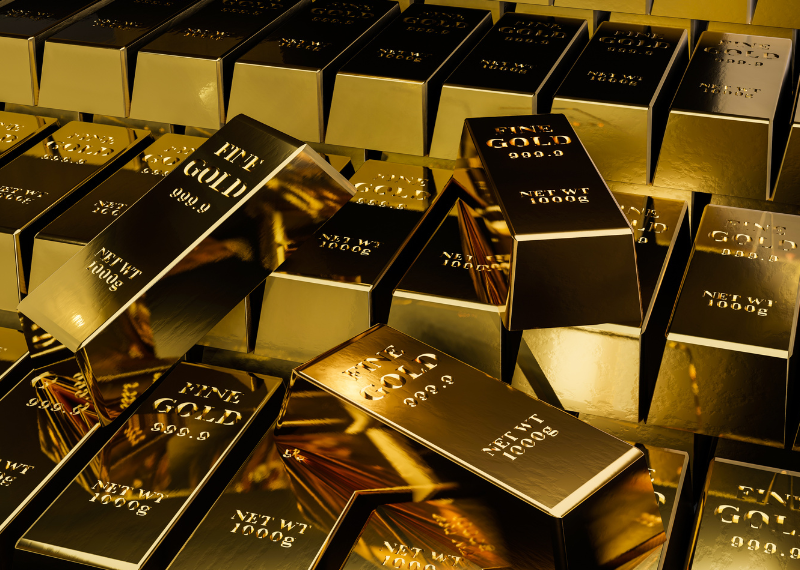
Why is gold so expensive is a question millions of people are asking in 2026, and the answer is more layered than most people expect. Gold has crossed $4,800 per ounce as of April 2026, up roughly $1,500 from just one year ago.
Major banks including J.P. Morgan, Goldman Sachs, and Deutsche Bank are forecasting prices between $5,500 and $6,300 per ounce by year-end.
This is not a random spike. It is the result of centuries of history, finite global supply, surging central bank demand, persistent inflation, geopolitical tension, and a fundamental shift in how the world views money and reserves. This guide breaks down every reason why gold is so expensive — and why it may go even higher.
What Makes Gold Valuable in the First Place?
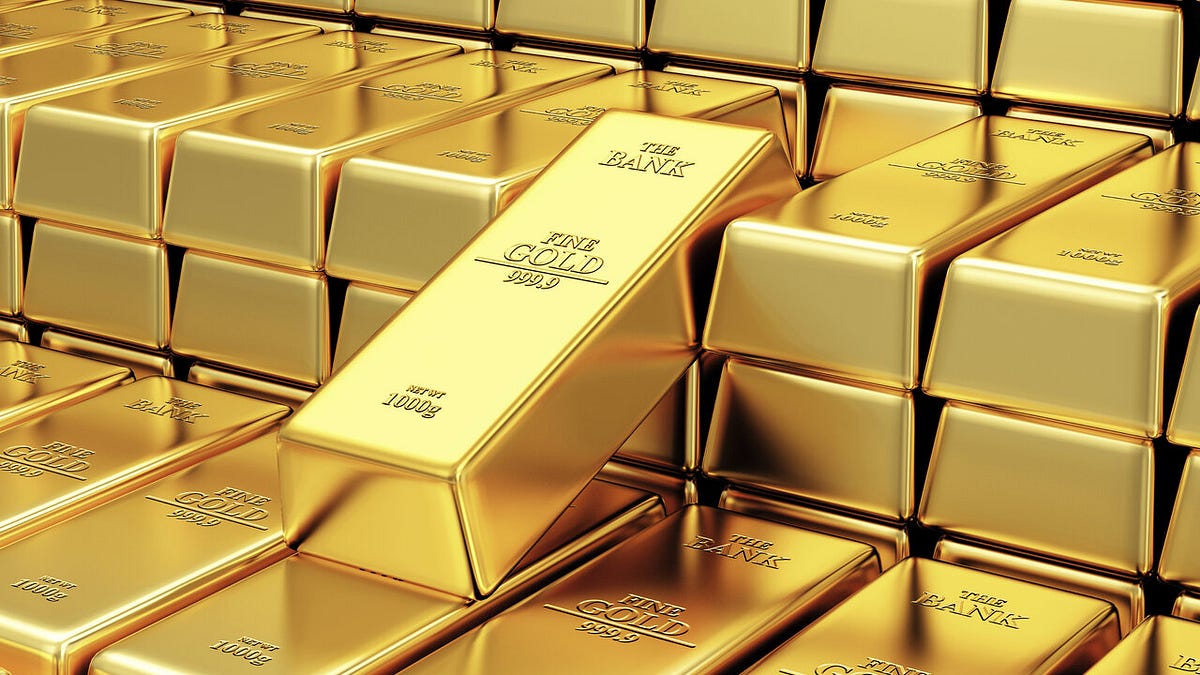
Before understanding why gold is so expensive today, it helps to understand what has made it valuable for thousands of years. Gold is not just a shiny metal. It has a unique combination of properties that no other element on the periodic table shares in the same combination.
Gold does not corrode, rust, or tarnish. It survives indefinitely in its original form, which makes it unlike any commodity you can store. A grain of wheat rots. A piece of iron rusts. Gold buried for 3,000 years emerges as bright and pure as the day it was mined.
Gold is also extraordinarily rare. It occurs at just 0.004 parts per million in the Earth’s crust. All the gold ever mined across all of human history — estimated at roughly 216,000 to 244,000 metric tonnes — would fit into approximately three Olympic-sized swimming pools. That is every coin, every bar, every piece of jewelry, and every circuit board ever made with gold, stacked together in a cube of just 21 metres on each side.
A Brief History of Why Humans Chose Gold as Money
Gold has been used as currency and a symbol of wealth since at least 4000 BC. Ancient Egypt, Mesopotamia, and Lydia all recognized gold as the standard store of value. By 1500 BC, gold had become a widely recognized medium of exchange for international trade.
King Croesus of Lydia introduced the first standardized gold coins around 550 BC, revolutionizing commerce. The Roman Empire minted gold coins across its territories, cementing gold as the backbone of international trade for centuries.
The gold standard — where national currencies were pegged to a fixed quantity of gold — dominated global economics from the 19th century through the early 20th century. Even when the United States formally ended the gold standard in 1971 under President Nixon, gold did not lose its appeal. Instead, it became a freely traded asset whose price reflects the health of the global financial system in real time.
Why Is Gold So Expensive Right Now in 2026?
Gold is trading at approximately $4,816 per ounce as of April 2026. That is nearly double its price from just two years ago. Several converging forces have driven this historic surge, and most of them are structural trends, not temporary spikes.
Reason 1: Gold Supply Is Finite and Increasingly Hard to Mine
The most fundamental reason why gold is so expensive is simple: there is not very much of it, and getting more out of the ground is becoming harder and more expensive every year.
Global gold mine production adds only around 3,000 to 3,500 tonnes of new gold to the world’s supply each year. That sounds like a lot until you consider that total above-ground gold stocks already exceed 205,000 metric tonnes. Annual new mine supply represents less than 2 percent of total existing supply, meaning the market cannot be flooded with new gold the way it could be flooded with oil or copper.
New gold discoveries are declining. The easy-to-find, near-surface deposits have mostly been found and mined. Modern mining requires going deeper underground, operating in remote and politically unstable regions, and investing billions of dollars in infrastructure before extracting a single ounce. The World Gold Council notes that most major mining companies are forecasting cautious or declining production into 2026 and 2027, even with prices at historic highs.
Environmental regulations, permitting delays, rising energy costs, and community opposition make building new gold mines a decade-long process with no guarantee of success. This structural supply constraint means gold cannot respond quickly to rising demand the way manufactured goods can.
Reason 2: Central Banks Are Buying Gold at Record Levels
One of the biggest drivers of gold’s price explosion in recent years is institutional demand from central banks. In 2022, 2023, and 2024, central banks around the world purchased more than 1,000 tonnes of gold per year — levels not seen since the Cold War era.
For the first time since 1996, gold now accounts for a larger share of central bank reserves than U.S. Treasuries. That is a historic shift in how sovereign institutions store their national wealth.
Countries including China, India, Turkey, Poland, Kazakhstan, and Singapore have all been aggressively increasing their gold reserves. The driving motivation is de-dollarization — a deliberate strategy to reduce dependence on the U.S. dollar as a reserve currency and shield national balance sheets from U.S. sanctions and dollar policy decisions.
J.P. Morgan projects that central banks will purchase approximately 755 tonnes of gold in 2026. Even this lower figure compared to recent years is nearly double the pre-2022 average of 400 to 500 tonnes annually. This is price-insensitive demand — central banks are buying regardless of the current price because their goal is strategic reserve diversification, not short-term profit.
Reason 3: Inflation Makes Gold More Attractive
Gold has served as an inflation hedge for millennia. When paper currency loses purchasing power, gold holds its value because it cannot be printed, created, or inflated away.
After the COVID-19 pandemic, the U.S. Federal Reserve increased the money supply by approximately 40 percent in a very short period. This massive monetary expansion fed directly into consumer price inflation. As inflation eroded the real value of savings held in cash or bonds, investors and individuals worldwide turned to gold as a store of value that could protect their purchasing power.
Core inflation in 2026 remains stubbornly above the Fed’s 2 percent target, hovering near 3.5 percent. As long as inflation outpaces Treasury yields, real interest rates remain negative. Negative real interest rates are historically the most bullish possible environment for gold, because the opportunity cost of holding a non-yielding asset like gold falls to zero or below.
Reason 4: Geopolitical Uncertainty Drives Safe Haven Demand
When the world feels unstable, money flows into gold. This is one of the most consistent patterns in financial history, and it is playing out powerfully in 2026.
Goldman Sachs estimates that ongoing geopolitical conflicts — including the Russia-Ukraine war, Middle East instability, and U.S.-China trade tensions — have added an $800 to $1,200 per ounce “war premium” to gold’s current price. That is a staggering premium driven entirely by fear and uncertainty.
Gold is unique among safe haven assets because it carries no counterparty risk. Unlike bonds, bank deposits, or government securities, gold does not depend on any institution to honor an obligation. A gold bar simply is what it is — a physical store of value that no government can default on, freeze, or confiscate without physical access to it.
Trade war fears and tariff uncertainty also drove significant demand in 2025. The imposition of a 39 percent U.S. tariff on gold bar imports from Switzerland — one of the world’s largest gold refiners — directly increased the cost of acquiring physical gold in the United States and created additional upward pressure on prices.
Reason 5: Gold ETFs and Investment Demand Are at Record Highs
Modern financial products have made it easier than ever for ordinary investors, institutional funds, and sovereign wealth funds to buy gold. Gold-backed exchange-traded funds (ETFs) allow investors to buy shares that represent fractional ownership of physical gold held in secure vaults, without needing to store it personally.
In 2025, gold ETFs globally recorded net inflows of 801.2 tonnes — the highest ever recorded. U.S.-listed gold ETFs alone added 437 tonnes, pushing total U.S. ETF gold holdings to a record 2,019 tonnes with assets under management of $280 billion.
This financialization of gold has dramatically expanded the pool of potential buyers. Retail investors, pension funds, insurance companies, and hedge funds that would never buy physical bullion can now access gold through their brokerage accounts. The World Gold Council recorded global gold demand hitting a record 1,313 tonnes in just the third quarter of 2025 — the highest single quarter ever measured.
Reason 6: A Weakening U.S. Dollar Amplifies Gold’s Price
Gold is priced globally in U.S. dollars. When the dollar weakens relative to other currencies, gold becomes cheaper for buyers using euros, yen, yuan, or rupees — which stimulates additional demand and pushes the dollar price higher.
The U.S. dollar index fell 6 percent in 2025, and that dollar weakness was a meaningful amplifier of gold’s rally. A weaker dollar reflects concerns about U.S. fiscal deficits, monetary policy credibility, and the long-term status of the dollar as the world’s reserve currency.
In January 2026, when the euro exchange rate hit approximately $1.20, gold simultaneously reached an all-time high near $5,600 per ounce. The correlation between dollar weakness and gold price strength is one of the most reliable relationships in commodity markets.
Reason 7: Interest Rate Cuts Reduce the Cost of Holding Gold
Gold pays no interest or dividend. In a high-interest-rate environment, investors have a strong incentive to hold bonds or savings accounts that generate yield instead of gold. But when interest rates fall, the opportunity cost of holding gold disappears.
The Federal Reserve delivered three consecutive interest rate cuts in late 2025, reducing the federal funds rate to 3.75 percent. Markets are pricing in additional cuts in 2026. Every rate cut reduces the yield on competing assets like U.S. Treasuries and makes non-yielding gold relatively more attractive.
The inverse relationship between interest rates and gold prices is one of the most studied phenomena in financial economics. Lower rates mean lower real yields, and lower real yields have historically been the single most reliable driver of gold bull markets.
Reason 8: Industrial and Technological Demand
Gold is not just a financial instrument. It is a critical industrial material used in electronics, medical devices, aerospace, and advanced technology. Its combination of conductivity, corrosion resistance, malleability, and biocompatibility makes it irreplaceable in many high-technology applications.
Currently, about 6 percent of annual gold demand comes from electronics manufacturing. Gold is used in computer chips, circuit boards, smartphones, aerospace components, and medical implants. As the global economy transitions toward more technology-intensive industries, industrial gold demand provides a stable floor beneath the price.
Unlike investment demand, which can be volatile, industrial gold demand is consistent and growing. Technology firms cannot substitute gold out of critical components without compromising performance or reliability.
Reason 9: Cultural and Jewelry Demand From Asia
India and China together account for the largest share of physical gold jewelry demand in the world. Gold holds deep cultural significance in both countries — in India, gold is central to weddings, festivals, and is considered auspicious and a form of financial security. In China, gold gifts are traditional during the Lunar New Year and a common form of savings.
These cultural patterns create persistent, recurring demand that is relatively inelastic to price changes. Even at historically high gold prices, Indian and Chinese consumers continue buying gold jewelry, coins, and bars as part of cultural tradition and financial planning.
India’s gold ETF market has grown 15.5 times in assets under management since 2020, reflecting a shift from purely physical gold purchases toward investment-grade gold products. This evolution broadens and deepens the base of gold demand in the world’s two most populous countries.
Gold Price History: How We Got to $4,800+ Per Ounce
Understanding how gold’s price has evolved over decades puts the current level in context.
| Year | Approximate Gold Price (per oz) | Key Driver |
|---|---|---|
| 1971 | $35 | End of gold standard (Nixon Shock) |
| 1980 | $800 | Oil shock, inflation, geopolitical crisis |
| 2000 | $280 | Post-Cold War stability, strong dollar |
| 2008 | $1,000 | Global financial crisis, safe haven surge |
| 2011 | $1,900 | Post-GFC debt crisis, Eurozone turmoil |
| 2020 | $2,067 | COVID-19 pandemic, monetary expansion |
| 2022 | $2,050 | Russia-Ukraine war, inflation spike |
| 2024 | $2,800 | Central bank buying surge, rate cut cycle begins |
| 2025 | $4,000+ | Record ETF inflows, tariff shock, de-dollarization |
| April 2026 | $4,816 | Geopolitical premium, continued central bank demand |
Each major price surge in gold’s modern history has been driven by a combination of financial stress, inflation, or geopolitical crisis — the exact conditions the world is experiencing in 2026.
Gold Supply: How Is Gold Mined and Why Is It So Hard?
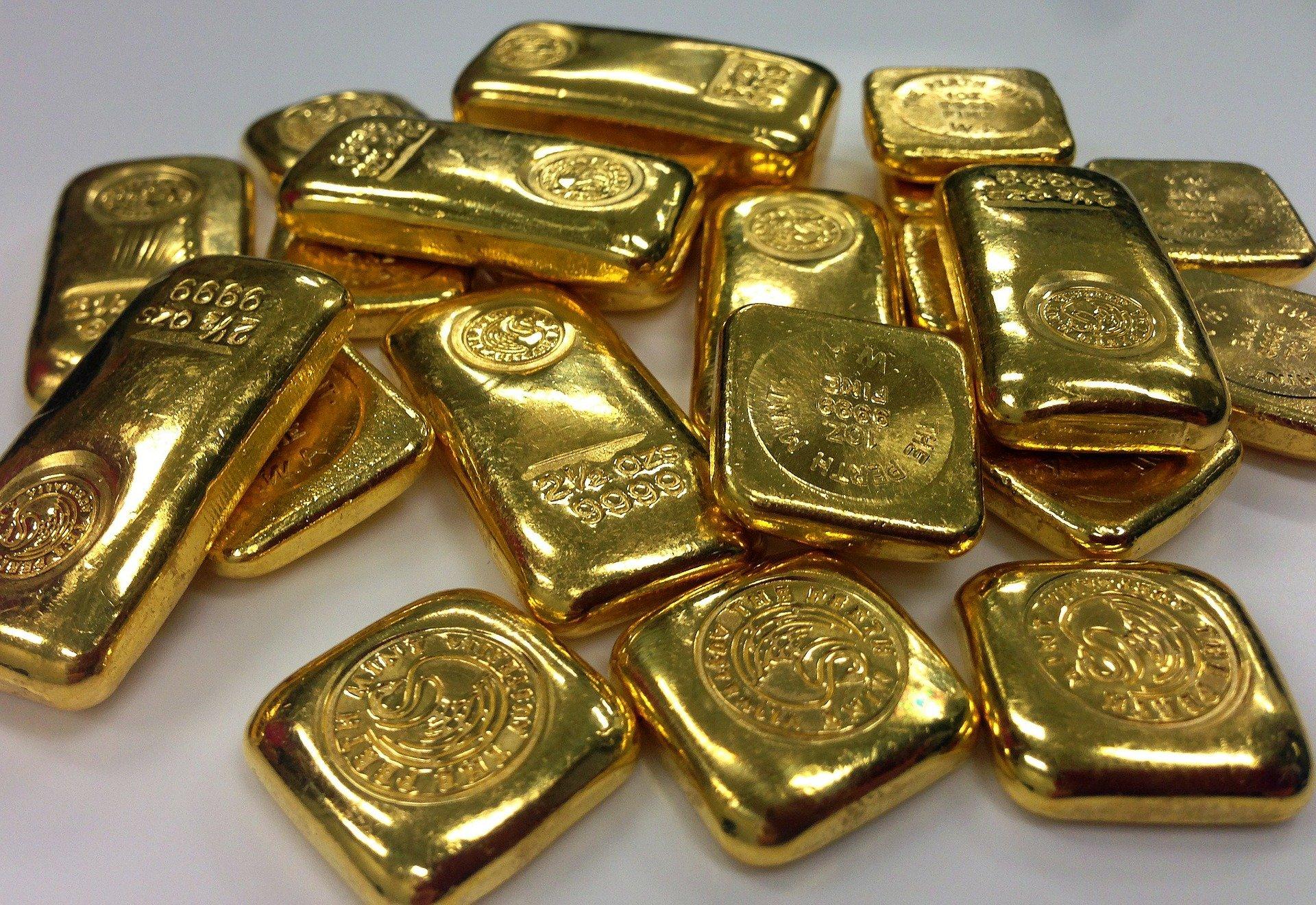
Gold mining is one of the most capital-intensive and technically complex industrial operations on earth. Understanding why supply cannot keep up with demand helps explain why gold stays expensive.
The top gold-producing countries are China, Australia, Russia, Canada, and the United States. Together they account for the majority of annual global mine output. But output from established mines declines over time as deposits are depleted, and finding and developing new mines takes 10 to 20 years from initial discovery to first production.
The average cash cost to mine an ounce of gold has risen dramatically over the past two decades, from around $200 per ounce in the early 2000s to over $1,000 per ounce today. When you include sustaining capital costs and overhead, the all-in sustaining cost (AISC) for many major producers exceeds $1,200 to $1,400 per ounce. Even at current prices above $4,800, margins are strong — but they were not strong enough at $1,500 to $2,000 to justify the enormous capital investment required to build new mines quickly.
Environmental permitting for new gold mines can take 5 to 10 years in many jurisdictions. Community opposition, indigenous land rights, water usage concerns, and political risk in gold-rich regions of Africa and South America add further delays and costs. The result is a structurally constrained supply that simply cannot respond quickly to price signals.
Global Gold Demand: Who Is Buying and Why?
| Demand Category | Share of Total Demand (2025) | Notes |
|---|---|---|
| Jewelry | ~44% | India and China dominant buyers |
| Investment (ETFs, bars, coins) | ~31% | Record ETF inflows in 2025 |
| Central Bank purchases | ~18% | Near-record buying for third straight year |
| Technology / Industrial | ~7% | Electronics, medical, aerospace |
Total above-ground gold stocks stand at approximately 205,000 to 219,000 metric tonnes. Annual mine production of roughly 3,300 to 3,500 tonnes adds less than 2 percent to this stock each year. Recycling (primarily jewelry resale and industrial recovery) adds another 300 to 400 tonnes annually.
This means the total annual supply increase is roughly 1.5 to 2 percent of existing stock — an extraordinarily low flow-to-stock ratio that gives gold its unique price stability over long time horizons and its vulnerability to demand surges in the short term.
De-Dollarization: The Structural Shift Behind the Gold Bull Market
One of the most important and underappreciated drivers of gold’s expensive price in 2026 is de-dollarization — the global trend of countries reducing their dependence on the U.S. dollar as a reserve currency.
For decades after World War II, the U.S. dollar served as the world’s dominant reserve currency. Central banks held U.S. Treasury bonds as their primary reserve asset. But a series of events — including U.S. sanctions freezing Russian dollar reserves after 2022, growing U.S. national debt (now approaching $39 trillion), concerns about dollar weaponization, and the rise of BRICS economic blocs — have accelerated a shift toward gold as a neutral reserve asset.
Gold has no counterparty. It cannot be sanctioned, frozen, seized by electronic means, or devalued by a foreign government’s policy decisions. For countries seeking independence from dollar-dominated financial systems, gold is the logical alternative.
China alone has been systematically increasing its official gold reserves for years. India, Turkey, Poland, and dozens of smaller central banks have followed. Morgan Stanley notes that investor positioning in gold remains surprisingly light among U.S.-based investors, meaning the de-dollarization-driven demand from foreign central banks and institutional investors has driven much of the recent rally without full participation from American retail investors — suggesting further upside potential if U.S. investors increase allocations.
Gold Price Forecast 2026: What Are the Major Banks Saying?
| Institution | 2026 Gold Price Forecast |
|---|---|
| J.P. Morgan | $5,500–$6,300 per ounce |
| Goldman Sachs | $5,800 per ounce |
| Deutsche Bank | $6,000 per ounce |
| UBS | $5,200–$5,900 per ounce |
| RBC Capital Markets | $4,800–$5,100 per ounce |
| Heraeus | $3,750–$5,000 per ounce |
| ING | $4,325 per ounce (conservative) |
| Citi | $5,000 per ounce (short-term) |
The range of forecasts reflects genuine uncertainty, but the floor estimates from even the most conservative analysts remain above $4,300. The bull case — driven by continued central bank buying, a weak dollar, negative real yields, and persistent geopolitical risk — points toward $6,000 and potentially higher.
J.P. Morgan calls gold its “highest conviction long” for 2026, noting that the structural drivers of demand — de-dollarization, inflation hedging, and geopolitical premium — show no signs of reversing.
How Does Gold Compare to Other Precious Metals?
Gold is not the rarest precious metal. Rhodium, platinum, and palladium are all significantly rarer than gold by crustal abundance. Yet gold commands the highest sustained price of the common investment metals because of something none of the others have in the same degree — universal historical recognition as money and a store of value.
| Metal | Rarity (Earth’s Crust) | Price (April 2026 approx.) | Key Use |
|---|---|---|---|
| Gold | 0.004 ppm | ~$4,800/oz | Finance, jewelry, electronics |
| Silver | 0.075 ppm | ~$38/oz | Industrial, investment, jewelry |
| Platinum | 0.005 ppm | ~$1,050/oz | Catalytic converters, jewelry |
| Palladium | 0.0015 ppm | ~$1,100/oz | Automotive catalysts |
| Rhodium | 0.0002 ppm | ~$4,600/oz | Automotive catalysts |
Silver is roughly 20 times more abundant than gold, which is one reason it is historically less expensive. Platinum is rarer than gold but lacks gold’s 6,000-year history as a global currency, limiting its investment demand base. Gold’s combination of moderate rarity, physical properties, and universal cultural recognition is what gives it its unique price premium over other metals.
Ways to Invest in Gold in 2026
There are more ways to invest in gold today than at any point in history, from physical ownership to digital gold products.
Physical gold — bars and coins — provides the purest form of ownership with no counterparty risk. However, it requires secure storage and insurance. Gold coins from national mints such as the American Gold Eagle, South African Krugerrand, and Canadian Maple Leaf are widely recognized and liquid.
Gold ETFs such as the iShares Gold Trust (IAU) or SPDR Gold Shares (GLD) allow investors to gain exposure to the gold price without holding physical metal. ETFs are highly liquid, trade on major exchanges, and have low expense ratios. They are the most popular entry point for new investors.
Gold mining stocks offer leveraged exposure to gold prices. When gold rises 10 percent, well-run mining companies can see profits rise 20 to 30 percent or more, because the incremental revenue above their cost of production flows directly to earnings. However, mining stocks carry operational and geopolitical risk not present in physical gold or ETFs.
Gold IRAs allow U.S. investors to hold IRS-approved gold coins and bars within a tax-advantaged retirement account, combining the wealth-protection properties of gold with the tax benefits of an individual retirement account.
Frequently Asked Questions (FAQs)
Why is gold so expensive compared to other metals?
Gold combines exceptional rarity, indestructibility, 6,000 years of recognition as money, and universal demand from jewelry, industry, and central banks. No other metal shares all these properties simultaneously.
Will gold prices keep rising in 2026?
Major banks including J.P. Morgan, Goldman Sachs, and Deutsche Bank forecast gold reaching $5,500–$6,300 per ounce by end-2026. Structural drivers including central bank buying, inflation, and de-dollarization remain firmly in place.
What is the current price of gold in 2026?
As of April 2026, gold is trading at approximately $4,816 per ounce, up roughly $1,500 from one year ago and more than double its price from early 2024.
Why do central banks buy so much gold?
Central banks buy gold to diversify away from U.S. dollar reserves, protect against sanctions risk, hedge inflation, and hold a neutral asset that carries no counterparty risk from any foreign government.
Is gold a good inflation hedge?
Yes. Gold has a proven long-term track record of maintaining purchasing power during inflationary periods. Unlike paper currency, gold cannot be printed, devalued by central bank policy, or diluted by excess supply.
Why is gold mining so expensive?
Modern gold deposits require deep underground mining, massive infrastructure investment in remote locations, years of environmental permitting, and energy-intensive processing to extract microscopic gold particles from rock.
What is de-dollarization and how does it affect the gold price?
De-dollarization is the trend of countries reducing reliance on the U.S. dollar as a reserve currency. Nations shifting reserves from U.S. Treasuries to gold creates price-insensitive buying that structurally supports higher gold prices.
Why does a weak U.S. dollar make gold more expensive?
Gold is priced in dollars globally. When the dollar weakens, buyers using other currencies can purchase more gold for the same amount of their local currency, increasing demand and pushing the dollar price higher.
How much gold has ever been mined in human history?
Approximately 216,000 to 244,000 metric tonnes of gold have been mined throughout all of human history. If melted together, this entire supply would form a cube measuring just 21 metres on each side.
Is gold more valuable than platinum or silver?
Gold is not the rarest precious metal, but it commands the highest sustained price among the commonly traded ones because of its unmatched global recognition as a store of value and its six-thousand-year history as money, which no other metal can match.
Conclusion
Why is gold so expensive comes down to one overarching truth: the world has decided, over thousands of years and through every economic system ever invented, that gold is the most reliable store of value humans have ever found.
In 2026, that ancient judgment is being reinforced by very modern forces. Finite and increasingly difficult mine supply cannot meet the demand being generated by record central bank buying, surging gold ETF inflows, persistent inflation, a weakening U.S. dollar, geopolitical conflict, and an accelerating global shift away from dollar-denominated reserves.
Gold crossed $4,800 per ounce in April 2026 and the consensus among the world’s largest investment banks is that the price will move higher.
Whether you are an investor looking to protect wealth, a curious consumer wondering why gold jewelry costs so much, or someone trying to understand why the global financial system treats this yellow metal with such reverence, the answer is always the same: gold is rare, indestructible, universally trusted, and increasingly in demand from the most powerful financial institutions on earth.