Why Is Important Discipline in Daily Life 2026
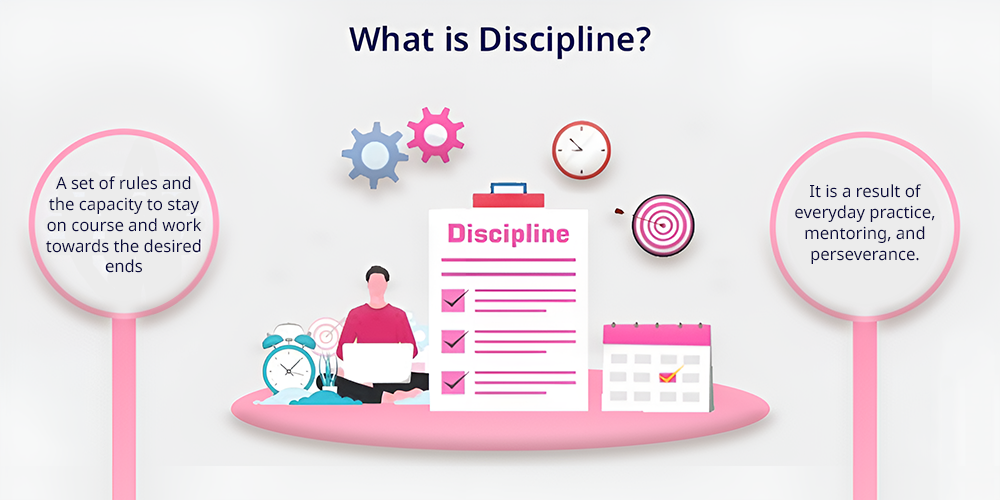
Why is important discipline in daily life is one of the most searched and most misunderstood questions of our time. Most people associate discipline with restriction, punishment, or rigid rules.
In reality, discipline is the single greatest tool you have for building the life you actually want. It is the bridge between where you are today and where you want to be tomorrow. Without it, goals stay as wishes. Habits never form.
Time slips away. In 2026, with more distractions than ever before — social media, constant notifications, and endless entertainment — discipline has never mattered more.
What Is Discipline? A Clear Definition
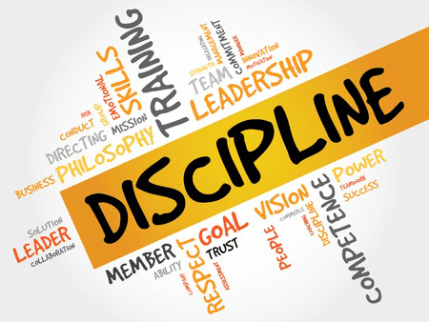
Discipline is the practice of training yourself to act according to a set of rules, values, and consistent behaviors — even when you do not feel like it.
It is not about being harsh on yourself. It is not about living a joyless, restrictive lifestyle. True discipline is about self-control, consistency, and the ability to delay short-term pleasure for long-term reward.
There are two core types of discipline that shape your daily life.
Internal discipline is self-control — the inner ability to decide what is right and act on it, even without external pressure. It comes from values, clarity of purpose, and personal commitment.
External discipline is compliance with rules, systems, and routines set by your environment — school schedules, workplace deadlines, family responsibilities, and social norms.
Both types work together. When internal and external discipline align, your daily life runs with far greater efficiency, purpose, and satisfaction.
Why Is Important Discipline in Daily Life: The Core Reasons
Understanding why discipline matters starts with seeing its impact across every single area of your life. Here is a detailed breakdown of the most important reasons.
1. Discipline Builds Habits That Shape Your Life
Habits are the building blocks of daily life. Every action you repeat consistently eventually becomes automatic — something you do without thinking.
Discipline is the force that creates habits in the first place. You cannot build a morning workout routine without disciplining yourself to get out of bed on the days you do not feel like it. You cannot develop a reading habit without disciplining yourself to put down the phone and pick up a book.
Discipline creates habits, and habits create routines. Routines, practiced daily, shape your entire life over months and years. The compound effect of small disciplined actions — taken consistently — produces extraordinary results over time.
2. Discipline Is the Bridge Between Goals and Achievement
Everyone sets goals. Very few people achieve them. The gap between setting a goal and reaching it is always filled — or left empty — by discipline.
A goal without discipline is just a wish. You can want to lose weight, earn a promotion, learn a language, or start a business. But wanting is not enough. Daily disciplined action is what moves you from point A to your desired point B.
Studies suggest that 92% of people who consistently practice discipline in pursuing their goals actually achieve them. The number-one reason people fail to reach their goals is not lack of talent or opportunity — it is lack of consistent disciplined effort.
3. Discipline Creates Effective Time Management
Disciplined people do not have more hours in the day. They simply use their hours better than everyone else.
Time management is impossible without discipline. When you lack discipline, small unimportant tasks take over your day. You procrastinate on the work that matters. You scroll through social media for thirty minutes when you planned for five. You delay the hard task indefinitely because it feels uncomfortable.
Discipline forces you to prioritize. It pushes you to complete high-value tasks first, manage deadlines without panic, and protect your time from low-value distractions. The result is less stress, more productivity, and a sense of daily accomplishment.
| Without Discipline | With Discipline |
|---|---|
| Procrastination dominates the day | High-value tasks are completed first |
| Deadlines cause panic and stress | Deadlines are met consistently |
| Time is lost to distractions | Time is protected and intentional |
| Goals feel overwhelming | Goals are broken into daily actions |
| Motivation runs the schedule | Systems and routines run the schedule |
| Energy is wasted on decisions | Decision fatigue is minimized by routines |
4. Discipline Reduces Stress and Anxiety
A chaotic, undisciplined life is a stressful life. When you have no routine, no structure, and no system for managing your responsibilities, everything feels urgent and overwhelming at the same time.
Discipline creates predictability. When you follow a structured daily routine, your brain does not need to waste energy making the same low-level decisions over and over. You wake up, follow your morning routine, work during your planned hours, exercise at the scheduled time, and rest at the right moment.
Research consistently shows that people with structured daily routines experience lower cortisol levels — the body’s primary stress hormone. They report less anxiety, better sleep quality, and a stronger sense of being in control of their lives.
5. Discipline Improves Mental Health and Emotional Stability
Why is important discipline in daily life extends directly into mental health. The connection is powerful and well-documented.
Maintaining structured daily habits — consistent sleep, regular exercise, nutritious meals, and time for reflection — directly supports brain chemistry. These habits regulate dopamine, serotonin, and cortisol levels, which govern mood, focus, and emotional resilience.
For people managing anxiety or depression, discipline provides the daily structure needed to keep symptoms in check. Therapies like Cognitive Behavioral Therapy (CBT) and Dialectical Behavior Therapy (DBT) are essentially structured frameworks for building disciplined thinking and behavioral patterns.
Jay Shetty and Mel Robbins — two of the most widely followed wellness voices in 2026 — both emphasize that pushing through tasks you tend to avoid actually grows neural pathways in the brain associated with resilience and motivation. Discipline literally changes your brain over time.
6. Discipline Drives Academic Success
In education, discipline is the single most consistent predictor of academic performance — more consistent than raw intelligence or talent.
A disciplined student attends class regularly, completes assignments on time, revises consistently rather than cramming before exams, and maintains focus during study sessions. Over time, these small daily habits compound into significantly better grades, deeper understanding, and stronger academic confidence.
Discipline also develops the meta-skills that last a lifetime beyond school: concentration, perseverance, delayed gratification, and the ability to work through difficulty without giving up.
Subjects that require constant practice — mathematics, languages, music — are impossible to master without sustained disciplined practice. There is no shortcut that replaces daily effort.
7. Discipline Boosts Career Performance
Employers at every level value disciplined professionals above almost any other quality. Reliability, punctuality, consistency, and the ability to deliver results under pressure are all direct expressions of discipline.
A disciplined professional shows up on time. They meet deadlines. They follow through on commitments. They complete difficult projects without waiting for inspiration to arrive. They do not disappear when the work gets hard.
Over a career, disciplined workers earn more promotions, build stronger professional reputations, and accumulate greater expertise than their talented-but-inconsistent peers. Discipline converts potential into performance — consistently and predictably.
8. Discipline Builds Physical Health
Your body responds directly to disciplined daily habits. Regular exercise, consistent sleep schedules, disciplined eating patterns, and adequate hydration are all choices that require discipline to maintain over time.
Motivation alone will not keep you exercising through winter, stress, or fatigue. Only discipline — the commitment to show up even when you do not feel like it — builds the consistent physical health habits that produce lasting results.
Research confirms that people who maintain disciplined health routines have lower rates of obesity, cardiovascular disease, type 2 diabetes, and sleep disorders. The discipline to make small healthy choices daily is the most powerful preventive medicine available.
9. Discipline Strengthens Relationships
Discipline plays a less obvious but deeply important role in building strong personal relationships. Patience, respect, active listening, and emotional regulation are all forms of self-discipline.
A disciplined person does not react impulsively during arguments. They listen before responding. They follow through on commitments to family and friends. They show up on time. They manage their own emotional state instead of projecting it onto others.
These qualities — all grounded in discipline — build trust, deepen connection, and create the kind of reliability that makes relationships last. Undisciplined emotional reactions, broken promises, and chronic lateness erode relationships over time, even when intentions are good.
10. Discipline Builds Self-Confidence and Self-Esteem
Every time you do what you said you would do — even when it was hard — your self-confidence grows.
Self-discipline and self-esteem are directly linked. When you consistently keep promises to yourself, your brain builds a track record of reliability. You begin to trust yourself. You believe you can handle hard things because you have already handled hard things.
Conversely, every time you give in to procrastination, break a commitment to yourself, or skip a planned healthy behavior, your self-confidence takes a small hit. Repeated enough times, this erodes self-belief significantly.
Discipline is one of the most direct and reliable paths to genuine self-confidence available to any person.
Discipline vs. Motivation: The Critical Difference
Most people wait for motivation to act. Disciplined people act regardless of how they feel.
Motivation is an emotion — unreliable, temporary, and tied to mood, energy, and circumstance. It peaks at the beginning of a new goal and fades quickly when the initial excitement wears off.
Discipline is a system — reliable, consistent, and independent of how you feel on any given day. Discipline is what gets you to the gym when motivation has completely disappeared. It is what keeps you writing your book on the days when words feel impossible.
| Factor | Motivation | Discipline |
|---|---|---|
| Nature | Emotional, temporary | Systematic, consistent |
| Reliability | Unreliable — fades quickly | Reliable — operates independently of mood |
| When it works | When you feel inspired | Every single day |
| Long-term results | Inconsistent | Consistent and compounding |
| What drives it | External rewards, excitement | Internal values, habits, systems |
| What replaces it | Nothing — it disappears | Nothing needed — it self-sustains |
The most successful people in every field — athletes, entrepreneurs, scientists, artists — are not more motivated than everyone else. They are more disciplined. They built systems and routines that carry them forward on the days motivation does not show up.
Discipline in Different Areas of Daily Life
Why is important discipline in daily life becomes clearest when you see how it applies across specific, practical areas.
Discipline in the Morning Routine
How you start your morning sets the tone for the entire day. A disciplined morning routine — waking at a consistent time, avoiding the phone for the first 30 minutes, exercising, eating a nutritious breakfast, and reviewing daily priorities — builds momentum that carries through every hour that follows.
People without a morning routine often feel reactive from the moment they wake up. Emails, notifications, and other people’s priorities pull them in multiple directions before they have even decided what matters most to them that day.
Discipline in Eating and Nutrition
Food choices made under discipline versus impulse are dramatically different. Without discipline, you eat whatever is convenient, heavily processed, calorie-dense, and immediately satisfying — regardless of how it makes you feel an hour later.
Disciplined eating does not require perfection. It requires a consistent framework: meal planning, eating at regular times, prioritizing whole foods, and resisting impulsive decisions when hungry or stressed. Over months, these small consistent choices produce significant health outcomes.
Discipline in Financial Management
Financial security is almost impossible without financial discipline. Impulse spending, neglected savings, ignored budgets, and unreviewed subscriptions silently destroy financial stability over time.
A disciplined financial life includes tracking income and expenses, saving a fixed percentage of every paycheck before spending, avoiding high-interest debt, and making consistent long-term investments. The compound effect of these disciplined financial behaviors, sustained over years, creates genuine financial freedom.
Discipline in Learning and Personal Development
The modern information economy rewards people who commit to continuous learning. Reading daily, taking courses, developing new skills, and practicing deliberately over time are all expressions of discipline.
No one learns a new language, instrument, coding skill, or professional competency without sustained disciplined practice. The people who consistently invest time in learning — even 20–30 minutes daily — accumulate a compounding advantage in knowledge and capability over those who rely on occasional bursts of motivated study.
Discipline in Digital Life
In 2026, digital discipline is one of the most important and most neglected forms of self-control. The average person spends over 6 hours per day on screens — much of it unplanned and unproductive.
Digital discipline means setting boundaries with your devices. Scheduled phone-free hours, turning off non-essential notifications, defined social media windows, and using technology intentionally rather than compulsively. These boundaries protect deep work, real-world relationships, mental clarity, and sleep quality.
How to Build Discipline: Practical Steps That Work
Understanding why discipline is important is the first step. Building it is the second. Here is a practical, research-backed framework.
Start extremely small. The most common mistake is trying to change everything at once. Pick one behavior you want to change. Commit to doing it for just 5–10 minutes daily. Small wins build consistency and confidence more reliably than ambitious overhauls that collapse within a week.
Build a concrete routine. Discipline thrives on structure. Design a daily schedule that assigns specific time blocks to your most important activities. A written schedule removes the need to make the same decision every day — which reduces decision fatigue and makes consistent action easier.
Use habit stacking. Attach a new disciplined behavior to an existing habit. For example: “After I brush my teeth, I will write in my journal for five minutes.” Linking new behaviors to established anchors dramatically improves the rate of habit formation.
Remove friction from good habits. Set out your workout clothes the night before. Prepare healthy meals in advance. Keep books visible and phones out of the bedroom. Every barrier you remove between yourself and a disciplined behavior makes it significantly more likely you will follow through.
Track your progress. Habit tracking apps, simple paper calendars, or journals all serve the same purpose: they make your consistency visible. Seeing a chain of successful days creates a powerful psychological incentive not to break the streak.
Practice self-compassion after setbacks. Discipline is not perfection. Missing one day is not failure — giving up after one missed day is. Treat a missed day as data, not as a verdict on your character. Review what caused it, adjust your system, and continue.
Increase gradually. Once a small habit is consistent, expand it slowly. Add five minutes. Add one more healthy meal. Add one more chapter. Gradual progression is how sustainable discipline is built — not through sudden dramatic overhauls.
The Science Behind Discipline
Neuroscience confirms that self-discipline is not a fixed character trait you either have or do not have. It is a skill that is developed through repeated practice — and the brain physically changes as you build it.
The prefrontal cortex — the part of the brain responsible for decision-making, impulse control, and long-term planning — grows stronger with consistent disciplined behavior. Every time you resist an impulse and choose the harder, better option, you strengthen this neural pathway.
Conversely, giving in to impulses repeatedly strengthens the brain’s reward circuits that prioritize immediate gratification. This is why undisciplined behavior feels easier over time — but also why building discipline through consistent small actions becomes progressively easier the longer you practice it.
Willpower — the fuel that powers discipline in its early stages — is a limited daily resource. This is why starting with small, manageable disciplined behaviors matters so much. As discipline becomes habitual and automatic, it no longer depletes willpower because it no longer requires conscious effort.
Discipline and Children: Why It Matters Early
Teaching discipline to children from an early age is one of the most important investments any parent or educator can make.
Children who develop self-discipline early show significantly better academic performance, stronger emotional regulation, healthier social relationships, and greater long-term success across virtually every measurable life outcome.
Parents build discipline in children by establishing consistent daily routines, setting clear expectations with consistent follow-through, modeling disciplined behavior themselves, praising effort and consistency rather than just outcomes, and gradually increasing the level of responsibility as children grow.
Schools reinforce discipline through structured schedules, respect for rules, punctuality expectations, and the daily practice of doing difficult work even when it is uncomfortable. When families and schools work together consistently, discipline becomes a natural embedded trait — not an external force that children resist.
Common Misconceptions About Discipline
Several widely held beliefs about discipline are inaccurate and prevent people from developing it.
Misconception 1: Discipline means being harsh on yourself. False. Discipline is about clarity and consistency, not punishment. Self-compassion and discipline work together, not against each other.
Misconception 2: Disciplined people are never tempted. False. Disciplined people face the same temptations as everyone else. They have simply built systems that make giving in less likely, and habits that make the right choice easier.
Misconception 3: You either have discipline or you do not. False. Discipline is a skill developed through practice. Anyone can build it, at any age, starting from wherever they are right now.
Misconception 4: Motivation comes before discipline. False. With discipline, motivation is not required to start. Action itself generates momentum, and momentum often generates motivation retroactively.
Misconception 5: Discipline restricts freedom. False. Discipline creates freedom. Financial discipline creates the freedom to make choices without money stress. Health discipline creates the freedom to live fully in your body. Time discipline creates the freedom to spend hours on what truly matters.
Discipline and Long-Term Success: What the Data Shows
Research across multiple disciplines consistently confirms the long-term value of self-discipline.
| Life Area | Impact of Discipline |
|---|---|
| Academic performance | Consistent disciplined students outperform talent-reliant peers in the long run |
| Career advancement | Disciplined professionals earn more promotions and higher salaries over time |
| Physical health | Regular disciplined exercise reduces chronic disease risk by up to 50% |
| Mental health | Structured daily routines significantly reduce anxiety and depression symptoms |
| Financial outcomes | Consistent disciplined saving and investing produces long-term wealth |
| Relationships | Emotionally disciplined individuals report higher relationship satisfaction |
| Life satisfaction | People who rate themselves as highly self-disciplined report greater overall happiness |
A landmark longitudinal study tracking participants over decades found that childhood self-discipline was a stronger predictor of adult health, wealth, and life satisfaction than IQ or socioeconomic background. The evidence is clear: discipline compounds over a lifetime.
Frequently Asked Questions (FAQs)
Why is important discipline in daily life for adults?
Discipline helps adults manage time, build healthy habits, advance in careers, and maintain emotional stability. Without it, responsibilities pile up and goals remain permanently unmet.
What happens if you have no discipline in your life?
Without discipline, procrastination, poor health, financial instability, and broken commitments become the norm. Life becomes reactive rather than intentional, and long-term goals never materialize.
Is discipline more important than talent?
Yes, in most cases. Talent without discipline produces inconsistent results. Disciplined practice, sustained over time, consistently outperforms raw talent that is never developed through consistent effort.
How long does it take to build discipline?
Building a basic habit takes approximately 21–66 days of consistent practice, depending on the complexity of the behavior. Discipline grows stronger the longer and more consistently it is practiced.
Can you build discipline at any age?
Absolutely. The brain remains capable of building new habits and strengthening self-control at any age. Starting small and building gradually works equally well for teenagers, adults, and seniors.
What is the easiest way to start building discipline today?
Pick one small behavior — wake up 20 minutes earlier, drink one glass of water before breakfast, read for 10 minutes. Do it daily for 30 days without exception. One consistent win builds the foundation for more.
Does discipline reduce stress?
Yes. Structured routines reduce decision fatigue and create predictability. People with disciplined daily systems consistently report lower stress and anxiety than those without regular routines.
How does discipline affect mental health?
Regular disciplined habits — sleep, exercise, nutrition, reflection — directly regulate brain chemistry and support emotional stability. Therapies like CBT and DBT are built on principles of disciplined thought and behavior.
What is the difference between self-discipline and willpower?
Willpower is a limited daily resource — it depletes with use. Self-discipline builds systems and habits that reduce reliance on willpower by making the right behavior automatic rather than effortful.
Why do people struggle with discipline even when they understand its importance?
Because discipline requires discomfort in the short term for rewards that arrive later. The brain naturally prefers immediate pleasure. Building discipline means repeatedly choosing long-term benefit over short-term ease until the habit becomes automatic.
Conclusion
Why is important discipline in daily life is a question with a clear, evidence-backed answer: because almost everything that matters in life depends on it. From your health and career to your relationships, finances, and mental well-being — discipline is the common thread that connects effort to outcome.
It is not about being perfect every day. It is about showing up consistently, following through on commitments, and choosing long-term growth over short-term comfort. In 2026, with distractions engineered to compete for every moment of your attention, discipline is the most powerful competitive advantage available to any person.
Start small. Build one habit. Keep one commitment. Then build another. Over weeks, months, and years, the compounding effect of consistent disciplined action creates a life that is genuinely extraordinary — one small choice at a time.