Why Is It Illegal to Drive Barefoot? Myth or Fact? 2026
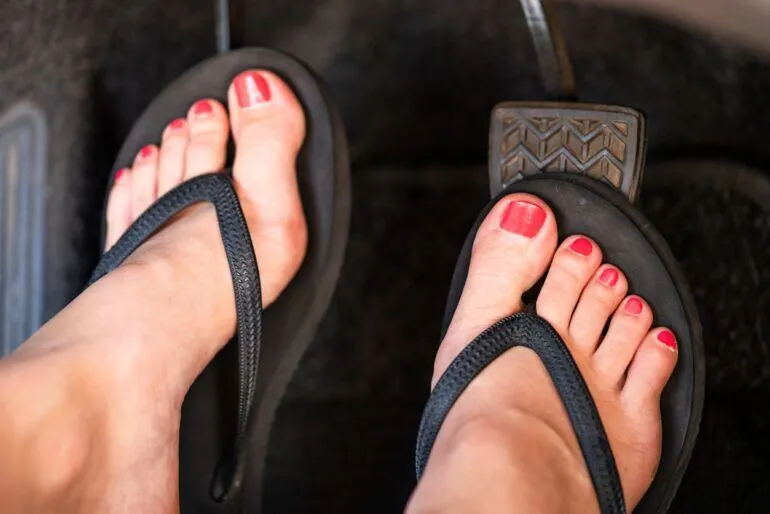
Why is it illegal to drive barefoot — the answer may completely surprise you. It is not illegal. Not in a single state. Not under any federal law. Despite what your parents told you, what your driver’s ed teacher warned, and what feels like common knowledge, driving barefoot is 100% legal across all 50 states in the United States.
This persistent belief is one of the most widespread driving myths in American history.
The Direct Answer: Why Is It Illegal to Drive Barefoot?
No. Driving barefoot is not illegal in any of the 50 United States. There is no federal law and no state law that prohibits operating a car, truck, or SUV without shoes.
This was formally confirmed in the 1990s when a man named Jason Heimbaugh wrote letters to the department of motor vehicles in all 50 states asking directly whether barefoot driving was legal. Every single state confirmed it was legal. The laws have not changed since.
If you have believed your entire life that driving without shoes could get you a ticket, you have been operating under one of the most persistent traffic myths in America.
Where Did the “Barefoot Driving Is Illegal” Myth Come From?
The myth has several overlapping origins, and understanding them explains why it has survived for decades.
Parents and grandparents warned children against driving barefoot as a safety precaution. Over time, those safety warnings transformed into statements of law — even though no law ever existed.
Driver’s education instructors repeated the claim without ever checking actual traffic statutes. Because the warning came from an authority figure in a formal class, students accepted it as legal fact.
Many people apply a simple logic pattern: if something seems dangerous, it must be illegal. Driving barefoot sounds risky, so it feels like it should be banned. In reality, traffic laws are only created after specific dangers have been documented and proven — not based on what seems potentially risky.
The “no shirt, no shoes, no service” rule posted in businesses also contributed. People mentally extended that policy to driving, assuming footwear requirements applied everywhere.
Repetition cemented the myth. Once enough people believe something and repeat it confidently, it becomes cultural fact — regardless of whether any law supports it.
State-by-State Barefoot Driving Laws
Every state permits barefoot driving for standard passenger vehicles. However, the official position and any related guidance varies by state.
| State Category | States | Official Position |
|---|---|---|
| Legal with no comment | Most states | No law, no official guidance issued |
| Legal but discouraged | Indiana, Iowa, Missouri, Ohio, Virginia, Wyoming | Officially noted as unsafe, not illegal |
| Legal but can affect accident liability | Arizona, Arkansas, California, Nevada | Barefoot driving cited as contributing factor in crashes |
| Local ordinances possible | Tennessee and select municipalities | Some counties may have local rules — check locally |
| Motorcycle exception only | Alabama | Only state requiring footwear — for motorcycle riders only |
Even in states that discourage barefoot driving, you cannot be pulled over or ticketed solely for driving without shoes. The discouragement is advisory, not legal.
Local ordinances are the one exception to watch. Some counties and municipalities — particularly in Tennessee — may have local rules on the books. If you are concerned about a specific local area, checking with the local jurisdiction or a traffic attorney is the safest move.
What Happens If You Drive Barefoot and Cause an Accident?
This is where barefoot driving enters legal territory — not because of the barefoot status itself, but because of what it might imply about driver negligence.
If you are involved in a collision while driving barefoot, an insurance company, opposing attorney, or court may argue that your lack of footwear was a contributing factor to the crash. This is especially relevant in states like Arizona, Arkansas, California, and Nevada, which explicitly recognize barefoot driving as a potential contributing factor.
The argument typically focuses on four areas: delayed reaction time due to reduced pedal feel, reduced braking force from lack of shoe grip, slippage caused by wet or sweaty bare feet, and reduced ability to maintain precise pedal control in an emergency.
None of these arguments make barefoot driving illegal. But they can affect who is found at fault, how much insurance compensation you receive, and whether a personal injury claim succeeds or fails.
Can You Be Charged with Reckless Driving for Driving Barefoot?
A police officer cannot ticket you solely for being barefoot at the wheel. There is no law to cite.
However, if a crash occurs and the investigating officer determines that driving without shoes directly contributed to the accident — for example, your foot slipped off the brake pedal on a wet day — you could face a reckless driving charge or a citation for failure to exercise due care.
Reckless driving charges are built around whether you operated your vehicle in a way that endangered others. If barefoot driving is identified as part of that pattern — not as the standalone offense — it enters the legal record.
This is a narrow circumstance. The vast majority of barefoot drivers will never face any legal consequence. But it is worth understanding the distinction between the act being legal and the act being immune from all legal context.
Barefoot Driving and Your Car Insurance
Insurance companies are motivated to find reasons to reduce payouts or deny claims. Barefoot driving gives them an opening — even though the practice is legal.
If you file an accident claim while barefoot, your insurer may investigate whether your footwear contributed to the crash. They typically analyze reaction time evidence, pedal control, weather conditions, and overall driving behavior from available data.
If they determine that driving barefoot was a factor in the accident, they may deny your claim entirely, offer a reduced settlement, or share fault in a way that reduces your compensation.
The safest legal and insurance position is always to wear proper, secure footwear while driving. Not because the law requires it — but because it removes one potential argument from any future insurance dispute or lawsuit.
Is Barefoot Driving Actually Dangerous?
The safety picture is more nuanced than most people assume. Barefoot driving is not inherently more dangerous than driving with shoes — and in some specific situations, it is actually safer.
The real risks involve these specific scenarios: feet that are wet, oily, or sweaty, which reduce friction on the pedal surface; metal or slick plastic pedals that provide less grip without shoe soles; and medical conditions affecting foot strength or sensation.
Under normal dry conditions, a person with healthy, dry bare feet can typically operate pedals with adequate control. The body’s natural sensory feedback through bare skin is, in some cases, more precise than through thick shoe soles.
The situations where barefoot driving creates genuine risk are specific and avoidable — not universal.
Why Flip-Flops and High Heels Are More Dangerous Than Bare Feet
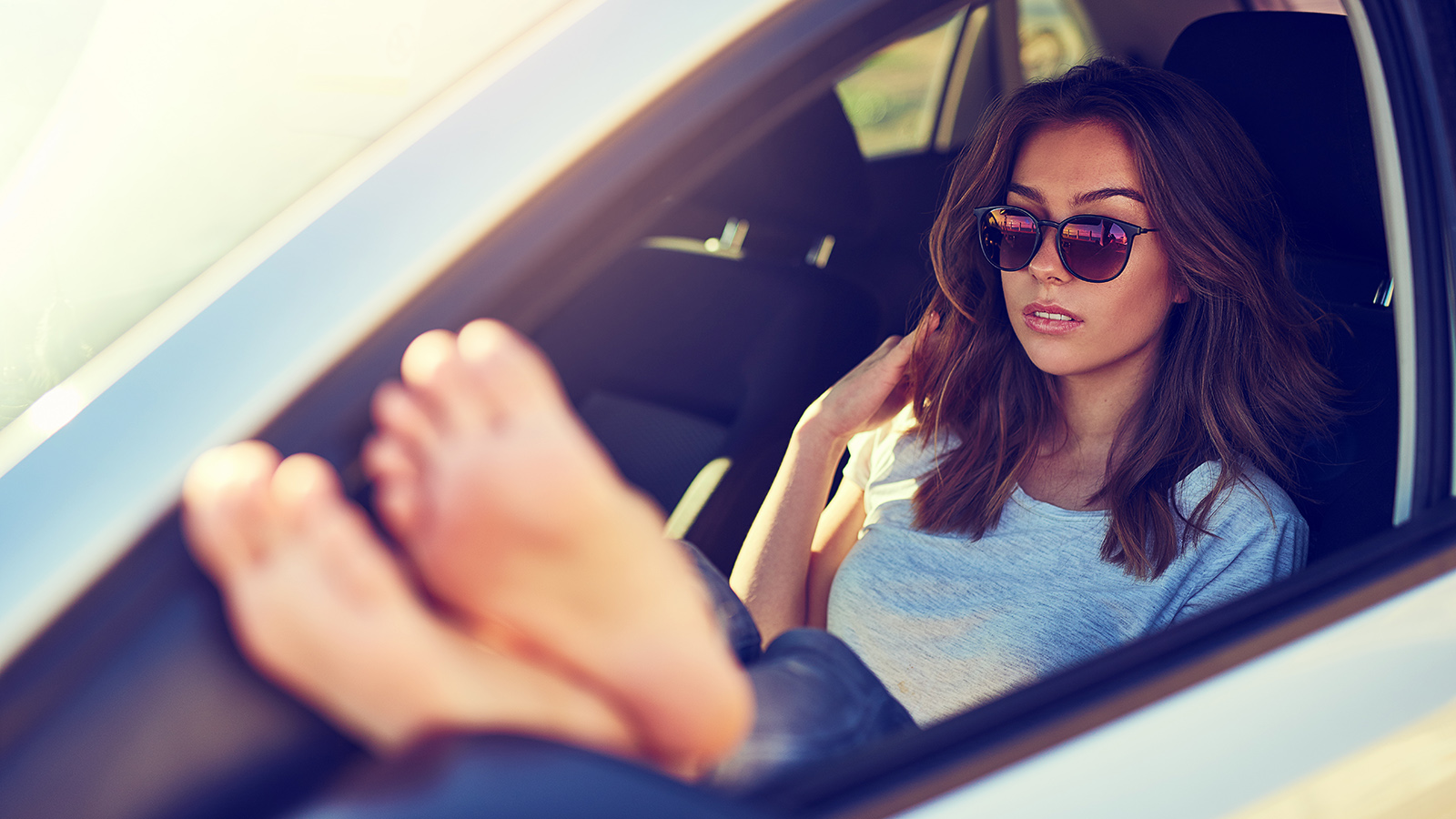
Shot of a young woman sitting in her car
Here is the detail that surprises most people: certain types of footwear are demonstrably more hazardous than driving barefoot.
Flip-flops are designed to slip on and off easily — which is exactly the wrong quality in driving footwear. A flip-flop can slide off the foot mid-drive, slip under the brake pedal, or catch on the pedal edge during an emergency stop.
High heels dramatically reduce ankle mobility, making it harder to apply full braking force quickly. The narrow heel can also slip off the brake pedal surface during hard braking.
Loose sandals, platform shoes, and overly thick-soled boots all present similar problems — reducing pedal feel, limiting ankle movement, or creating the risk of getting lodged beneath a pedal.
In fact, several traffic safety experts and attorneys note that driving barefoot is legally and practically safer than driving in flip-flops. Despite this, there is no law against driving in flip-flops either — footwear is simply not regulated for standard passenger vehicles.
| Footwear Type | Primary Risk | Safer Than Barefoot? |
|---|---|---|
| Bare feet (dry) | Reduced grip on slick pedals | Comparable — situational |
| Bare feet (wet/sweaty) | Slippage, reduced braking | No |
| Flip-flops | Slips under or off pedals | No |
| High heels | Limited ankle movement, narrow heel contact | No |
| Thick platform shoes | Reduced pedal feel | No |
| Loose sandals | Can get lodged under pedals | No |
| Thin-soled sneakers | Minimal | Yes — best choice |
| Driving shoes | Minimal | Yes — purpose-built |
Barefoot Driving Laws for Motorcycles
The picture changes significantly for motorcycles. While car drivers face no footwear requirements in any state, motorcycle riders operate in a different legal and physical environment.
Alabama is the only state that explicitly requires motorcycle operators to wear shoes. However, many other states strongly recommend or effectively require protective footwear through their general motorcycle safety gear guidelines.
California, Florida, Texas, and New York all recommend protective footwear in their motorcycle operator manuals, even where no specific law mandates it. The physical risks of riding a motorcycle barefoot are significantly higher — feet can slip from foot pegs at speed, and in a crash, bare feet are extremely vulnerable to road surface injuries.
Any motorcyclist should treat protective footwear as non-negotiable regardless of whether state law requires it.
What Counts as Safe Driving Footwear?
Since no law defines required footwear, understanding what traffic safety experts recommend helps drivers make smart choices.
The ideal driving shoe has a thin, flexible sole that allows good pedal feedback, a secure heel that stays in place during pedal operation, a grippy sole surface that maintains friction on the pedal, and a fit that does not allow the shoe to slip or shift while driving.
Thin-soled sneakers, driving moccasins, and purpose-built driving shoes all meet these criteria. Heavy work boots, platform shoes, and backless footwear of any kind perform poorly against these standards.
If you regularly drive from the beach, pool, or gym and find yourself choosing between wet flip-flops and bare feet — bare feet are the better choice.
The History of the Barefoot Driving Myth in America
The barefoot driving myth has its roots in mid-20th century American driving culture. As car ownership expanded rapidly in the 1950s and 1960s, informal safety rules circulated widely. Many of these rules were reasonable habits passed along in informal ways — and some of those habits became misremembered as laws.
The myth became particularly durable in driver’s education culture. Instructors who believed it was illegal told students, who grew up and told their own children, who told their children. Each generation passed along the false law as confidently as if they had read it in a statute.
When Jason Heimbaugh formally surveyed all 50 state DMVs in the 1990s and published the results confirming barefoot driving was universally legal, the myth had already been embedded in American driving culture for decades. The confirmation barely dented the belief.
The myth persists today not because it is backed by law but because it has been repeated for so long that questioning it feels unnecessary.
Driving Barefoot in Other Countries
While this guide focuses on U.S. law, barefoot driving laws vary internationally.
In the United Kingdom, driving barefoot is legal but the Highway Code recommends suitable footwear. In Germany, barefoot driving is technically legal but courts have found drivers partially at fault in accidents when barefoot driving contributed to the crash — a liability framework similar to several U.S. states.
In Australia, barefoot driving is legal in all states and territories. In South Africa, it is also legal. Most countries follow the same pattern: no law against the practice, but potential liability if it contributes to an accident.
The global consensus mirrors the U.S. position — legality without universal endorsement.
What to Do If You Are Stopped While Driving Barefoot
If a police officer pulls you over and notices you are barefoot, remain calm. You are not committing a traffic offense.
The officer cannot issue a citation for barefoot driving alone. If they attempt to do so, politely note that no state or federal law prohibits driving without shoes and ask which specific statute is being cited.
Officers may mention that barefoot driving is unsafe, which is their right to do. They may note it in a report. But in the absence of any other traffic violation or an accident, your bare feet are not a legal issue.
If you are ever in an accident while barefoot, document everything thoroughly: road conditions, your exact actions at the time of the crash, and any witness accounts. This documentation protects you against insurance arguments that your footwear was a contributing factor.
Common Dangerous Driving Myths Similar to the Barefoot Law
The barefoot driving myth is not alone. Several other widespread beliefs about driving laws turn out to be false.
Many people believe it is illegal to drive with the interior dome light on — it is not, in any state, though it can create a dangerous glare at night. Many people believe you must always move to the right for emergency vehicles regardless of highway position — rules vary significantly by state. Many people believe it is illegal to eat while driving — no state has a specific law against it, though distracted driving laws can apply if control is lost.
The barefoot driving myth fits a broader pattern of informal safety wisdom being misremembered as legal prohibition. Understanding which beliefs are myths and which are actual laws makes you a more informed, legally literate driver.
Practical Advice for Barefoot Drivers
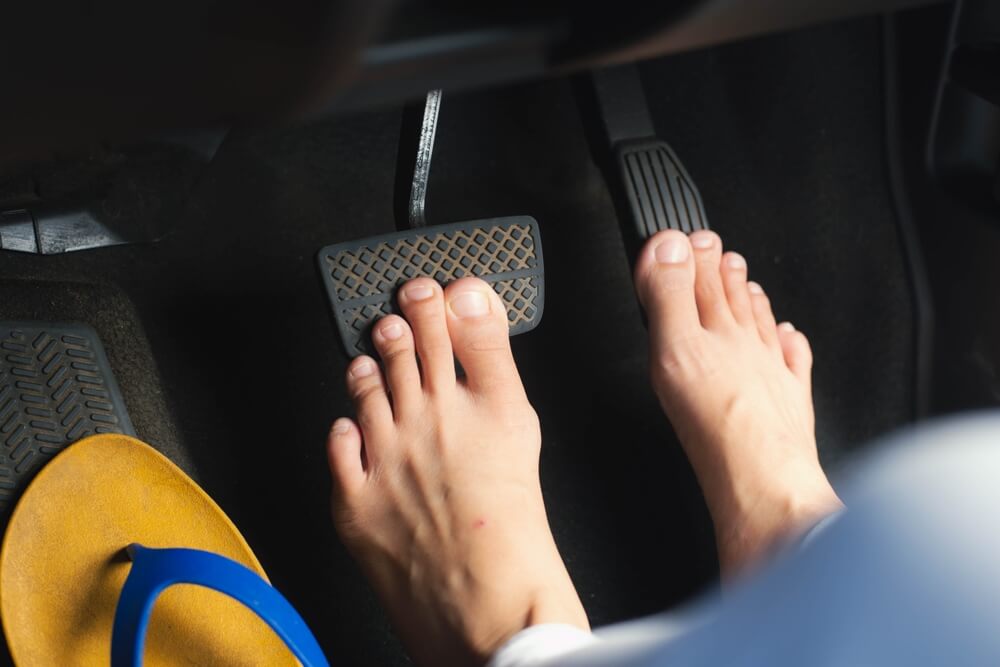
If you choose to drive barefoot — legally and within your rights — a few practical steps reduce the small real risks that exist.
Make sure your feet are completely dry before operating pedals. Wet or sweaty feet on a smooth metal pedal is a genuine slip risk that barefoot driving critics are correct to flag.
Remove shoes and place them in the back seat or trunk rather than leaving them on the driver’s side floor. Loose footwear on the driver’s floor can slide under the brake or accelerator pedal during a stop — creating exactly the kind of pedal obstruction that can cause a real accident.
Be extra cautious if your vehicle has smooth metal or plastic pedals rather than rubber-surfaced ones. The grip difference is significant when barefoot.
Keep a pair of lightweight, thin-soled shoes in the car for situations where conditions change — wet weather, high-speed highway driving, or any scenario where you want maximum pedal feedback and stability.
Frequently Asked Questions (FAQs)
Is it illegal to drive barefoot in the United States?
No. Driving barefoot is completely legal in all 50 states. There is no federal law and no state law that prohibits driving a passenger vehicle without shoes.
Can a police officer ticket you for driving barefoot?
No officer can issue a citation solely for barefoot driving because no law against it exists. A ticket could only arise if barefoot driving is linked to reckless behavior or a crash.
Which states discourage barefoot driving even though it is legal?
Indiana, Iowa, Missouri, Ohio, Virginia, and Wyoming have officially noted barefoot driving as unsafe, though none of these states make it illegal or allow citations for it.
Can driving barefoot affect your car insurance claim?
Yes. If you are in an accident while barefoot, your insurer may argue that barefoot driving was a contributing factor and use it to reduce your payout or deny your claim entirely.
Is it safer to drive barefoot or in flip-flops?
Dry bare feet are generally safer than flip-flops for driving. Flip-flops can slip off, get lodged under pedals, or catch on the pedal edge during emergency braking — all documented accident risks.
Is barefoot motorcycle riding illegal?
Alabama is the only state that explicitly requires motorcycle operators to wear shoes. Other states strongly recommend protective footwear for riders even without a specific legal mandate.
Why do so many people believe barefoot driving is illegal?
The belief originated from parents and driver’s ed instructors repeating a safety warning as if it were law. Decades of repetition without anyone checking the actual statutes turned a safety suggestion into a widely accepted false legal fact.
Can you be charged with reckless driving for driving barefoot?
Not for the barefoot status alone. However, if an accident occurs and an officer determines that driving barefoot directly contributed to it, a reckless driving charge based on the overall circumstances is possible.
Are there any local laws against barefoot driving?
Some municipalities — particularly certain counties in Tennessee — may have local ordinances on the books. When in doubt, check with your local jurisdiction before assuming state-level legality covers all local areas.
What is the best footwear for driving?
Thin-soled, closed-toe shoes with a grippy sole and a secure heel are ideal. Driving moccasins and purpose-built driving shoes are the gold standard. Avoid flip-flops, high heels, platform shoes, and any loose-fitting footwear.
Conclusion
The answer to why is it illegal to drive barefoot is simple — it is not. It never has been. The belief that barefoot driving is against the law is one of the most durable and widespread traffic myths in American history, passed down through generations of well-meaning parents and unchecked driver’s education claims. No federal law, no state law, and no traffic statute in all 50 states prohibits driving a passenger vehicle without shoes.
The real story is more nuanced than the myth. While barefoot driving is legal, it can affect accident liability, insurance claims, and reckless driving determinations if it is deemed a contributing factor in a crash.
Certain footwear — particularly flip-flops and high heels — is actually more dangerous behind the wheel than dry, healthy bare feet. And motorcyclists face a different set of recommendations and, in Alabama, a legal requirement.
Drive informed in 2026. Know your actual rights, understand the real risks, and make smart footwear choices based on facts — not myths that have circulated unchecked for half a century.