Why Is My Freezer Frosting Up? Stop Ice Buildup 2026
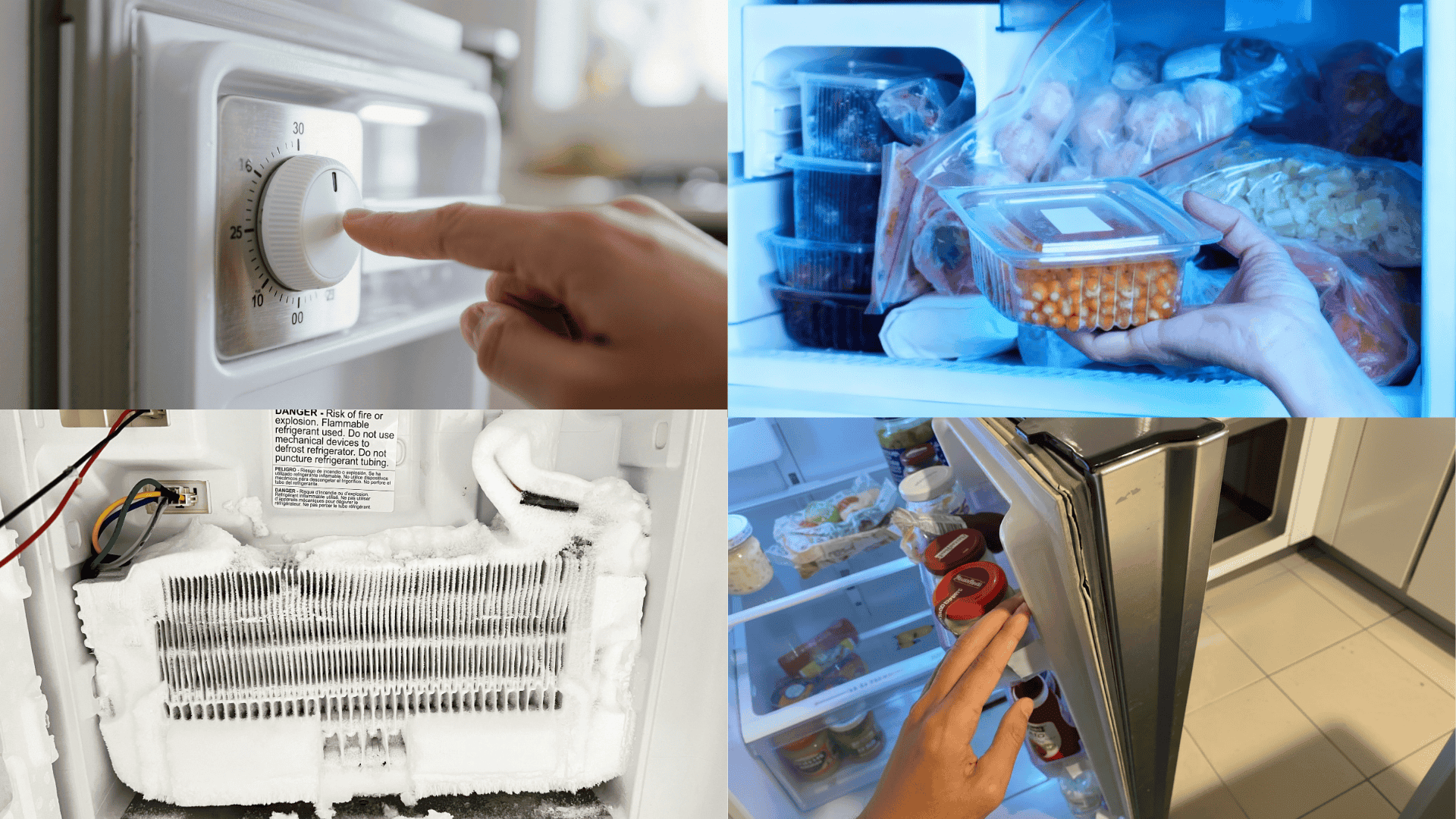
Why is my freezer frosting up is one of the most common appliance questions homeowners search for, and it almost always has a fixable answer. Frost buildup in your freezer is not just an eyesore. It reduces storage space, forces your appliance to work harder, drives up your energy bill, and can spoil your food through freezer burn.
Whether you have a chest freezer, a top freezer, or a French door refrigerator with a bottom freezer, this guide covers every cause and every fix. By the end, you will know exactly why ice is building up and what to do about it in 2026.
How Frost Forms in a Freezer
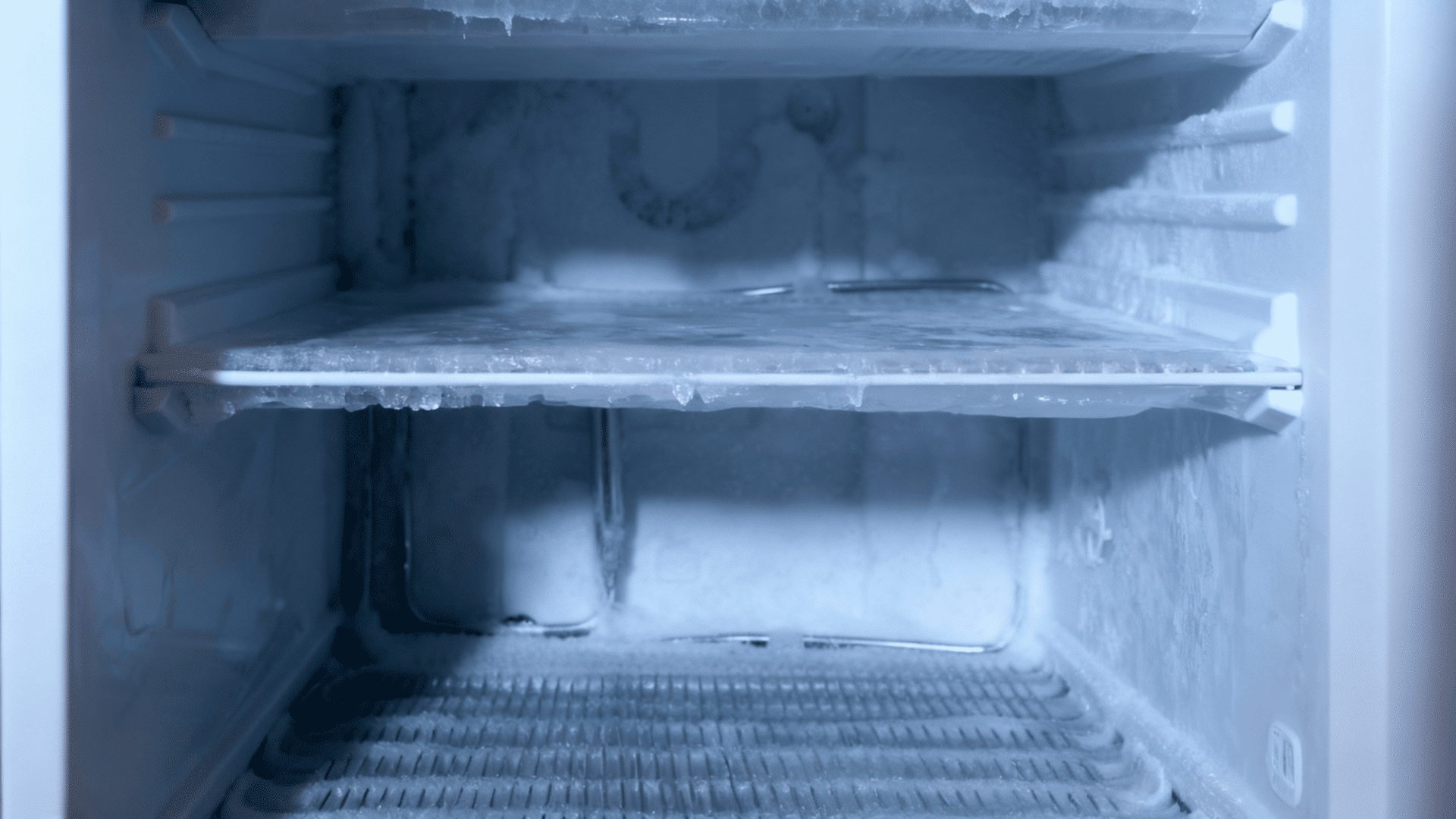
Understanding why frost forms helps you fix the problem properly rather than just defrosting and having it return in a week.
Frost forms when warm, humid air enters the freezer compartment. When that humid air meets the sub-freezing surfaces inside, the moisture in the air freezes on contact.
The coldest surfaces in your freezer are the evaporator coils, which sit behind the back panel. Frost always starts there first, then spreads outward as it thickens.
Modern freezers are designed to be frost-free. They use an automatic defrost system that heats the evaporator coils several times a day to melt frost before it builds up. When that system works correctly, you should never see frost inside your freezer.
When frost is visible, it means either warm humid air is getting in faster than the defrost system can keep up, or the defrost system itself has failed.
Why Is My Freezer Frosting Up? The 10 Main Causes
There are ten distinct causes that account for almost every case of freezer frosting. Each one has a specific fix.
| Cause | Severity | DIY Fix Possible? |
|---|---|---|
| Door left open or not fully closed | Low | Yes |
| Damaged or worn door gasket | Medium | Yes |
| Placing hot food directly in freezer | Low | Yes |
| Incorrect temperature setting | Low | Yes |
| Overpacked or underpacked freezer | Low | Yes |
| Blocked defrost drain tube | Medium | Yes (with care) |
| Failed defrost heater | High | Professional recommended |
| Faulty defrost thermostat | High | Professional recommended |
| Broken defrost timer or control board | High | Professional recommended |
| Failed evaporator fan motor | High | Professional recommended |
1. Door Left Open or Not Fully Closing
This is the simplest and most common cause of why a freezer frosts up.
Every time the freezer door is left open or fails to seal completely, warm humid air floods into the cold compartment. That moisture freezes almost instantly on the interior surfaces.
Even a door that is slightly ajar, just a few millimeters, allows a steady trickle of humid air. Over days and weeks this creates a significant frost layer without anyone realizing the door was the problem.
Quick Fix: Make sure the door closes completely every time. Remove any items that may be blocking the door seal. Check that the freezer is sitting level, as an unlevel appliance can prevent the door from sealing properly on its own weight.
2. Damaged or Worn Door Gasket
The door gasket is the rubber seal that runs around the entire perimeter of the freezer door. Its job is to create an airtight barrier between the cold interior and the warm kitchen air outside.
Over time, gaskets dry out, crack, warp, or accumulate grime. Even a small gap or crack allows warm humid air to continuously seep into the freezer compartment.
How to test your gasket: Close the freezer door on a piece of paper or a dollar bill. Pull the paper out. If it slides out easily with no resistance, the gasket is not sealing properly and needs to be replaced.
Signs of a failing gasket:
- Frost forming on the sides, top, or bottom edges of the freezer interior
- Frost or condensation on the inside of the freezer door
- Water droplets visible around the door opening
- The gasket looks visibly cracked, torn, or flattened
Quick Fix: Clean the gasket with warm soapy water first. Grime and food residue prevent a full seal even when the rubber itself is intact. If the gasket is cracked or deformed, replace it. Most gaskets are model-specific and can be ordered online for around ten to thirty dollars.
3. Placing Hot Food Directly in the Freezer
Putting warm or hot food directly into a freezer is a surprisingly effective way to create frost buildup.
Hot food releases steam and warm air into the freezer compartment. That warm moist air quickly freezes on the cold interior walls and evaporator coils.
The bigger the temperature difference between the food and the freezer, the more moisture is released and the more frost forms.
Quick Fix: Always allow cooked food to cool to room temperature before placing it in the freezer. For faster cooling, put it in the refrigerator for 30 to 60 minutes first, then transfer it to the freezer. Covering food properly in airtight freezer-safe containers also reduces the amount of moisture released.
4. Incorrect Temperature Setting
A freezer set to the wrong temperature creates conditions where frost forms and accumulates much faster than the defrost system can handle.
The recommended freezer temperature is 0°F or -18°C. Setting the temperature warmer than this means the freezer cycles on and off more frequently, allowing more temperature fluctuation and more opportunity for moisture to condense and freeze on interior surfaces.
Setting it too cold wastes energy and can also stress the defrost system by creating heavier frost loads between defrost cycles.
Quick Fix: Check your freezer’s thermostat setting. Use a standalone appliance thermometer inside the freezer to verify the actual internal temperature, as the built-in thermostat dial is not always accurate. Adjust to 0°F (-18°C) and allow 24 hours for the temperature to stabilize before re-checking.
5. Overpacked or Underpacked Freezer
Both overpacking and underpacking a freezer can cause frost problems, for different reasons.
An overpacked freezer blocks air circulation. Cold air needs to move freely around the interior to maintain an even temperature. When airflow is blocked, warm spots develop, and frost forms unevenly.
An underpacked freezer has too much empty air space. Every time the door opens, that large volume of empty air is replaced with warm humid air from the kitchen. A freezer with more food absorbs fewer temperature changes per door opening.
Quick Fix: For an overpacked freezer, reorganize contents to leave clear channels for airflow, especially near the back wall and vents. For an underpacked freezer, fill empty space with water bottles or bags of ice to reduce the air volume that gets exchanged when the door opens.
6. Blocked or Frozen Defrost Drain Tube
The defrost drain tube is a small channel that carries water from the melted frost on the evaporator coils down to a drain pan under the freezer, where it naturally evaporates.
When this drain tube becomes blocked with debris or ice, the meltwater from defrost cycles has nowhere to go. It backs up, refreezes inside the freezer compartment, and creates a sheet of ice on the floor of the freezer or pools of water that leak onto the kitchen floor.
A blocked defrost drain is one of the most overlooked causes of ice buildup and is responsible for many cases where ice appears specifically on the bottom of the freezer compartment.
Signs of a blocked defrost drain:
- Sheet of ice or standing water on the bottom of the freezer
- Water leaking from the bottom of the refrigerator onto the floor
- Ice accumulation in one specific area rather than spread throughout
Quick Fix: Unplug the freezer and locate the drain hole at the bottom back of the freezer interior. Pour a small amount of warm water into the drain hole to melt any ice blockage. Use a turkey baster for more control. For stubborn blockages, a thin flexible brush or pipe cleaner can clear debris from the tube. If the drain tube itself has cracked or the blockage keeps returning, a repair technician should inspect it.
7. Failed Defrost Heater
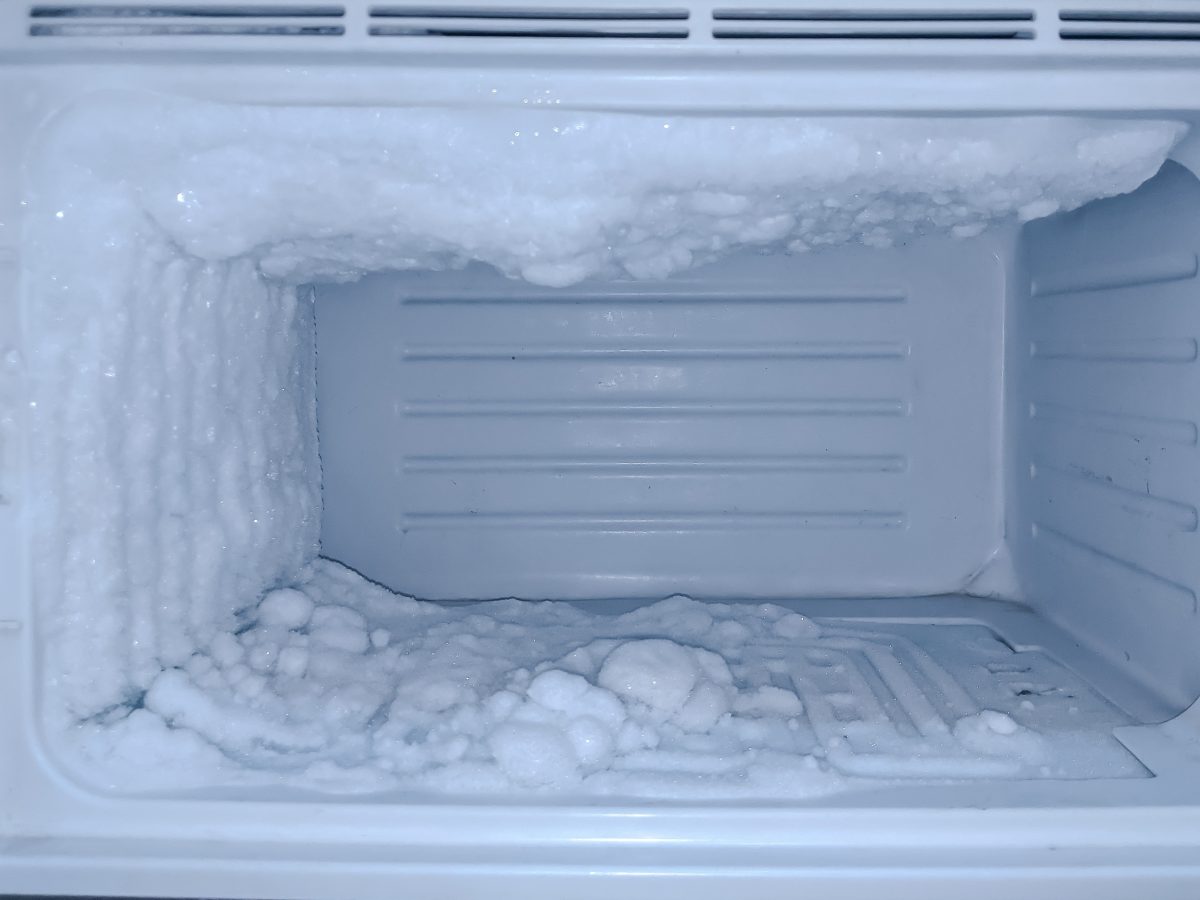
This is one of the most common mechanical causes of serious frost buildup in modern frost-free freezers.
The defrost heater is a heating element that activates several times a day, typically two to three times, to melt frost off the evaporator coils. Each defrost cycle lasts around 20 to 30 minutes. When the heater is working, you never see frost because it gets melted before it can accumulate.
When the defrost heater burns out or fails, the evaporator coils begin to frost over continuously. Within days, the coils can become completely encased in ice. This blocks airflow so severely that the freezer stops cooling efficiently even though the compressor is still running.
Warning signs of a failed defrost heater:
- Heavy frost buildup on the back wall of the freezer interior
- Frost or ice visible through the vents in the back panel
- Clicking sound when the circulation fan starts, caused by fan blades hitting ice
- Food in the freezer is not staying frozen despite the compressor running
Fix: Testing the defrost heater requires a multimeter to check for electrical continuity. If the heater has no continuity, it needs to be replaced. This is a job that most appliance repair technicians can complete in under an hour with an inexpensive replacement part.
8. Faulty Defrost Thermostat
The defrost thermostat works alongside the defrost heater. It monitors the temperature of the evaporator coils and allows the heater to turn on only when the coils drop below a set threshold, usually around 30°F.
When the defrost thermostat fails, it prevents the heater from receiving power even when it should be running. The result is identical to a failed defrost heater: continuous frost accumulation on the coils.
The thermostat can also fail in the opposite direction, staying closed and allowing the heater to run too long, which wastes energy but does not cause frosting.
Fix: A multimeter test for continuity at low temperature will confirm whether the thermostat has failed. Replacement thermostats are model-specific and relatively inexpensive. This repair is manageable for a confident DIYer but is more safely handled by a technician.
9. Defrost Timer or Control Board Failure
The defrost timer or control board is the brain of the defrost system. It schedules when defrost cycles run and coordinates the heater, thermostat, and compressor.
A mechanical defrost timer turns the heater on at fixed intervals, usually two to three times per 24 hours for about 25 minutes each cycle. A digital control board performs the same function but responds more intelligently to actual frost conditions.
When either component fails, defrost cycles either stop running entirely or run at the wrong times. The result is frost accumulation that the heater never gets a chance to melt.
Sign of a failed defrost timer: The compressor runs continuously without cycling off, even during periods when it would normally enter a defrost cycle.
Fix: A mechanical defrost timer can sometimes be manually advanced to test whether the defrost heater fires. If it does, the timer is the problem. Control board failures require professional diagnosis and replacement.
10. Failed Evaporator Fan Motor
The evaporator fan circulates cold air from the evaporator coils throughout the freezer and refrigerator compartments. Without it, cold air stays concentrated near the coils and does not reach the rest of the freezer evenly.
When the fan fails or becomes jammed with ice, temperature becomes uneven throughout the freezer. This creates warm spots where condensation builds up and freezes on the walls and shelves.
Warning signs of a failed evaporator fan:
- Unusual noise coming from the back of the freezer
- Vibration or rattling when the compressor is running
- Frost building up unevenly in specific areas rather than uniformly
- Refrigerator section warming up while freezer appears cold
Fix: Unplug the appliance, remove the rear panel inside the freezer, and inspect the fan. If ice has jammed the blades, manually defrosting the freezer for 24 to 48 hours may resolve it temporarily. If the fan motor has failed electrically, it needs to be replaced.
How to Defrost Your Freezer Properly
When frost has already built up significantly, a full manual defrost is the best starting point before diagnosing any underlying mechanical problems.
Step 1: Remove all food from the freezer and store it in a cooler with ice packs.
Step 2: Unplug the freezer or switch it off at the breaker.
Step 3: Place towels on the floor around the base of the appliance to absorb meltwater.
Step 4: Leave the freezer door open and allow the ice to melt naturally. This can take 2 to 8 hours depending on how thick the frost is.
Step 5: Never use a knife, screwdriver, or sharp object to chip away ice. This can puncture the freezer lining or damage the evaporator coils, which is an expensive repair.
Step 6: Once all ice has melted, wipe the interior dry with clean cloths. Use a mixture of warm water and baking soda to clean the interior walls and remove any odors.
Step 7: Dry everything thoroughly before plugging back in. Moisture left inside the freezer becomes the first new layer of frost.
Step 8: Plug the freezer back in and allow it to reach operating temperature before restocking it with food. This takes 2 to 4 hours for most models.
How to Prevent Freezer Frost from Returning
Fixing the immediate frost problem is only half the job. These habits keep it from coming back.
| Prevention Tip | Frequency | Impact |
|---|---|---|
| Check door seal with dollar bill test | Monthly | High |
| Clean door gasket with warm soapy water | Monthly | High |
| Verify temperature is set to 0°F / -18°C | Quarterly | High |
| Check drain hole for blockage | Every 6 months | Medium |
| Reorganize for airflow | As needed | Medium |
| Allow hot food to cool before freezing | Every use | High |
| Minimize time door is open | Every use | High |
| Manual defrost (manual-defrost models) | Every 6 months | High |
Keep the door closed as long as possible. Know what you want before you open the freezer. Every second the door is open, humid air pours in.
Use airtight freezer-safe containers. Loose food and uncovered items release moisture directly into the freezer air. Airtight containers dramatically reduce internal humidity.
Inspect gaskets regularly. A clean, intact gasket is your primary defense against warm air infiltration. Check it monthly and replace it at the first sign of cracking or deformation.
Keep the freezer well-stocked but not overpacked. A comfortably full freezer is more energy efficient and less prone to temperature swings than an empty one.
Frost-Free Freezers vs. Manual Defrost Freezers
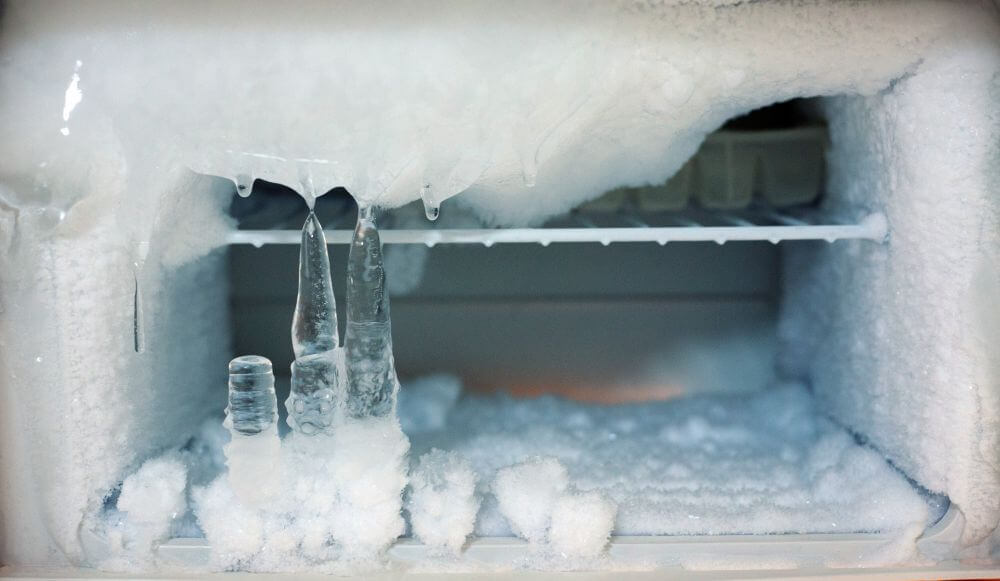
Understanding what type of freezer you have changes how you approach the problem.
| Feature | Frost-Free Freezer | Manual Defrost Freezer |
|---|---|---|
| Automatic defrost cycles | Yes | No |
| Needs manual defrosting | No | Yes (every 6 months) |
| More mechanical parts to fail | Yes | No |
| Common frost cause | Defrost system failure | Normal frost accumulation |
| Energy use | Slightly higher | Slightly lower |
| Best for | Convenience | Long-term food storage |
A frost-free freezer that is icing up always has an underlying mechanical reason. It does not just frost up on its own under normal conditions.
A manual-defrost freezer frosts up naturally and needs to be defrosted manually before ice reaches about a quarter-inch thickness on the walls.
Freezer Frosting Up by Location: What It Tells You
Where the frost is building up inside your freezer is one of the most useful diagnostic clues available.
Frost on back wall only: Evaporator coils behind the back panel are frosting over. Most likely cause is a failed defrost heater, thermostat, or control board.
Frost on sides, top, or door interior: Warm humid air is entering the compartment. Most likely cause is a damaged door gasket or door not fully closing.
Ice on the floor of the freezer: The defrost drain tube is blocked and meltwater is refreezing at the bottom of the compartment.
Frost everywhere, uniformly: The entire defrost system may have failed, or the freezer has not been manually defrosted for too long (manual defrost models).
Frost forming around one specific vent: Airflow is blocked in that area. Reorganize stored items to clear the vents.
When to Call a Repair Technician
Some freezer frost problems are safe and easy to fix yourself. Others require professional knowledge and tools.
Call a technician when:
- You suspect the defrost heater, thermostat, or control board has failed
- The evaporator fan motor needs replacement
- The compressor is running continuously without cycling off
- Frost returns within days of a full manual defrost with no obvious cause
- The appliance is still under warranty (DIY repair may void coverage)
- You hear unusual electrical sounds or notice burning smells
DIY-safe fixes:
- Replacing the door gasket
- Clearing a blocked defrost drain tube
- Adjusting the temperature setting
- Reorganizing food for better airflow
- Performing a manual defrost
- Cleaning the door seal
How Much Does Freezer Frost Repair Cost?
Knowing the approximate cost helps you decide whether repair or replacement makes more sense.
| Repair Type | Estimated Cost |
|---|---|
| Door gasket replacement (DIY) | $10 – $35 |
| Door gasket replacement (pro) | $100 – $200 |
| Defrost heater replacement | $150 – $300 |
| Defrost thermostat replacement | $100 – $200 |
| Defrost timer replacement | $100 – $200 |
| Control board replacement | $200 – $500 |
| Evaporator fan motor replacement | $150 – $300 |
| Drain tube clearing (pro) | $100 – $200 |
As a general rule, if the total repair cost exceeds 50 percent of the cost of a new comparable freezer, replacement is the smarter long-term investment.
Frequently Asked Questions (FAQs)
Why is my freezer frosting up when it is frost-free?
A frost-free freezer that frosts up has a failed defrost system component. The most common culprits are the defrost heater, thermostat, or control board, all of which require testing and replacement.
Why is frost only building up on the back wall of my freezer?
Frost on the back wall means the evaporator coils behind that wall are icing over. This is a classic sign of a defrost system failure, specifically the heater or thermostat not activating properly.
Why is there ice on the bottom of my freezer?
Ice on the floor of the freezer compartment usually means the defrost drain tube is blocked. Meltwater from defrost cycles cannot drain out and refreezes at the bottom.
Can a bad door seal cause frost buildup?
Yes, a worn or cracked door gasket is one of the most common causes of freezer frosting. It allows warm humid air to continuously enter the freezer compartment, where it freezes on the cold surfaces.
How often should I manually defrost my freezer?
Manual defrost freezers should be defrosted when the frost layer reaches about a quarter inch thick, which is typically every 6 to 12 months depending on how often the door is opened.
Is it safe to use a hair dryer to defrost a freezer?
Yes, a hair dryer on a low or medium heat setting can speed up manual defrosting. Keep it away from any standing water and never allow the cord or device near pooled liquid to avoid electric shock.
Why does my freezer frost up so quickly after I defrost it?
If frost returns within a few days, the underlying cause has not been fixed. Check the door gasket, make sure the door closes fully, and have the defrost system components tested by a technician.
Does an overfull freezer cause frost?
Yes. Overpacking blocks airflow from the vents and evaporator, creating uneven temperatures and warm spots where condensation can freeze. Leave space for air to circulate around stored items.
What temperature should my freezer be set to prevent frost?
Set the freezer to exactly 0°F or -18°C. Higher temperatures cause more frequent temperature fluctuations that promote frost formation. Lower temperatures waste energy without additional benefit.
Can putting hot food in the freezer cause frost buildup?
Yes. Hot food releases steam and warm moist air directly inside the freezer, which freezes on the interior walls. Always cool food to room temperature or refrigerator temperature before freezing.
Conclusion
Why is my freezer frosting up is a question with a specific answer in almost every case, and that answer almost always points to a fixable problem. The most common causes are warm humid air getting in through a bad door seal or an open door, a blocked defrost drain tube, or a failed component in the automatic defrost system.
Start with the simplest checks first: inspect the door gasket, verify the temperature setting, make sure the door closes fully, and check for ice buildup on the back wall. If simple fixes do not stop the frost from returning, the defrost heater, thermostat, or control board likely needs professional attention.
With the right diagnosis and repair, your freezer will run cleanly and efficiently, your food will stay properly frozen, and your energy bills will stop creeping up because of an overworked compressor fighting a losing battle against ice.