Why the 2026 WSOP Main Event Is the Perfect Moment to Actually Learn Poker Strategy
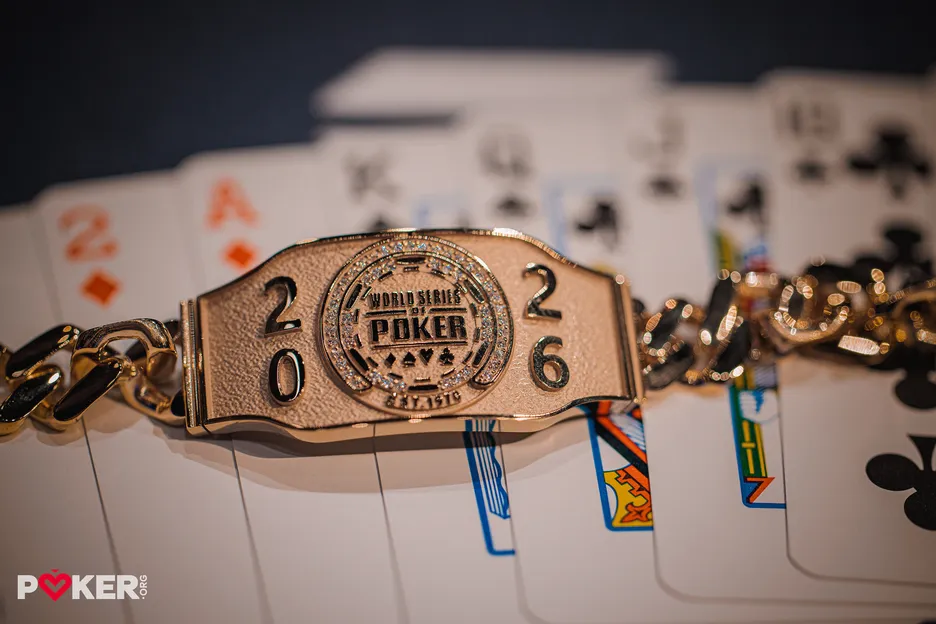
Nine thousand, two hundred and eight players walked into the Rio Convention Center this July. That’s the fourth-largest Main Event field in World Series of Poker history, generating an $85.6 million prize pool. And for the first time in years, the whole thing is landing on ESPN primetime under a new multi-year broadcast deal signed in March 2026. Casual fans who’ve never thought twice about poker are suddenly watching Michael Mizrachi grind toward what would be the first back-to-back Main Event title since Johnny Chan did it in 1988. They’re watching the drama. The feuds. Phil Hellmuth biting at someone across a felt table. But most of them have no idea what’s actually happening strategically. For anyone catching the Main Event for the first time and realising the game runs far deeper than the cards, pokerology is where that education starts.
This isn’t a piece about how to become a professional. Most people watching won’t play a single live tournament in their lives. But understanding what you’re seeing. Really understanding it. Changes the experience completely. Like watching the Tour de France without knowing what a peloton is, or following a chess match without knowing what a zwischenzug means. The drama makes sense once you know what everyone is trying to do.
What the ESPN Deal Actually Changes
Poker had its last great TV moment in the early 2000s, when hole-card cameras turned the game into appointment television. The 2003 Chris Moneymaker win. An amateur who qualified online for $86 and walked away with $2.5 million. Drove a generation of players to the tables and launched a decade of explosive growth.
The 2026 ESPN deal is a second shot at that. Mainstream viewers. Primetime slots. Commentary aimed at people who don’t know the difference between a continuation bet and a check-raise. That’s genuinely new. And the field numbers back up the renewed interest: according to ESPN’s coverage of the 2026 Main Event, Michael Rossitto currently leads a field that has already pushed the total prize pool past anything seen since the poker boom years.
New viewers are going to watch someone shove all-in with nothing, take the pot, and have no idea why that worked. They’re going to watch someone fold what looks like a strong hand and wonder if they made a mistake. The gap between what’s happening on screen and what viewers understand is massive right now. That gap is an opportunity.
The Strategy Layer Most New Viewers Miss Entirely
Here’s the thing about poker that TV coverage can’t fully capture: almost every significant decision at a Main Event table is made before the cards even arrive.
Position. Stack depth. The history between two players at that specific table over the last four hours. The image you’ve built through forty hands of tight play, and whether you can exploit that image right now with a three-bet bluff. None of that appears on the broadcast. What you see is a confident push and a call or a fold. What you don’t see is the reasoning structure underneath it.
GTO. Game Theory Optimal. Strategy has quietly transformed how serious players approach No-Limit Hold’em over the last decade. Cornell University’s networks research has documented how GTO poker is grounded in Nash equilibrium principles, meaning a player using a balanced GTO strategy cannot be exploited by any counter-strategy their opponent chooses. That’s not a small claim. It’s the same mathematical framework used in economics and arms-control theory, applied to a card game played in a casino in Las Vegas.
The reason this matters for new viewers is simple: the players on that ESPN broadcast aren’t just experienced. They’re operating from structured frameworks that took years to build. Watching without that context is like watching a Formula 1 race and thinking the interesting part is who turns the wheel fastest.
What Mizrachi’s Run Is Actually Telling You
Michael Mizrachi won the 2025 Main Event. He’s back. Grinding through 9,000+ opponents again. The narrative ESPN is selling is the underdog-and-greatness arc, which works as entertainment. But the strategic reality is more interesting.
Back-to-back Main Event wins would be historically unprecedented in the modern era. The field is too large, variance too high. Chan’s consecutive wins in 1987 and 1988 came in fields of 152 and 167 players respectively. Mizrachi is trying to repeat against a field 55 times that size. Pure statistical probability says this shouldn’t happen. The fact that it’s even plausible is an argument for just how much skill compresses variance over 10 days of play.
That compression is the strategy story nobody is quite telling on air. Mizrachi isn’t running hot. He’s making marginally better decisions than everyone else, thousands of times over, and letting the math accumulate. Small edges, repeated consistently, compound.
Sound familiar? It should. It’s how any skill-based competitive system works.
Where a New Viewer Actually Starts
The instinct for most people watching their first WSOP broadcast is to go straight to hand rankings. That’s fine, but it gets boring fast because hand rankings are the smallest part of the game. The more useful starting point is understanding ranges. Not what cards someone has, but what range of hands they could plausibly hold given how they’ve played the entire hand from preflop through to the river.
That mental shift, from thinking about specific cards to thinking about distributions of possible hands, is where recreational players separate from serious ones. It’s also where the broadcast gets genuinely interesting, because now when an experienced commentator says “he has to know he’s behind here,” you understand what they mean.
Position comes next. Acting last in a hand is a structural advantage so significant that it changes which hands are profitable to play. A hand that’s a clear open-raise from the button. Last to act before the blinds. Can be a fold from under the gun, eight positions earlier. That dynamic is invisible to a new viewer but it explains roughly half of what you see on screen.
Then bet sizing. Then pot odds. Then implied odds. Each layer adds texture to what looks, from the outside, like someone just deciding whether to push chips forward.
Vibromedia’s readers who’ve tracked big-money entertainment events. The kind of spectacle where the numbers alone make the story. Might find the profiles of major poker earners a useful lens here. The WSOP’s top earners have built net worth figures that rival mid-tier entertainment careers, purely through accumulated strategic edge over thousands of hours of play.
The Hellmuth Angle: Reads, Tells, and Why Psychology Still Matters
Phil Hellmuth got penalised during this year’s Main Event for conduct at the table. Classic Hellmuth. The thing is, he’s also a 17-time WSOP bracelet winner and one of the most read-dependent players in the history of the game.
Hellmuth operates in a way that professional solvers would mark as theoretically suboptimal. He exploits live reads and player psychology to a degree that GTO purists dismiss as variance-dependent. They’re not entirely wrong. But they’re not entirely right either.
At a live table, with history, tells, and emotional dynamics in play, exploitative strategy. Deviating from GTO to target specific tendencies in a specific opponent. Can outperform balanced play. The tension between GTO and exploitative approaches is one of the genuinely unresolved debates in modern poker theory. You see it play out every time Hellmuth sits down opposite someone running solver outputs on their laptop between sessions.
MIT Technology Review covered this dynamic directly when Facebook’s Pluribus AI mastered multiplayer No-Limit Hold’em at a superhuman level. And the researchers chose not to release the model publicly because of how severely it could damage online poker ecosystems. The fact that an AI achieving theoretically optimal play was considered a threat to the integrity of the game says something about how sophisticated the current competitive environment actually is.
Hellmuth, operating almost entirely on reads and instinct, is somehow still competitive in that environment. That’s the subplot worth watching.
2026 Is the Year to Actually Engage With This
The WSOP has been running since 1970. It has paid out more than $4 billion in prize money across six decades. This year’s event is the fourth-largest ever by field size, and it’s on mainstream television for a new generation of viewers.
If there’s a moment to go beyond casual watching and actually understand what the best players in the world are doing and why, this is it. The broadcast makes it accessible. The stakes make it compelling. And the strategic depth makes it genuinely worth studying.
The players on that final table didn’t get there by catching good cards. They got there by making better decisions than everyone else, in real time, under pressure, against the full distribution of what their opponents might hold. That’s learnable. Not easy. But learnable.
Frequently Asked Questions
What is GTO poker and why does it matter for watching the WSOP?
GTO stands for Game Theory Optimal. It describes a playing style where your decisions across all situations are balanced enough that no opponent can profitably exploit you. At the WSOP level, most serious players are GTO-informed, which means the moves you see on ESPN are calculated responses to ranges and positions, not gut feelings about individual cards.
How did the 2026 WSOP Main Event become the fourth-largest in history?
The 2026 field of 9,208 players reflects renewed mainstream interest in live poker, amplified by the ESPN broadcast deal announced in March 2026. The event generated an $85.6 million prize pool. The largest-ever fields were recorded during the mid-2000s poker boom, with the 2006 event drawing 8,773 players. Now surpassed by this year’s turnout.
Can someone learn poker strategy without any prior experience?
Yes, and starting with hand ranges and position. Rather than just memorising hand rankings. Gives you a much faster path to understanding competitive play. Most strategic frameworks are learnable without any prior poker background; the mathematical concepts involved are accessible, even if mastering them takes significant time and repetition.
What is the difference between exploitative play and GTO play?
GTO play balances your decisions so no opponent can exploit you regardless of their strategy. Exploitative play deviates from that balance deliberately, targeting a specific opponent’s known tendencies to extract more value. Live players like Phil Hellmuth lean heavily exploitative based on reads; solvers and online specialists often start from GTO baselines.
Who is Michael Mizrachi and why is his 2026 run historically significant?
Mizrachi won the 2025 WSOP Main Event and returned in 2026 to compete in the same field. A back-to-back win would be the first since Johnny Chan achieved it in 1987 and 1988. In fields of under 200 players. Doing it against 9,000+ opponents would be statistically extraordinary and would rank among the most impressive single achievements in poker history.
Gambling involves risk. Please play responsibly and only wager what you can afford to lose. If you feel gambling is becoming a problem, visit BeGambleAware.org or call 1-800-GAMBLER.