Why Is a Flea Market Called a Flea Market? Explained 2026
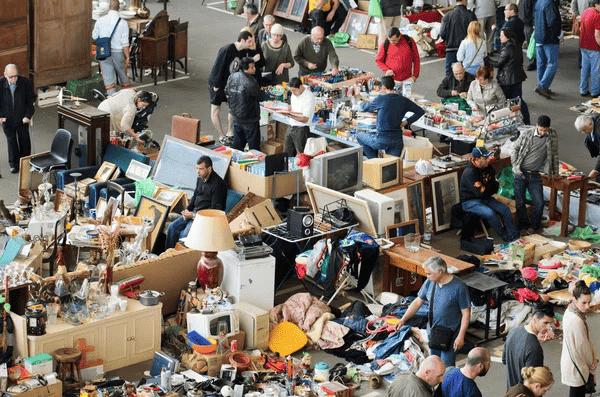
Why Is a Flea Market Called a Flea Market? Because of a French phrase, “marché aux puces,” which literally means “market of fleas.” The name first described a famous secondhand bazaar in Paris during the 1800s, where old furniture and used clothing were said to attract fleas.
That short answer covers the basics, but the real story has a few twists. There are actually three competing theories about how this quirky name came to be, and historians still don’t agree on which one is fully accurate.
The Origin of “Flea Market”
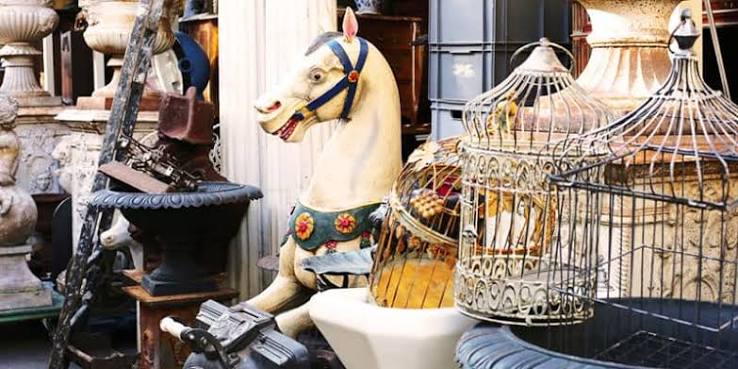
The most widely accepted explanation traces back to Paris in the 1860s–1880s. A bargain hunter reportedly nicknamed the city’s outdoor secondhand bazaar “le marché aux puces” because the used furniture and fabrics on sale were often infested with fleas.
- Term: Flea Market
- Language of origin: French (“marché aux puces”)
- Place of origin: Paris, France
- First English print appearance: 1887 (American newspaper)
- Added to Oxford English Dictionary: 1922
The French Origin: Marché aux Puces
Paris in the 1800s had a famous outdoor market known as the Saint-Ouen market, located just outside the city. Vendors sold used furniture, old clothing, and secondhand household goods here.
Much of this furniture came from homes across the city and had not been cleaned in years. Fleas were a genuinely common problem in old upholstery during this period, so the nickname made practical sense at the time.
Legend says a bargain hunter looked over the worn goods and jokingly called it “le marché aux puces,” or “market of fleas.” The name apparently stuck, and locals began using it regularly.
Theory Two: The “Flee Market” Connection
A second theory has nothing to do with insects at all. During the mid-1800s, Paris underwent massive redevelopment under Georges-Eugène Haussmann, who widened the city’s boulevards.
This construction displaced countless small vendors who had operated out of narrow alleyway shops. Forced out of their storefronts, these sellers had to “flee” to open-air stalls elsewhere in the city.
In English, this became known as a “flee market,” since the vendors had literally fled their original locations. Over time, some linguists believe “flee” was mistranslated or simply misspelled into “flea,” and the spelling stuck permanently.
Theory Three: The Dutch “Vlie Market”
A lesser-known theory points to Colonial America rather than France. Dutch settlers in what is now New York operated an open-air trading market they called the “Vlie Market.”
“Vlie” is a Dutch word related to “swamp,” referencing the marshy land where the market was held. English speakers reportedly found “vlie” difficult to pronounce and gradually shifted it toward “flea.”
Most etymologists consider this theory weaker than the French origin story, since there’s less written evidence to support it. Still, it remains part of the broader discussion around the word’s history.
Which Theory Is Actually True?
No historian has definitively proven any single theory. Sources like Merriam-Webster and Britannica note that the exact origin remains genuinely uncertain, even after decades of research.
The French “marché aux puces” theory has the strongest documentary support and the widest acceptance among language experts. Most dictionaries and encyclopedias list it as the primary explanation.
- Most supported: French “market of fleas” origin
- Historically plausible: The Haussmann “flee market” theory
- Least documented: The Dutch “Vlie Market” theory
How the Term Reached English Speakers
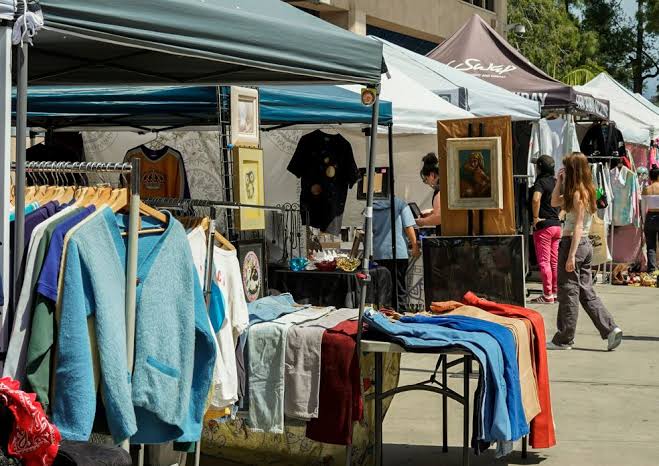
American newspapers began using “flea market” as early as 1887, describing markets in cities like Copenhagen and New York rather than Paris directly. This shows the phrase had already spread across Europe before crossing the Atlantic.
The Oxford English Dictionary officially recognized the term in 1922, citing a travel book that explained the fleas connection directly. From there, the phrase became a standard part of American English.
From Paris Bazaar to American Tradition
Flea markets didn’t become a true American phenomenon until the 1960s. Before that, similar events were often called swap meets, rummage sales, or bazaars.
Once “flea market” caught on in the U.S., it quickly became the preferred term nationwide. Today, thousands of these markets operate across the country every weekend.
Flea Market vs. Swap Meet vs. Antique Market
These terms are often used interchangeably, but there are subtle differences worth knowing.
| Term | Typical Focus | Common Setting |
|---|---|---|
| Flea Market | Mixed secondhand goods, antiques, crafts | Indoor or outdoor, weekly |
| Swap Meet | Auto parts, tools, trade-based sales | Outdoor, often car-related |
| Antique Market | Higher-value vintage and collectible items | Indoor, curated stalls |
| Rummage Sale | Donated household items, charity-driven | Church halls, community centers |
Does the Name Have Anything to Do With Real Fleas Today?
No, modern flea markets have no actual connection to fleas or pest infestations. The name is purely historical, tied to 19th-century furniture and secondhand goods.
Health and safety standards for vendors have changed dramatically since the 1800s. Today’s flea markets are regulated shopping events, not places associated with pests.
What Flea Markets Are Called Around the World
The word has been translated and adapted differently depending on the country and local language.
- France: Marché aux puces
- Netherlands: Vlooienmarkt
- Sweden: Loppmarknad
- Australia: Trash and treasure market
- United Kingdom: Car boot sale (a related but distinct concept)
- Philippines: Tiangge
- India: Gurjari bazaar or juna bazaar (regional names)
Interesting Facts About Flea Market History
- The original Paris flea market, Saint-Ouen, still operates today and is considered one of the largest antique markets in the world.
- The term appeared in print in the U.S. more than 30 years before it entered the Oxford English Dictionary.
- The United States now has more than 5,000 active flea markets, according to industry estimates.
- Flea markets support an estimated one million-plus vendors and roughly 100 million shoppers annually in the U.S. alone.
Key Takeaways
- The name most likely comes from the French phrase “marché aux puces,” referring to fleas found in old Parisian furniture.
- A competing theory ties the name to vendors who “fled” Parisian redevelopment in the 1800s.
- A third, less-supported theory traces it to a Dutch “Vlie Market” in Colonial America.
- No single theory has been proven definitively true.
- The term entered English print by 1887 and became official in dictionaries by 1922.
- Modern flea markets have no real connection to fleas or pest problems.
Also Read:
- 200+ Best Replies to “Inshallah” & What It Really Means
- Top 10 Contact Form Plugins
- The Fastest WordPress Theme
- 200+ Replies to “How’s It Hanging” You’ll Love Using
- 200+ Best Replies to “It Was Nice Talking to You”
- 200+ Best Replies to “Allahumma Barik” – Show Gratitude
- Why Workstation Sinks Are Becoming A Practical Upgrade For Property Investments
- Why Shame Blocks Growth
- Setting Shared Financial Goals
- How Useful is a PMP Certification for HR Professionals?
- The Digital First Impression Houston Companies Can’t Ignore
- 4 High-Tech Home Entertainment Amenities That Bring the Country Club Home
- Quality Meets Affordability in Lab Diamond Tennis Bracelets
- Do STIs Affect the Vaginal Microbiome?
- Why Investing In Quality Equipment Matters For Small Trade Businesses
- Moving a Few Items? Why Small Moves Are Easy to Underestimate
- Top 6 Simple to Implement Barber Scheduling Software
- How Modern Businesses Combine Technology and Storage Solutions for Better Operations
- Should You Buy Lab Diamond Tennis Bracelets Now?
- How to Choose the Perfect Lab Diamond Jewelry for Yourself
- The Benefits and Perils of a Last-minute Wedding
- Protecting Digital Content from Piracy Across Multiple Platforms
- A Practical Guide to Earth Ground Resistance Testing for Electrical Safety
Frequently Asked Questions (FAQs)
Why is a flea market called a flea market?
It’s most likely named after the French phrase “marché aux puces,” meaning “market of fleas,” which described a secondhand bazaar in 1800s Paris where old furniture often carried fleas.
Is the flea in “flea market” a real insect reference?
Yes, according to the leading theory. Old furniture and fabrics sold at Parisian markets were genuinely prone to flea infestations, which inspired the nickname.
When did the term “flea market” first appear in English?
It first appeared in American newspapers around 1887, decades before it was officially added to the Oxford English Dictionary in 1922.
Where did the original flea market take place?
The original and most famous flea market was the Saint-Ouen market on the outskirts of Paris, France, which is still active today.
Is there another theory besides the flea infestation story?
Yes, a second theory says Parisian vendors were forced to “flee” their storefronts during 1800s city redevelopment, and “flee market” later became “flea market.”
What is the Dutch “Vlie Market” theory?
This theory claims Dutch settlers in Colonial New York had a market called the “Vlie Market,” named after a nearby swamp, which English speakers eventually reshaped into “flea market.”
Which flea market origin theory is most accepted?
The French “marché aux puces” theory is the most widely accepted by linguists, dictionaries, and historical sources, though it has never been definitively proven.
Do modern flea markets actually have fleas?
No, modern flea markets are regulated shopping events with no connection to pest infestations. The name is purely historical.
What’s the difference between a flea market and a swap meet?
A flea market typically sells a wide mix of secondhand goods, crafts, and antiques, while a swap meet traditionally focuses on trading auto parts, tools, or bartered items.
Are flea markets and antique markets the same thing?
Not exactly. Antique markets usually feature curated, higher-value vintage items, while flea markets offer a broader mix of secondhand and new goods at varying price points.
What do other countries call flea markets?
Names vary by country, including “vlooienmarkt” in the Netherlands, “loppmarknad” in Sweden, and “trash and treasure market” in Australia.
How many flea markets exist in the United States today?
Industry estimates suggest there are more than 5,000 active flea markets across the U.S., serving roughly 100 million shoppers each year.
When did flea markets become popular in America?
Flea markets became a mainstream American shopping tradition starting in the 1960s, after the term had already been used informally for decades.
Why were flea market goods considered risky in the past?
Because much of the furniture and clothing sold was secondhand and unwashed for long periods, making pest infestations more common in the 1800s than today.
Is “flea market” used the same way in British English?
Not always. In the UK, a similar concept is often called a “car boot sale,” even though the term “flea market” is also understood and used.
Who documented the earliest flea market origin story?
Author Albert LaFarge is frequently credited with popularizing the French origin story in his writings, including the U.S. Flea Market Directory.
Does the name affect how people view flea markets today?
Not really. Despite its odd origin, the term carries no negative connotation today and is widely associated with bargain hunting and unique finds.
Can the term “flea market” also refer to online marketplaces?
Occasionally, informal or vintage-style online marketplaces are described as “digital flea markets,” though the term traditionally refers to physical events.
Why do people still enjoy visiting flea markets despite the name’s origin?
The name has lost its original negative meaning over time, and today flea markets are valued for affordability, unique items, and community atmosphere.
Is there an official record proving the exact origin of the term?
No single authoritative record exists. Most sources describe the origin as historically uncertain, with the French theory being the strongest candidate.
Conclusion
The name “flea market” carries more history than most shoppers ever realize. Whether it traces back to fleas in old Parisian furniture, displaced vendors fleeing redevelopment, or a Dutch swamp market in early America, the phrase has survived for well over a century.
What started as an unusual nickname eventually became the standard term for secondhand shopping worldwide. The next time you walk through rows of vintage finds and handmade crafts, you’ll know exactly why the market earned its curious name.