The Knicks Won the NBA Finals. Here’s How Celebrity Courtside Culture Became a Gaming Phenomenon
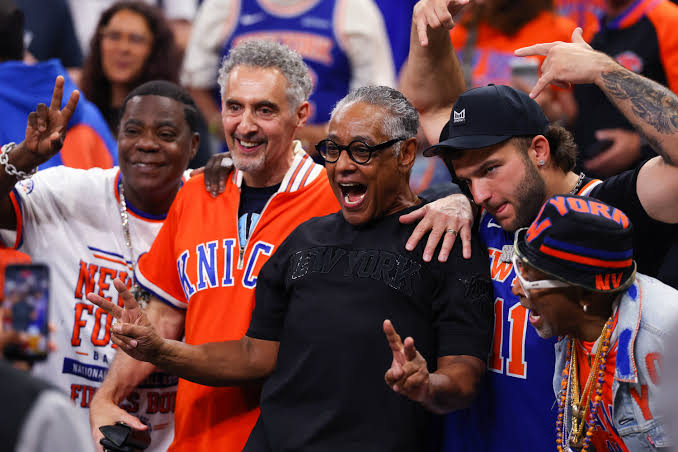
Timothée Chalamet was spotted in row one. Jay-Z was three seats down. Tracy Morgan, in full Knicks gear, looked like he’d been awake for three days. Madison Square Garden during the 2026 NBA Finals wasn’t just a basketball arena. It was the most photographed room in America, a rotating gallery of fame that had absolutely nothing to do with what was happening on the court.
That’s the thing about the Knicks finally winning. Yes, Jalen Brunson was brilliant. Yes, Karl-Anthony Towns got the ring he’d been chasing since Minnesota. But the story that exploded across every feed, every group chat, every entertainment recap was the celebrity row. A spectacle so concentrated that Hollywood Reporter ran a separate story just on the TV ratings, noting the Finals drew the most viewers since the 1998 Michael Jordan farewell run.
The celebrity courtside circus pulled millions of casual fans into the Finals who wouldn’t have watched a minute of a Knicks-Spurs series otherwise. And a huge chunk of those fans didn’t just watch. They bet. For anyone trying to understand where that action actually went. Specifically for US-based fans locked out of state-regulated books or chasing better live NBA lines. The guide to offshore betting sites at esports.gg is the clearest breakdown of which platforms were actually carrying in-game Finals markets and what the access looked like for players outside New York State’s regulated ecosystem.
What Celebrity Row Actually Does to a Sports Event
Madison Square Garden has always had famous faces in the expensive seats. Spike Lee has been a fixture for decades. Woody Allen showed up when Woody Allen still showed up anywhere. But the 2026 Finals escalated the tradition into something else entirely. A curated spectacle that the Knicks’ front office openly acknowledged managing, according to ABC News coverage of Celebrity Row, which detailed exactly how the organization coordinates high-profile seat placements around the camera angles broadcast networks use most.
That’s not accidental. It’s a marketing operation. Courtside seats during the Finals ran to around $40,000 a game at peak resale. The celebrity appearances generate earned media worth multiples of that. When Chalamet reacts to a Brunson three, it becomes a clip. That clip gets fifty million views. The Knicks become the story even for people who couldn’t name a single player on the Spurs roster.
And here’s what that does to betting volume. Pure and simple.
Casual fans who wouldn’t ordinarily wager on an NBA game start paying close attention once the event reaches cultural saturation. The Finals became water-cooler conversation. Water-cooler conversation becomes investment in outcomes. Investment in outcomes becomes people opening apps and placing money on prop bets, series outcomes, individual game lines.
The Numbers Behind the Fandom
Sports betting in the US crossed $16.96 billion in revenue during 2025, per ESPN’s industry reporting. The NBA drives a disproportionate share of in-play volume compared to other leagues. Shorter possessions, constant momentum swings, and the fact that games are decided in the final two minutes make live betting on basketball genuinely compelling in a way that, say, a baseball game in the fifth inning usually isn’t.
The Finals amplifies all of that. By roughly 400 percent on major sportsbooks, going by the handle spikes reported around Game 5 of the Knicks-Spurs series.
But here’s what the state-by-state regulated market doesn’t capture neatly: the fan in a state without legal mobile betting, the casual punter who wants a $10 prop on how many times the camera cuts to Tracy Morgan, or the international viewer who caught the Chalamet sighting on Instagram and suddenly wants to bet the series outcome. That audience is enormous. And it largely ends up on offshore platforms.
Offshore books have been carrying full NBA markets. Live lines, player props, series futures. For years before most US states regulated anything. The product is more varied than most domestic operators run, and the sign-up friction is lower. The tradeoff is that regulatory protections are thinner, and withdrawal timelines can be inconsistent depending on the platform and the payment method you use. I’ve had offshore withdrawals clear in under 90 minutes on crypto rails and I’ve had a bank transfer sit for eleven days. The quality difference between platforms matters a lot more than it does on a state-regulated book.
Celebrity Endorsement and What It Actually Moves
There’s published research on this now, which I find genuinely interesting. A peer-reviewed study in a public health journal found that celebrity endorsers in sports betting advertising measurably increase intent to bet among audiences who wouldn’t otherwise engage with wagering products. The mechanism isn’t hard to understand. Parasocial familiarity lowers the psychological distance between watching and participating.
When you see Jay-Z visibly invested in a Knicks win, a part of your brain files that under ‘stakes are real.’ The leap from ‘Jay-Z cares about this game’ to ‘I should have something riding on this game’ is shorter than advertisers used to think.
The Knicks understood this intuitively. The Vibromedia piece on Vibromedia’s own coverage of how to choose the best new gaming sites for safe and smart sports gaming touches on exactly the kind of considerations that come up for first-time sports bettors who enter the market through a cultural event rather than a traditional sports fandom pathway. That’s the audience celebrity row creates.
First-time bettors activated by the Finals frenzy aren’t arriving with pre-formed loyalty to a specific book. They’re searching, they’re clicking around, and they’re often landing on offshore platforms before they’ve worked out what regulated alternatives look like in their state.
What the Wu-Tang Knicks Moment Tells Us About Sports Culture in 2026
Variety ran a piece with Wu-Tang Clan, Fat Joe, and Chuck D celebrating the Knicks’ win from a pure NYC cultural identity angle. That’s not a sports story. That’s a civic moment.
New York hadn’t won an NBA championship since 1973. The city had been carrying that for fifty-three years. The Finals weren’t just a basketball series. They were a release valve for something that had been building since the Ewing era, through the Sprewell years, through the Carmelo era that promised more than it delivered. Entire generations of New Yorkers had never seen a Knicks ring.
When that kind of cultural weight gets attached to a sports event, betting volume doesn’t just go up. The nature of who bets changes. People who have never placed a wager in their lives are suddenly looking up how to get money on a Game 7. People in New Jersey, in Connecticut, in states with legal markets, were doing it through regulated apps. People without that access were figuring out offshore options. And the platforms that had broad US-facing NBA market coverage. Live lines, alternative spreads, same-game parlays. Captured most of that new volume.
The celebrity row made the Finals unmissable. The cultural weight made the Finals mean something. The betting market was always going to follow from there.
FAQ
Why does celebrity courtside attendance affect betting volume on NBA games?
Celebrity presence at high-profile games dramatically increases mainstream media coverage and social engagement beyond the core sports audience. When casual fans are pulled in by the cultural spectacle, a meaningful portion convert to bettors. Especially during Finals-level events where the outcome feels personally relevant even to people who don’t follow the sport week to week.
What are offshore betting sites and how do they differ from state-regulated sportsbooks?
Offshore books operate outside US state licensing frameworks, typically from jurisdictions like Curaçao or Panama. They’re accessible to players in states without legal mobile betting, usually offer broader market selection and larger bonuses, but carry fewer regulatory protections. Withdrawal reliability varies substantially by platform. The difference between a good and a bad offshore book is significant.
Did the Knicks’ 2026 championship set betting handle records?
The NBA Finals drew the highest US TV ratings since 1998, and major sportsbooks reported handle spikes of roughly 400 percent on Game 5 compared to regular-season benchmarks. Sports betting as an industry had already hit a record $16.96 billion in revenue across 2025, and the Finals pushed in-play NBA volume to new single-event highs.
Can you bet on celebrity-related prop bets during the NBA Finals?
Some offshore platforms offered entertainment-style props during the 2026 Finals. Including markets around courtside celebrity reactions and broadcast mentions. These aren’t available on most state-regulated books, which stick closer to traditional game and player props. Offshore platforms with wider market coverage were the main venue for this type of wagering.
Is it legal to use offshore betting sites in the United States?
US federal law doesn’t criminalize individual bettors using offshore sites, but the legal status varies by state and the platforms themselves operate outside state licensing requirements. Players should understand the distinction between regulated books with PGCB, DGE, or similar oversight and offshore operators before depositing. The regulatory protections on withdrawals and dispute resolution are meaningfully different.
The Knicks win ends a fifty-three-year drought and gives New York the sports story it’s been waiting decades for. The celebrity row was the visual punctuation on that. A parade of famous faces that turned a basketball series into a cultural event visible from every corner of the internet. That’s not going away. The NBA has figured out that its product is as much entertainment spectacle as sport, and the betting market moves in lockstep with that reality. Expect the offshore platforms that carried strong Finals markets in 2026 to be even better positioned when the next unmissable series rolls around.
Gambling involves risk. Play responsibly and only wager what you can afford to lose. If gambling is becoming a problem, visit BeGambleAware.org or call 1-800-GAMBLER.