Why Does Bolivia Have Two Capitals? The Full Explanation 2026
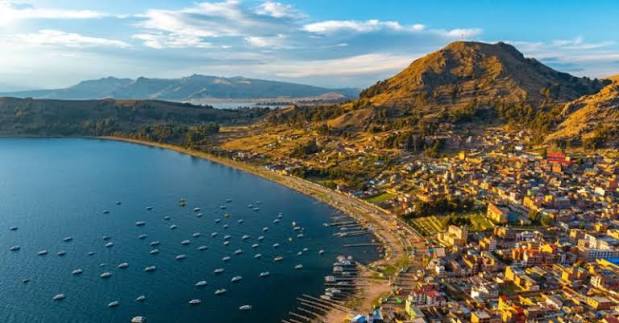
Ask someone the capital of Bolivia and you might get two different answers.
Both are correct, and the reason lies in a 19th-century political conflict. If you’re wondering why does Bolivia have two capitals, the story centers on a civil war and a compromise that still stands today.
Sucre holds the constitutional title, while La Paz runs the country’s day-to-day government. Instead of choosing one city, Bolivia split power between them.
Why Does Bolivia Have Two Capitals?
Bolivia has two capitals because of the Federal War of 1899, a civil conflict between Sucre and La Paz over political and economic power. Sucre remains the official constitutional capital, while La Paz became the seat of government, hosting the executive and legislative branches.
This division was never fully reversed, creating Bolivia’s unique two-capital system that continues today.
What Are Bolivia’s Two Capitals?
Bolivia’s constitution names Sucre as the country’s capital, while La Paz functions as the administrative and political center. Each city plays a distinct governmental role rather than competing for the same title.
Most travelers and international sources treat La Paz as the practical capital, since it hosts the president and Congress.
Bolivia’s Capital Split at a Glance
- Sucre: Constitutional capital, home to the Supreme Court
- La Paz: Seat of government, home to the Executive and Legislative branches
- Santa Cruz de la Sierra: Bolivia’s largest and most economically active city, though not a capital
- Neither city alone holds the full weight of Bolivia’s government
The History Behind Bolivia’s Two Capitals
Bolivia declared independence in 1825, and Sucre became the nation’s first capital. The city was named after revolutionary leader Antonio José de Sucre and hosted the country’s founding government.
Over time, economic and political power began shifting toward La Paz, setting the stage for future conflict.
1. Sucre as the Original Capital
Sucre served as the site of Bolivia’s declaration of independence and its early government. It held both symbolic and practical importance as the birthplace of the nation.
The city’s rich colonial architecture and courts reflect this founding role.
2. Economic Power Shifts to La Paz
As Bolivia’s mining and trade industries grew, La Paz became more influential due to its location and economic connections. This growing imbalance created tension between the two regions.
Business, transportation, and international trade increasingly centered around La Paz rather than Sucre.
3. The Federal War of 1899
Rising tension between liberal forces based in La Paz and traditional powers in Sucre led to a civil war. La Paz’s forces ultimately won, shifting real political power to the north.
Rather than stripping Sucre of its title entirely, a compromise was reached to divide governmental functions.
4. The Political Compromise
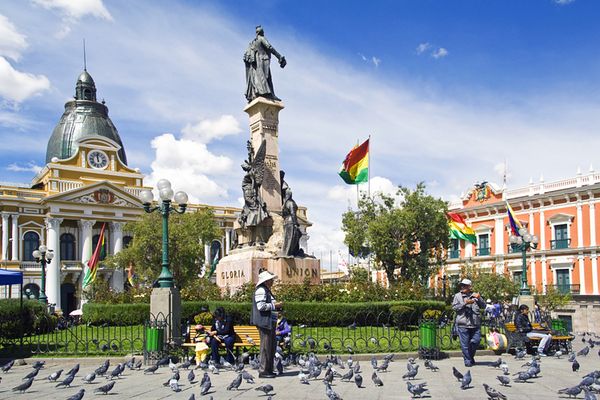
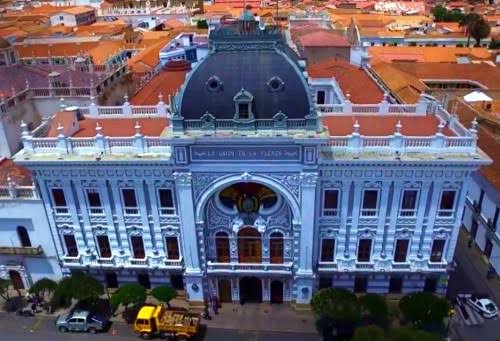
Sucre retained its constitutional status as Bolivia’s official capital and home to the Supreme Court. La Paz became the seat of government, hosting the Executive and Legislative branches.
This arrangement avoided a complete transfer of power and preserved Sucre’s historical significance.
Sucre vs. La Paz: Role Comparison Table
| Feature | Sucre | La Paz |
|---|---|---|
| Official title | Constitutional capital | Seat of government |
| Government branch | Judicial (Supreme Court) | Executive and Legislative |
| Founded role | Birthplace of independence | Political and economic hub |
| Altitude | Around 2,800 meters | Over 3,600 meters |
| Known for | Colonial architecture, UNESCO status | Government buildings, high-altitude setting |
| Everyday perception | Historic, symbolic capital | Practical, functioning capital |
Why the Split Has Never Been Reversed
Several political and cultural factors have kept Bolivia’s two-capital system in place for over a century.
Constitutional Reaffirmation
Bolivia’s 2009 constitution reaffirmed Sucre as the official constitutional capital. This decision reflected ongoing respect for the city’s historical role rather than a shift back toward centralization.
Regional Identity and Pride
Both cities carry strong regional identity tied to their governmental roles. Sucre residents take pride in the city’s founding legacy, while La Paz represents modern political life.
Practical Governance
Moving the entire government back to Sucre would require significant infrastructure and logistical changes. La Paz’s established government buildings make relocation impractical.
Common Misconceptions About Bolivia’s Capital
- Santa Cruz de la Sierra is Bolivia’s largest city, but it is not a capital.
- La Paz is often mistaken as the sole official capital due to its governmental role.
- The two-capital system is not a temporary arrangement; it has lasted since 1899.
- Both cities hold real constitutional and functional significance, not just symbolic value.
Similar Dual-Capital Systems Around the World
Bolivia isn’t entirely alone in separating a country’s official capital from its seat of government. Some nations divide governmental functions across multiple cities for historical or practical reasons.
Examples of Split Capital Roles
- Netherlands: Amsterdam is the official capital, while The Hague hosts the government
- South Africa: Pretoria, Cape Town, and Bloemfontein each host different government branches
- Sri Lanka: Colombo serves as the commercial capital, while Sri Jayawardenepura Kotte holds legislative functions
Expert Insight on Bolivia’s Political Geography
Political historians often point to Bolivia’s Federal War as a textbook example of how regional economic shifts can reshape national governance without erasing historical symbolism. The compromise between Sucre and La Paz remains a frequently cited case study in comparative political geography.
Also Read:
- Automated Enforcement Under Scrutiny: A Review of Red Light and Speed Cameras in the United States
- What Are Synonyms of Should? Top Words Explained 2026
- What Are Synonyms for Good? Words You Can Use 2026
- What Is the Difference Between Synonyms and Antonyms?
- YouTube Growth Strategy for New Creators: What Actually Works
- Electronics Recycling Container: The Smart Solution for Responsible E-Waste Disposal
- The Key Questions That Often Decide Truck Accident Claims
- Why Homeowners Skip Regular Cleaning and What It Costs Them
- Zodiac Signs: Your Personality Blueprint Guide
- Best 800+ Synonyms for Why: Simple Words & Usage Guide 2026
- Pun Names: Powerful & Hilarious Names to Make Everyone Laugh
- 200+ Funny Responses to “Good Morning” Texts
- OnThisVerySpot Com: Unlocking Layers of History and Pop Culture at Your Fingertips
- Unforgettable Ways to Incorporate Live Music Into Your Wedding Ceremony
- The Transformative Power of Music on Creativity and Well-Being
- How Music Listeners Are Quietly Moving Their Libraries Between Streaming Services
- Benjy Grinberg on Why a Musician’s Character Can Leave a Legacy as Powerful as Their Sound
- Redefining Sonic Identity Through the Lens of AI Music Generator
- Alabama Barker Age: The Empowering Journey of a Rising Music Star
- How Old Is Alabama Barker: The Dynamic Young Star’s Musical and Modeling Rise
- What Is Philip Michael Thomas Doing Now: Reigniting the Groove with Bold Music Moves
- Pretty Lights Net Worth: Illuminating the Glitch-Hop Empire of a Music Visionary
- Alahna Ly Age: The Rising Star of Social Media and Music
Frequently Asked Questions (FAQs)
Why does Bolivia have two capitals instead of one?
Bolivia has two capitals due to a political compromise after the Federal War of 1899, splitting government functions between Sucre and La Paz.
Which city is the official capital of Bolivia?
Sucre is the official constitutional capital of Bolivia, as stated in the country’s constitution.
Is La Paz the real capital of Bolivia?
La Paz is the seat of government, hosting the Executive and Legislative branches, though it is not the constitutional capital.
What caused the split between Sucre and La Paz?
The Federal War of 1899, a civil conflict over political and economic power, led to the divided capital system.
Does the Bolivian constitution recognize both cities as capitals?
The constitution officially names Sucre as the capital, while La Paz functions as the government’s seat in practice.
Which branch of government is located in Sucre?
Sucre hosts the Supreme Court of Justice, representing Bolivia’s judicial branch.
Why did La Paz gain political power over Sucre?
Economic growth tied to mining and trade increased La Paz’s influence, contributing to the shift in power after 1899.
Is Santa Cruz de la Sierra a capital of Bolivia?
No. Santa Cruz de la Sierra is Bolivia’s largest and most economically active city, but it holds no capital status.
When did Sucre become Bolivia’s first capital?
Sucre became Bolivia’s capital in 1825, following the country’s declaration of independence.
Did the 2009 constitution change Bolivia’s capital system?
No. The 2009 constitution reaffirmed Sucre as the official constitutional capital, keeping the split system intact.
Why hasn’t Bolivia unified its capital into one city?
Practical, political, and cultural factors have made a full transfer of government back to Sucre unlikely.
Is Bolivia the only country with two capitals?
No. Other countries, including the Netherlands and South Africa, also divide governmental roles across multiple cities.
What is La Paz known for besides government functions?
La Paz is known for its high altitude, dramatic Andes scenery, and vibrant local markets like the Witches’ Market.
Why is Sucre called the White City?
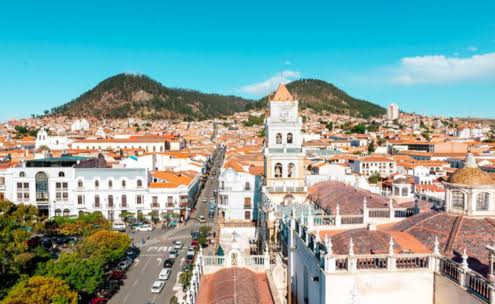
Sucre earned this nickname from its whitewashed colonial buildings, which remain a defining feature of the historic center.
Is Sucre a UNESCO World Heritage Site?
Yes. Sucre’s historic center was declared a UNESCO World Heritage Site in 1991 for its preserved colonial architecture.
How high is La Paz above sea level?
La Paz sits over 3,600 meters above sea level, making it one of the highest seats of government in the world.
Do Bolivians generally accept the two-capital system?
Yes. Most Bolivians view the split as a long-standing part of the country’s political identity rather than a source of ongoing conflict.
Which city hosts Bolivia’s president?
The president works from La Paz, since it hosts the Executive branch of government.
Why is Sucre significant to Bolivian independence?
Sucre is where Bolivia’s declaration of independence was signed, giving it deep historical and symbolic importance.
Could Bolivia’s capital system change in the future?
While possible, no major political movement currently seeks to reverse the long-standing split between Sucre and La Paz.
Conclusion
So, why does Bolivia have two capitals? The answer traces back to the Federal War of 1899 and the compromise that followed, splitting constitutional and governmental roles between Sucre and La Paz. More than a century later, that division still defines Bolivia’s political geography.
Understanding this history adds valuable context whether you’re studying Bolivia, planning a visit, or simply curious about one of the world’s more unusual capital city arrangements.