Why Is My Smoke Detector Blinking Red? Quick Fixes 2026

Why is my smoke detector blinking red is one of the most common home safety questions people search for late at night when a light suddenly catches their eye.
In most cases, it is not an emergency, but it is never something to ignore completely. A blinking red light can mean a low battery, normal operation, dust buildup, an aging unit, or in rare cases, an actual smoke detection.
Is a Blinking Red Light Always an Emergency?

No, a blinking red light is not always an emergency. Most smoke detectors use a periodic red blink simply to show the device is powered and working.
If there is no loud alarm sound accompanying the blink, the situation is very likely minor and easy to resolve.
Understanding your specific detector’s blink pattern is the fastest way to know whether you need to act immediately or not.
Reason 1: It Is Working Normally
Many smoke detector brands use a small red blink every 30 to 60 seconds to confirm the unit is powered on and actively monitoring.
This is often described in the manual as a “heartbeat” light, and it does not require any action from you at all.
If your light blinks at a steady, slow interval with no beeping, this is likely the explanation.
Reason 2: Low Battery Warning
A low battery is one of the most common reasons a smoke detector blinks red, usually paired with a sharp chirping sound every 30 to 60 seconds.
Battery-powered detectors typically last eight to twelve months before needing a replacement, even though many people wait for a warning signal first.
Replacing the battery with a fresh one, of the correct size and type, almost always resolves this specific cause.
Table: Common Blink Patterns and What They Mean
| Blink Pattern | Sound | Likely Meaning |
|---|---|---|
| Every 30-60 seconds, steady | None | Normal operation |
| Every 30-60 seconds, steady | Chirping | Low battery |
| Rapid or continuous | Loud alarm | Smoke or fire detected |
| Every 10 seconds | Fading alarm | Recovering from smoke exposure |
| Irregular or constant | None | Dust, debris, or sensor fault |
| Slow blink, unit is old | None or chirp | End-of-life warning |
Reason 3: Why It Still Blinks After a Battery Change
If the red light continues blinking even after you install a new battery, the battery itself may not have enough power.
Batteries that have been sitting in storage for a long time can lose charge before they are ever installed, even if they test as “new.”
Try a second fresh battery from a different pack before assuming the detector itself is faulty.
Reason 4: Dust and Debris Inside the Chamber
Dust, pet hair, and airborne debris can settle inside the smoke detector’s sensor chamber over time, interfering with normal function.
When this happens, some models blink red continuously or irregularly to signal that cleaning is needed.
Gently vacuuming the vents with a soft brush attachment, or wiping the exterior with a microfiber cloth, often resolves this issue.
How to Safely Clean a Smoke Detector
Start by removing the detector from the ceiling or wall, then take out the battery before cleaning anything.
Hold the test or hush button for about 15 seconds afterward to drain any leftover electrical charge stored in the unit.
Use a dry microfiber cloth on the outside and a soft brush or vacuum attachment on the inside vents, and never use water or cleaning chemicals.
Reason 5: The Detector Has Detected Smoke
If the red light is blinking rapidly and paired with a loud, piercing alarm sound, your detector may genuinely be sensing smoke.
This is the most important reason to check immediately, since it could indicate an active fire hazard somewhere nearby.
Check your home right away for visible smoke, and evacuate immediately if you find any signs of fire, then call emergency services.
Reason 6: Lingering Smoke After the Alarm Goes Off
After an alarm sounds and smoke clears, many detectors continue blinking red every 10 seconds while the sensor resets itself.
This is often called a “desensitized state,” where the unit is temporarily less sensitive after a recent alarm event.
Most detectors automatically return to normal operation within about 10 minutes once the air clears completely.
Reason 7: End-of-Life Warning
Smoke detectors typically have a lifespan of around 10 years, after which internal sensors become less reliable, even if the unit still appears to work.
Some brands use a distinct red blinking pattern specifically to signal that the device has reached its expiration date.
Check the manufacture date printed on the back of the unit, and replace it if it is 10 years old or older.
Table: When to Replace vs Repair Your Smoke Detector
| Situation | Recommended Action |
|---|---|
| Battery low, unit under 10 years old | Replace battery only |
| Constant blinking after cleaning and new battery | Consider full replacement |
| Unit is 10+ years old | Replace the entire detector |
| Sensor fault or false alarms repeating | Replace the entire detector |
| Interconnected units malfunctioning | Contact a licensed electrician |
Reason 8: Sensor Malfunction

If you have already replaced the battery and cleaned the unit but the red light keeps blinking irregularly, the internal sensor itself may be faulty.
A malfunctioning sensor means the detector can no longer reliably sense smoke, which defeats its entire safety purpose.
In this case, replacing the entire unit is usually safer and more cost-effective than attempting a repair.
Reason 9: Interconnected Alarm Issues
Homes with multiple smoke detectors often wire them together so all units sound simultaneously when one detects smoke.
A blinking red light in this setup can sometimes indicate a communication issue between interconnected units, rather than a problem with a single detector.
If this is suspected, a licensed electrician can test the interconnection wiring and identify which unit is causing the fault.
Reason 10: Hush Mode Is Active
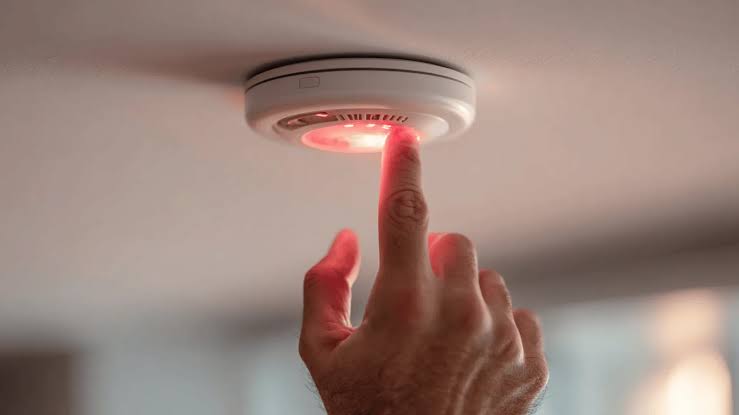
Some smoke detectors include a “hush” mode, often used near kitchens to temporarily silence the alarm while cooking.
While in hush mode, many units continue blinking red to indicate the alarm is muted, not disabled entirely.
The detector will usually notify you audibly once hush mode ends and normal monitoring resumes.
How to Reset a Smoke Detector
For most battery-powered units, press and hold the test or silence button for several seconds until the beeping stops.
Hardwired detectors typically require holding a dedicated reset button for around 20 seconds, followed by waiting for a confirmation beep.
Always check your specific model’s manual first, since reset procedures can vary meaningfully between brands.
Battery-Powered vs Hardwired Detectors
| Type | Power Source | Typical Battery Life | Reset Method |
|---|---|---|---|
| Battery-powered | Replaceable batteries | 8-12 months | Hold test/silence button |
| Hardwired with backup | Home electrical + backup battery | Backup lasts 1 year | Hold reset button ~20 seconds |
| Lithium sealed unit | Non-replaceable 10-year battery | Full device life (10 years) | Follow manufacturer manual |
Understanding Different Light Colors
Not every warning light is red. Many detectors use green, amber, or yellow lights to represent different statuses entirely.
Green typically confirms the unit is powered and functioning normally, while yellow or amber often signals a low battery or early malfunction warning.
Red is generally reserved for either normal heartbeat blinking or an active alarm condition, depending on the specific brand and model.
Preventing Future False Alarms and Confusion
Testing your smoke detector monthly using the built-in test button helps confirm it is working correctly before an emergency happens.
Replacing batteries on a fixed yearly schedule, rather than waiting for a warning chirp, reduces the chances of unexpected late-night alerts.
Keeping detectors clean and dust-free on a regular basis also significantly lowers the risk of false or confusing blink patterns.
When to Call a Professional
If you have replaced the battery, cleaned the unit, and the red light still blinks abnormally, it is time to call a professional.
A licensed electrician can test interconnected wiring, diagnose sensor faults, and confirm whether full replacement is necessary.
Never ignore persistent, unexplained blinking, since it may indicate a deeper electrical or safety issue worth professional attention.
Frequently Asked Questions (FAQs)
1. Why is my smoke detector blinking red with no sound?
It is usually a low battery warning or normal heartbeat blinking. Check for chirping first, since silent blinking is often harmless.
2. Why does my smoke detector still blink red after I changed the battery?
The new battery may lack sufficient charge. Try a fresh battery from a different, unopened package.
3. Is a blinking red light always a sign of fire?
No, it usually is not. It only signals fire risk when paired with a loud, continuous alarm sound.
4. How often should smoke detector batteries be replaced?
Replace batteries at least once a year, even without a warning signal, since power can weaken silently over time.
5. Why does my smoke detector blink red every 10 seconds?
This often means the unit is recovering from recent smoke exposure and will reset automatically within about 10 minutes.
6. Can dust cause a smoke detector to blink red?
Yes, dust and debris inside the sensor chamber can trigger irregular red blinking until the unit is properly cleaned.
7. How do I know if my smoke detector is too old?
Check the manufacture date on the back of the unit. Replace it if it is 10 years old or more.
8. Why do multiple smoke detectors blink red at the same time?
Interconnected detectors sometimes blink together due to wiring or communication issues, which may need electrician assistance.
9. What does hush mode do to the red light?
Hush mode mutes the alarm temporarily but often keeps the red light blinking to show monitoring is still active.
10. When should I call a professional about my smoke detector?
Call a professional if blinking continues after a battery change and cleaning, since it may indicate a sensor or wiring fault.
Conclusion
A blinking red light on your smoke detector is usually not something to panic over, but it is always worth understanding. In most cases, the cause is simply a low battery, normal heartbeat operation, dust buildup, or an aging unit nearing its 10-year replacement point.
In rarer situations, especially when paired with a loud alarm, it can signal actual smoke or fire and should be treated with immediate attention.
Replacing batteries yearly, cleaning your detector regularly, and checking its manufacture date are simple habits that prevent most confusing blink patterns from happening in the first place.
If problems persist after basic troubleshooting, replacing the unit or calling a licensed electrician is the safest next step. Taking these small steps seriously keeps your home’s fire safety system reliable when it matters most.